
Troubleshooting a garage door in Palm Beach, Florida requires a systematic approach: observe symptoms, perform safe preliminary checks, and determine whether the issue can be resolved quickly or needs a professional. This guide walks you through common problems, what they might indicate, safe steps you can take, and when to contact trained technicians. For examples of typical repair tasks and professional diagnostic practices, you can reference local garage door repair services that explain how technicians evaluate and correct frequent failures.
Initial safety precautions
Before you begin any troubleshooting, ensure safety: keep children and pets clear of the work area, disconnect power to the opener if you will be working near electrical parts, and avoid touching spring assemblies or cables under tension. If you are unsure about a step or if the issue involves springs, cables, or severe structural damage, call a professional.
Door will not open or close
When a door will not operate at all, check these common causes in order:
-
Power and opener issues: Verify the opener has power and check circuit breakers. If other devices on the same circuit are powered, the issue may be with the opener itself.
-
Remote or keypad problems: Replace remote batteries and check keypad batteries. Reprogramming or replacing remotes may be required if the transmitter malfunctions.
-
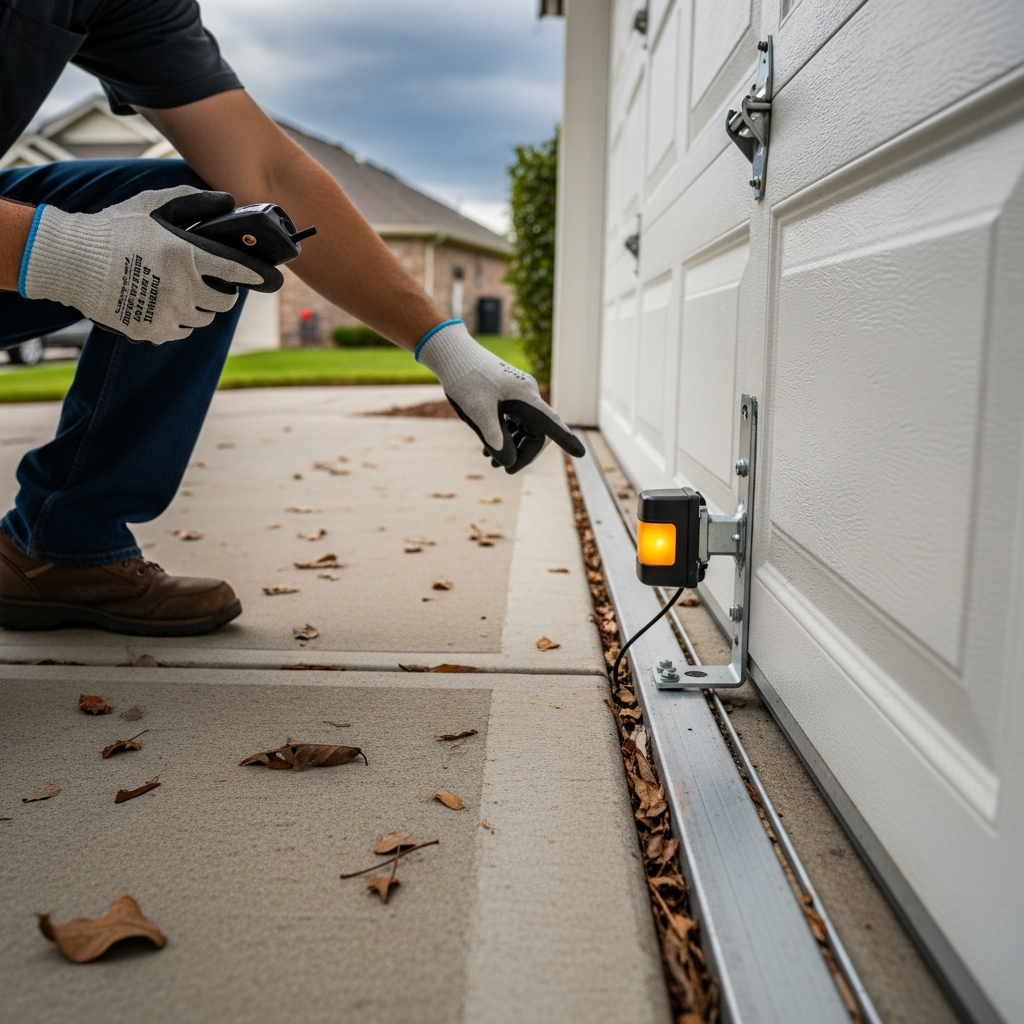
Safety sensors: Align and clean the photo-eye sensors. Even small obstructions like spider webs or dirt can prevent operation.
-
Manual lock engaged: Some doors have manual locks that must be released before the opener will operate—verify that none are engaged.
If these checks do not restore function, there may be internal opener faults, worn gears, motor issues, or transmitter/receiver problems that require professional diagnosis.
Door reverses after closing or won’t close fully
When a door reverses during closing or fails to close completely, investigate these areas:
- Sensor alignment and cleanliness—ensure both sensors are functioning and aligned at the same height.
- Obstructions in the door path—clear any objects and confirm the tracks are unobstructed.
- Force settings on the opener—force should be adjusted by a professional to ensure safety and compliance with manufacturer guidelines.
Repeated reversing can indicate a failing spring, worn hardware, or an improperly adjusted opener force setting.
Door is sagging or uneven
A sagging door usually points to spring imbalance, cable issues, or damaged rollers. To test balance, disconnect the opener and raise the door halfway; it should remain in place. If it moves, the springs may need adjustment or replacement. Because spring work is hazardous, contact a qualified technician for safe handling and adjustment.
Excessive noise during operation
Excessive noise is often caused by worn rollers, lack of lubrication, loose hardware, or failing opener components. Steps to reduce noise include:
- Lubricating rollers and hinges with proper garage door lubricant.
- Tightening loose bolts and brackets.
- Inspecting rollers for wear and replacing them when necessary.
If the opener itself makes grinding or clicking noises, the internal gears or motor may be worn and should be inspected by a professional.
Slow or inconsistent movement
Slow or jerky operation can result from insufficient lubrication, low voltage to the opener, worn gears, or unbalanced doors. Check lubrication and tracks first. If the problem persists, an electrician or door technician may need to check the opener’s motor, capacitor, or power source.
Doors that stick or bind
Binding often points to misaligned or damaged tracks, debris buildup, or worn rollers. Avoid hammering tracks back into shape yourself; minor adjustments can be made by loosening mounting fasteners and carefully tapping tracks back into alignment, but significant damage requires professional replacement to ensure safe operation.
Gap between bottom of door and floor
Gaps allow water, pests, and drafts into the garage. Check the bottom seal for deterioration and ensure thresholds are secure. Replacing seals or adjusting thresholds improves protection and energy efficiency. If the door frame has shifted due to moisture or impact, a technician can assess structural repairs.
Opener remote works inconsistently
Interference, low batteries, or a failing transmitter can cause intermittent remote performance. Replace batteries, test multiple remotes if available, and try operating the opener from the wall control. If wall control works but remotes do not, consider reprogramming or replacing the remote. If remotes and wall control fail, the issue may be in the opener’s receiver or circuit board, and professional inspection is recommended.
Electrical considerations and safety
If the opener shows signs of electrical failure—burning smells, smoke, blinking lights, or sparking—disconnect power immediately and do not attempt to operate the opener. These issues require an expert to safely evaluate wiring, control boards, capacitors, and motor conditions. Avoid DIY electrical repairs unless you are a qualified electrician familiar with opener systems.
Middle section: diagnostics and when to escalate
When basic troubleshooting does not resolve the issue, document the symptoms, the conditions under which they occur, and any checks you performed. This information helps technicians diagnose the problem quickly. For complex failures—like repeated spring breakage, cable fraying, bent drums, or opener motor faults—contact experienced professionals who follow industry safety protocols. For comparisons of typical diagnostic steps and service responses, review trusted local garage door repair services to understand how technicians approach complex troubleshooting.
Preparing for a repair visit
When you schedule a technician, provide clear details about the symptoms and what troubleshooting steps you’ve taken. Clear the workspace and ensure there is a safe path for equipment. If the door is off its tracks or has fallen, do not attempt to operate it—secure the area and wait for professionals with proper lift equipment and replacement parts.
Preventive measures to reduce repeat issues
Routine maintenance prevents many common failures. Keep components lubricated, align sensors, clean tracks, replace worn rollers, and schedule periodic professional inspections. Preventive care reduces stress on springs and openers and extends system life.
Signs that you may need a full replacement
Replacement is often the best option when there are multiple failing components, significant structural damage, or when the system is old and repeatedly requiring repairs. Consider replacement if the door has extensive rust, warped panels, or an opener nearing the end of its lifecycle with frequent electrical issues. Consult a technician for an unbiased assessment of repair vs. replacement based on safety and long-term reliability.
Frequently asked questions
-
Q: Can I reset my opener’s electronics myself? A: Many openers have a reset procedure in the manual. You can try basic resets like power cycling, but avoid opening the motor housing or circuit board—leave that to qualified professionals.
-
Q: Why does the door jerk when reversing? A: Jerkiness can indicate worn rollers, track issues, or a faulty force setting. If safety components are working but movement is inconsistent, schedule a technician to inspect moving parts and opener adjustments.
-
Q: What should I do if the door falls off the tracks? A: Clear the area, do not attempt to lift it yourself, and call a professional. Falling doors can cause injury and may indicate major structural or hardware failure.
-
Q: How often should I have a professional inspection? A: Annual professional inspections are a common recommendation, with more frequent checks if you notice progressive issues or have heavy-use doors.
-
Q: Are smart openers more prone to problems? A: Smart openers add convenience but also introduce electronics that require reliable power and connections. Choose models from reputable brands and have installation handled by professionals to minimize issues.
Closing and next steps
Troubleshooting can resolve many common garage door problems if you follow safety-first procedures and perform basic checks. However, for tasks involving springs, cables, major track damage, or electrical faults, enlist a trained technician to ensure safety and proper repair. If you need professional diagnostics or a service visit, contact experienced local teams or check established garage door repair services to understand typical repair processes and prepare for your appointment.