
Introduction
Understanding the garage door installation process in Palm Beach, Florida, helps homeowners plan, make informed decisions, and coordinate with contractors. The installation process spans planning, permitting, delivery, installation, testing, and handover. Starting the process with clear expectations and a local expert can make the difference between a stressful project and a smooth upgrade. If you prefer to start with seasoned professionals, consider scheduling services with professional garage door installation providers who are familiar with Palm Beach codes and environmental concerns.
Overview of the Installation Process
The installation process typically follows a sequence of well-defined stages. Each stage must be managed thoroughly to ensure safety, code compliance, and a final product that lasts.
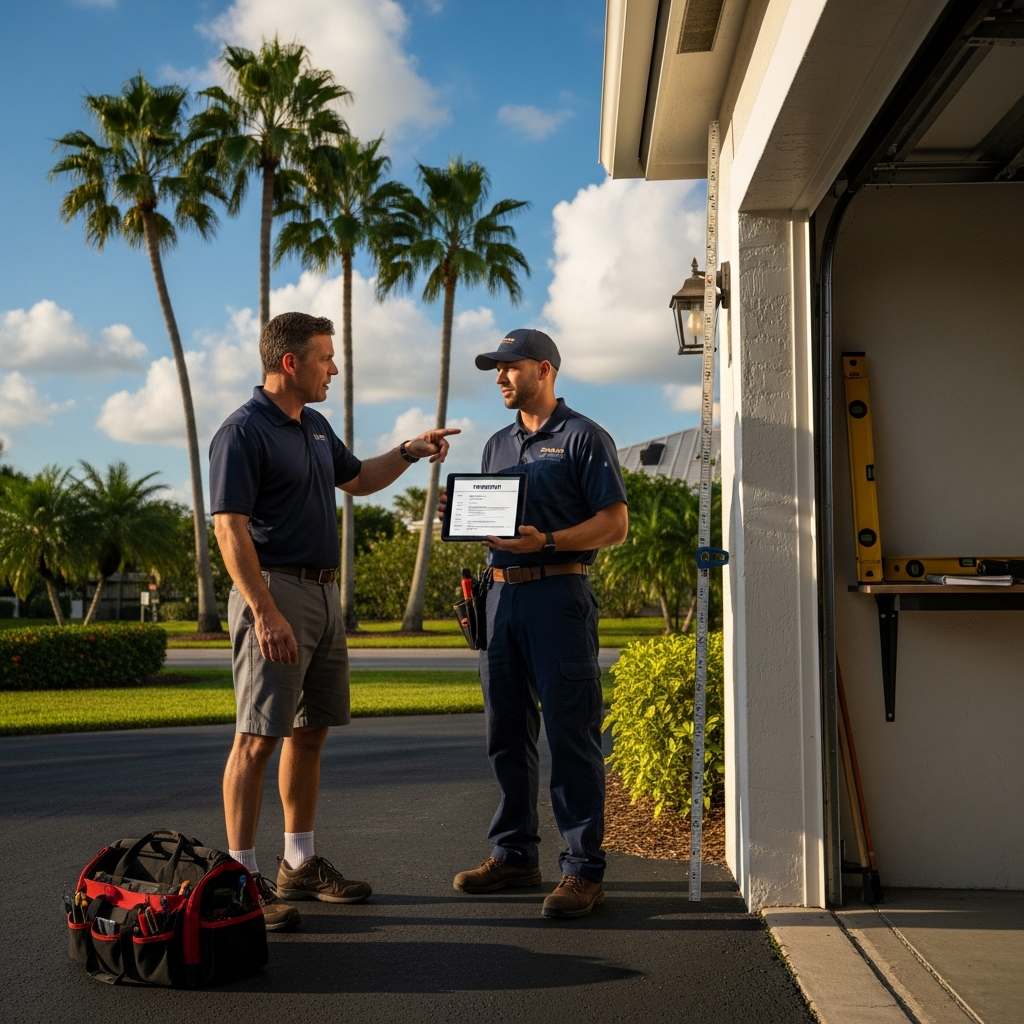
Initial consultation and measurement: The process begins with a site visit to measure the opening, inspect surrounding structure, and discuss design priorities such as insulation, windows, and finishes.
Product selection and ordering: After selecting the door and components, the contractor will order materials, accounting for lead times on custom finishes or impact-rated panels.
Permitting and code compliance: The contractor submits required paperwork and ensures the proposed installation complies with local wind-load requirements and building permit processes.
Delivery and staging: Materials arrive on-site and are staged for efficient workflow. Verify that components match the order before work commences.
Installation day: Technicians assemble the door, install tracks, springs, and the opener, test balance and safety features, and perform final adjustments.
Final inspection and handover: A final walk-through confirms operations, explains maintenance tasks, and transfers warranty documentation.
Detailed Steps Before Installation Day
Proper preparation before installation day minimizes delays and sets up the job for success.
Confirm measurements and order details: Verify height, width, headroom, and any custom features. Confirm paint or finish options and confirm impact glass or extra reinforcement if necessary.
Check for required structural repairs: Repair any frame damage, rot, or compromised headers prior to door arrival.
Verify permit approvals: Ensure permits are approved and posted, if required. This avoids stoppages once the crew arrives.
Prepare property access: Clear pathways, move vehicles, and protect flooring. Ensure the crew has access to power and a safe place to stage materials.
What Happens on Installation Day
On installation day, the crew follows a systematic workflow. Communication and a clear plan reduce time on site and minimize disruption.
Arrival and initial briefing: The crew reviews the plan, confirms measurements, and outlines the day’s timeline.
Removal of the existing door: If replacing an old door, technicians remove panels, tracks, and hardware. Care is taken to handle springs, which are hazardous if not secured properly.
Preparation of the opening: The opening is cleared, and the frame is examined. Any last-minute adjustments to the structure are made before new components are installed.
Mounting the new door: Technicians install the bottom seal, assemble and attach door sections, secure tracks and rollers, and install the spring system. If a torsion spring system is used, it will be carefully calibrated to balance the door weight.
Opener installation and programming: The opener is mounted, connected to power, and programmed to travel limits. Safety reversal systems and remote controls are tested.
Operational testing: The crew tests the door through multiple open/close cycles, checks sensor alignment, listens for unusual noises, and makes adjustments to spring tension and track alignment.
Quality Assurance and Safety Tests
Quality checks are essential to verify the installation meets performance and safety standards. Below are routine tests and adjustments completed during final acceptance.
Auto-reverse test: Place obstruction at threshold to verify the door reverses. This is required for safety and is checked multiple times during setup.
Sensor functionality: Confirm photo-eyes are secure, clean, and correctly aligned to prevent accidents.
Balance testing: Disconnect the opener and manually lift the door to ensure it stays in place when partially opened. Proper balance reduces wear on springs and openers.
Noise assessment: Run the door at different speeds to detect loose hardware or damaged rollers that cause noise or vibration.
Typical Installation Challenges and How They Are Handled
Experienced installers anticipate common issues and address them proactively to keep projects on schedule and safe.
Unforeseen structural damage: If the frame or header shows rot or damage, installers will recommend repair or reinforcement. Some repairs can be performed concurrently while others may require additional subcontracting.
Delivery mismatches: Verify all delivered components immediately. If a panel or critical part is missing, contractors will work to source replacements quickly to avoid delays.
Weather interruptions: Florida storms can interrupt exterior work. Installers may pause operations for safety and reschedule critical steps if necessary.
Permit delays: Sometimes permit processing takes longer than anticipated. Maintain open communication with local authorities and your installer to minimize waiting times.
Mid-Project and Communication Best Practices
Clear communication between homeowner and installer keeps expectations aligned and timelines realistic.
Daily briefings: Request a short briefing at the start and close of each workday to stay updated on progress, changes, and any needed homeowner decisions.
Document changes: If you request modifications or upgrades during installation, document them in writing with revised timelines.
Confirm warranties and maintenance tips: Before final payment, confirm all warranty terms, service intervals, and contact information for future service calls.
After Installation: What to Expect
Once installed, the door will settle into normal operation over several weeks. Minor adjustments may be needed as hardware beds in and seasonal temperature changes affect materials.
Initial break-in period: Expect to hear minor settling noises the first few days. If loud or abnormal noises persist, contact the installer for adjustments.
Follow-up check: Schedule a follow-up inspection within the first few months to reassess spring tension, opener function, and sensor alignment.
Maintenance plan: Put a maintenance schedule in place for semi-annual inspections and lubrication to extend the door’s life and maintain safe operation.
FAQ
Q: How long does it take to install a garage door?
A: Most standard residential installations are completed in a single day. Larger or customized doors and any required structural repairs may take additional time.
Q: Will installers remove my old door and dispose of it?
A: Many professional installers include removal and disposal of the old door. Confirm with your contractor ahead of time to understand what is included in the service.
Q: What should I do to prepare my garage before the crew arrives?
A: Clear the garage and surrounding area of vehicles and stored items. Secure pets and remove fragile items to protect them from dust and vibration.
Q: Are there special considerations for Palm Beach County permitting?
A: Yes, Palm Beach County may have wind-load and hurricane preparedness requirements. Your installer should handle permit submission and ensure compliance with local building codes.
Next Steps and How to Schedule
Once you are comfortable with product choices and the proposed timeline, schedule a specific installation date. Verify the contractor’s insurance, ask for references or photos of recent local work, and ensure you have the proper permits. If you want a professional team to guide you through the entire process from selection to final inspection, reach out to experienced local providers. When ready, request a consultation with proven installers who know Palm Beach requirements and can provide thorough support during every step of the installation process.
For seamless planning and local expertise, contact professional garage door installation to arrange an on-site assessment and start the process with confidence.