Understanding the garage door repair process helps homeowners in Palm Beach, Florida make informed decisions and ensures repairs are completed safely and efficiently. From the initial call to the final testing and documentation, knowing what to expect minimizes surprises and makes the service experience smoother. This guide details the typical steps a professional follows, safety practices to expect, and how to prepare your home for a successful repair. For examples of how companies describe their repair workflows, review reputable garage door repair services to see common process elements and service promises.
Initial contact and scheduling
The repair process usually begins with a phone call or online contact. During this initial exchange, you should provide clear information about the symptoms, any unusual sounds, and when the problem began. Reliable providers will ask targeted questions to prioritize safety—such as whether the door is stuck open or if there are visible signs of spring breakage—and will offer scheduling options based on urgency.
Pre-visit expectations
Before the technician arrives, gather information about your door: manufacturer, age, existing warranties, and service history. Clear the work area by moving vehicles and removing objects from the garage floor. If your door is stuck in an unsafe position, notify the provider so they can bring additional tools or arrange an emergency response.
Arrival and safety assessment
On arrival, a professional technician will perform an immediate safety assessment. This includes checking for loose or hanging components, verifying that electrical circuits are safe to work on, and ensuring the door is not at risk of sudden movement. Technicians will explain the plan and expected timeline before beginning work, and they will typically wear protective equipment and use the correct tools for the job.
Diagnostic inspection and diagnosis
The diagnostic phase is thorough: the technician examines the entire system, not just the reported symptom. Typical checks include inspecting springs and cables, testing the balance of the door, checking track alignment and roller condition, evaluating the opener’s performance, and testing safety sensors and electrical components. A clear diagnosis helps determine whether a repair or part replacement will resolve the issue long-term.
Estimate and approval
After diagnosing the problem, the technician provides a written estimate detailing recommended repairs, expected parts, labor, and warranty coverage. This transparency helps you decide on repairs with full knowledge of what will be performed. Reputable companies explain options and answer questions before proceeding, avoiding surprise charges and ensuring customer consent.
Parts sourcing and replacement
If parts need replacement, technicians will either carry commonly used components or order the required items. Providers often explain the advantages of OEM vs. compatible parts and recommend the best option for durability and fit. When parts must be ordered, the technician will schedule a return visit or coordinate temporary safety measures until replacement is completed.
Performing the repair
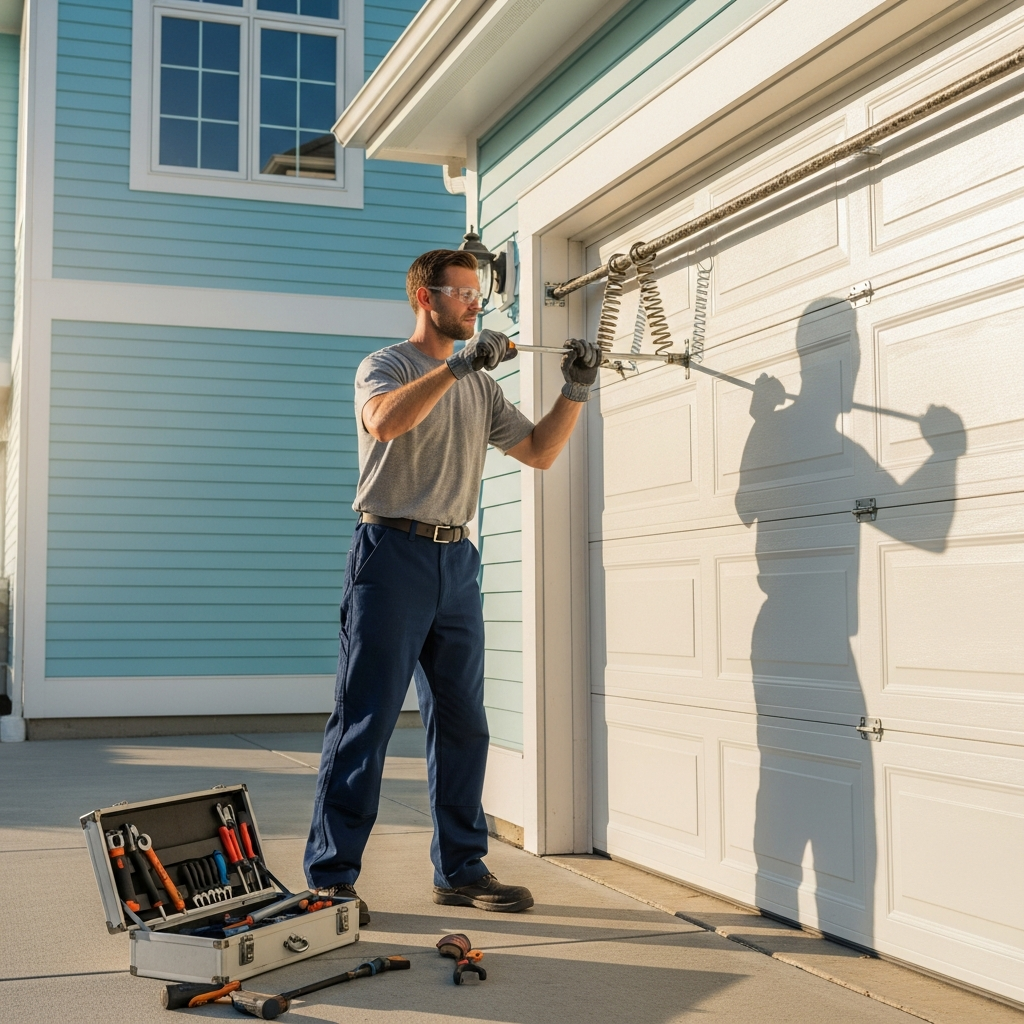
During repair, technicians follow manufacturer and industry guidelines. Common services include spring replacement, cable replacement, roller upgrades, track realignment, opener motor repair, and sensor adjustments. Safety practices during repairs include using proper winding bars for torsion springs, securing the door during work, and using protective eyewear and gloves. Technicians will also remove and dispose of worn parts per local regulations.
Testing and quality checks
After completing repairs, a thorough testing protocol ensures reliable operation. The technician will cycle the door multiple times, check balance and force settings, and verify sensor alignment and auto-reverse functionality. They will also inspect hardware torque and retest the door under typical loads to confirm smooth operation.
Documentation and warranties
Upon completion, expect written documentation that outlines the work performed, parts installed, and any maintenance recommendations. Warranties on parts and labor should be explained clearly, including the duration and any conditions that apply. Keep this documentation for future reference and to support any warranty claims.
Cleanup and customer review
Professional technicians clean up the work area, remove debris and old parts, and ensure no tools or fasteners are left behind. A final walkthrough with the homeowner demonstrates the door’s operation and addresses any questions. Good technicians encourage feedback and will provide guidance about signs to watch for after the repair.
Follow-up and preventive maintenance
Reputable companies often follow up to confirm performance and may offer a maintenance plan to reduce future issues. Preventive maintenance includes lubrication, tightening fasteners, roller inspection, and seasonal checks adjusted for coastal weather. Routine upkeep extends the life of parts and reduces the chance of emergency repairs.
Middle section: timeline and expectations
Repair timelines vary depending on the complexity and whether parts must be ordered. Many minor repairs are completed the same day, while more complex jobs or those requiring special-order parts may take longer. Ask for an estimated timeline upfront so you can plan accordingly. If you would like to compare typical service timelines and what technicians prioritize during visits, reviewing local garage door repair services can provide helpful context and set expectations about turnaround times.
Common questions during the process
Homeowners often ask about safety, warranties, and the longevity of repairs. Technicians should answer these clearly, explain preventive steps you can take, and advise on any telltale signs that would warrant a subsequent visit. Communication is a key part of professional service; a good provider keeps you informed throughout the repair.
Special considerations for coastal homes
Beach-adjacent properties face corrosion and humidity that can affect metal hardware and electronics. When repairing or replacing parts, ask about corrosion-resistant options and protective coatings. Proper seals, stainless steel components, and regular lubrication help combat coastal wear and extend component life.
What to avoid during repairs
Avoid interfering with technicians while they perform tension-related repairs or electrical work. These steps require concentration and special tools—interrupting a procedure can lead to mistakes or safety hazards. Also, avoid attempting spring or cable work yourself; the unfamiliar technique and tension can cause severe injury.
Frequently asked questions
-
Q: How quickly can a technician fix common problems? A: Many common issues are resolved the same day, but parts availability and complexity determine the exact timeline. Technicians should provide realistic estimates based on their initial diagnosis.
-
Q: Will the technician need to remove the door for repair? A: Removal is rarely required for typical repairs. Full door removal is generally reserved for major structural replacement or significant panel damage.
-
Q: What should I do if I’m not satisfied with the repair? A: Contact the service provider to describe your concerns. Reputable companies address issues covered by warranty and will schedule follow-up service if necessary.
-
Q: Can repairs be scheduled around my availability? A: Most providers offer flexible scheduling during regular service hours and may offer emergency support for urgent safety issues.
-
Q: How do professionals ensure safety after a repair? A: Technicians test balance, auto-reverse, and sensor alignment and confirm proper operation before leaving. They also provide documentation and recommendations for ongoing care.
Final steps and call to action
Understanding the repair process empowers homeowners to work confidently with technicians and ensures a smoother service experience. If you need a professional evaluation or want to schedule a repair in the Palm Beach area, contact experienced local technicians or review established garage door repair services to prepare for your appointment and learn more about standard procedures. Taking these steps will help ensure safe, efficient repairs and reliable garage door performance for years to come.