Introduction
Proper maintenance after garage door installation is essential, especially in Palm Beach, Florida, where humidity, salt air, and seasonal storms can quickly accelerate wear and corrosion. A proactive maintenance routine preserves function, extends service life, and helps prevent unexpected failures. This guide outlines practical maintenance tips tailored for Palm Beach homes and provides a checklist you can follow year-round. If you prefer professional maintenance and inspections, schedule services with trusted experts who offer local experience and tailored care; many homeowners start by contacting professional garage door installation providers for regular maintenance plans.
Why Maintenance Is Especially Important in Palm Beach
Coastal environments increase the risk of corrosion, accelerated wear, and weather-related damage. Salt can pit metal surfaces, humidity can affect wooden components and insulation, and hurricane-force winds can stress the entire system. Routine maintenance helps detect early signs of deterioration and ensures the door remains safe, secure, and reliable through seasonal changes.
Monthly Maintenance Checklist
Performing a few simple checks each month prevents most minor issues from developing into major repairs.
Visual inspection: Walk around the door and look for obvious signs of wear, rust, dents, or loose hardware.
Check weather seals: Ensure bottom, side, and top seals are intact and free from cracks or detachment.
Test auto-reverse: Place a stationary object across the threshold to ensure the door reverses when contacting it. Also test the photo-eye sensors by interrupting the beam.
Listen for unusual noises: Grinding, screeching, or clanking can indicate worn rollers, loose hardware, or failing opener components.
Semi-Annual Maintenance Tasks
Twice a year you should perform more thorough checks and basic servicing to maintain reliable operation and reduce long-term costs.
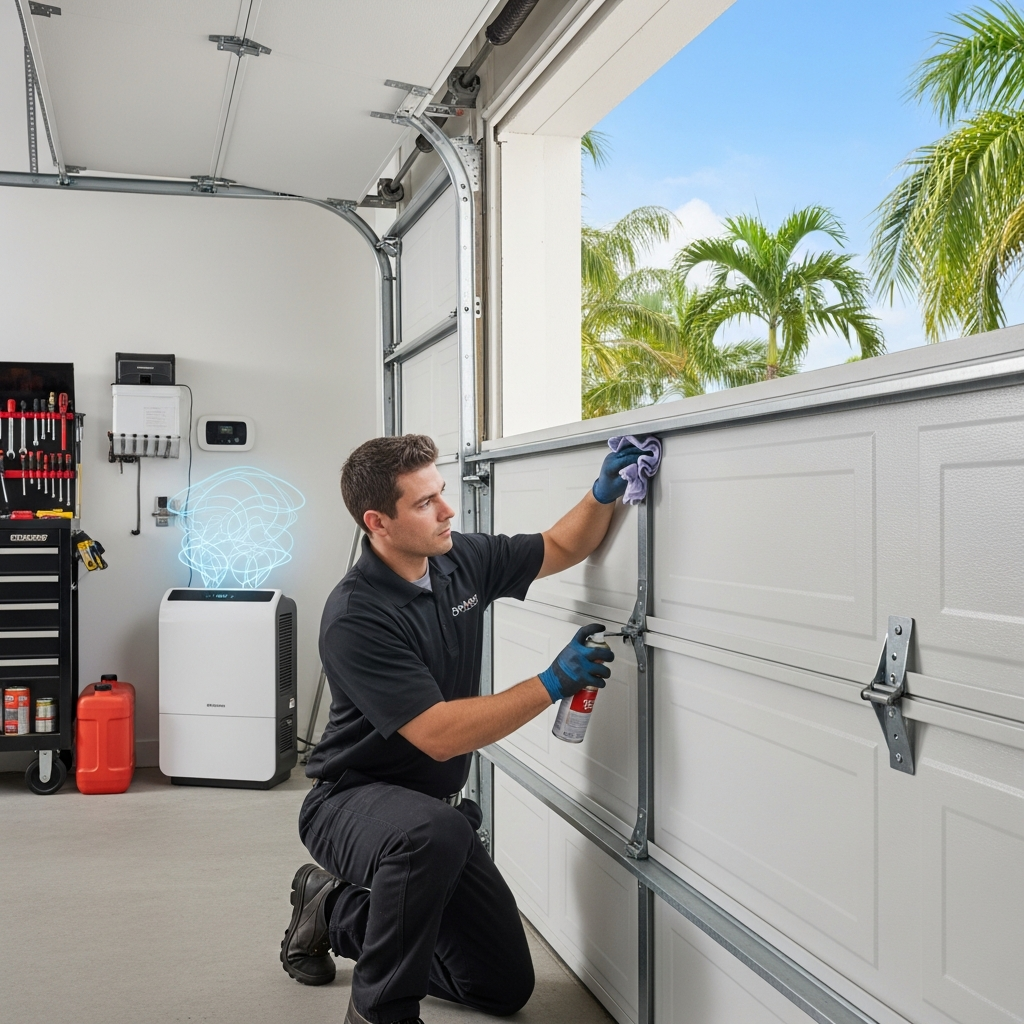
Lubrication: Apply a silicone-based spray lubricant to rollers, hinges, bearings, and springs per manufacturer recommendations. Avoid heavy grease that attracts dirt.
Inspect springs and cables: Look for signs of wear, rust, or fraying. Do not attempt to adjust springs yourself—call a professional for repairs and adjustments.
Check roller condition: Nylon rollers are quieter and require less maintenance than steel rollers, but inspect all rollers for chips, cracks, or excessive wear and replace as needed.
Test balance: Disconnect the opener and lift the door manually to the midpoint. A balanced door will stay in place; if it drifts up or down, call a technician to check spring tension.
Annual Maintenance and Inspection
Once a year, schedule a full inspection and service with a trained technician who can identify issues beyond routine homeowner checks.
Comprehensive hardware check: Technicians will inspect tracks, fasteners, brackets, rollers, and hinges for wear and corrosion and replace any compromised hardware.
Opener and control inspection: Openers should be tested for smooth operation, proper force settings, and updated firmware or safety features if applicable.
Weatherproofing and seal replacement: Replace any worn or brittle weather seals to prevent moisture intrusion and reduce pest access.
Detailed corrosion treatment: For coastal homes, technicians can apply protective coatings, replace sacrificial fasteners, and recommend upgraded stainless or galvanized components.
Special Considerations for Coastal and Hurricane-Prone Areas
Palm Beach homeowners must account for higher wind loads and salt exposure. Taking special precautions helps preserve the door and honors local building requirements.
Use corrosion-resistant hardware: Replace exposed fasteners and hardware with stainless or hot-dipped galvanized options to resist rust.
Regularly rinse exterior surfaces: Gently rinse the exterior panels and hardware with fresh water to remove salt deposits that accelerate corrosion.
Inspect impact-rated components: If you have an impact-rated door or windows, inspect seals and frames after storms to confirm integrity.
Check anchoring and reinforcement: Verify that hurricane straps, struts, and anchors remain tight and undamaged after high winds or storms.
Common Problems and How to Address Them
Being familiar with common issues helps you respond quickly and schedule professional service before small problems become costly.
Door is difficult to open: Likely causes include poor lubrication, misaligned tracks, worn rollers, or an out-of-balance door. Start with lubrication and a quick visual inspection; contact a professional for roller replacement or balance adjustment.
Door reverses unexpectedly: Check sensor alignment and lens cleanliness. If sensors are aligned and clean, the problem could be a sensitivity setting on the opener or an issue with the wiring.
Excessive noise or vibration: Worn rollers, loose hardware, or imbalanced panels often cause noise. Inspect rollers and fasteners and schedule roller replacement or hardware tightening.
Rust and corrosion: Address early-stage corrosion with cleaning and protective coatings. Replace heavily corroded parts and upgrade to stainless or galvanized hardware where possible.
DIY Checks vs Professional Maintenance
Homeowners can perform many visual checks and simple maintenance tasks safely, but some jobs must remain with professionals due to hazard risks and code requirements.
DIY tasks: Visual inspection, light lubrication of rollers and hinges with appropriate products, cleaning sensors, and replacing weather seals are typically safe for homeowners.
Professional tasks: Spring adjustments, cable replacement, and any repairs involving spring tension or complex wiring should be completed by trained technicians to avoid injury and ensure code compliance.
FAQ
Q: How often should I lubricate my garage door components?
A: Lubricate rollers, hinges, and bearings at least twice a year. In coastal areas or with heavy use, consider quarterly lubrication to reduce wear.
Q: Can I pressure-wash my garage door to remove salt and grime?
A: Use a gentle rinse with fresh water rather than high-pressure washing, which can force water into seals and cause damage. Wipe down hardware and apply protective coatings as needed.
Q: How do I know if my door is properly balanced?
A: With the opener disconnected, manually lift the door to the midway point. A properly balanced door should remain in place. If it drifts up or down, arrange for a technician to inspect springs and cables.
Q: Should I upgrade hardware after living in Palm Beach for several years?
A: Consider upgrading to stainless or galvanized hardware if you notice corrosion. Regular replacement of vulnerable components prolongs overall door life and reliability.
Final Recommendations and Scheduling Professional Support
Consistent maintenance tailored to Palm Beach conditions protects your investment and keeps your garage door functioning reliably. Keep a log of inspections, lubrication dates, and service calls to provide a maintenance history for future buyers or warranty claims. For routine semi-annual servicing or in-depth annual inspections, rely on reputable local professionals who understand coastal requirements and building codes.
If you prefer to arrange professional maintenance or want a service plan that covers periodic inspections and priority response after storms, contact local specialists to discuss options and scheduling. Professional teams can provide tailored maintenance plans, emergency response, and peace of mind.
To set up a maintenance visit or enroll in a care plan designed for Palm Beach homes, reach out to professional garage door installation to ensure your system receives the attention it needs to perform reliably year after year.