How to Choose Coastal Grade Garage Door Components in Fort Lauderdale
Most people think that buying a standard heavy-duty garage door is enough to protect their home, but the truth is that South Florida’s marine atmosphere will destroy standard hardware in just a few seasons. In Fort Lauderdale, the combination of intense ultraviolet light, high relative humidity, and salt spray from the Atlantic Ocean creates a highly corrosive environment. A door system built with standard builder-grade materials will quickly succumb to rust, binding, and structural failure. Investing in specialized materials is not about aesthetic preference; it is about choosing components specifically designed to withstand these relentless environmental forces.
When selecting parts for your home, understanding how different materials interact with salt and moisture is critical. Utilizing proper coastal garage door care means matching the physical properties of your door panels, rollers, and hinges to the harsh local climate. By making informed material choices, you can dramatically extend the life of your entire system, preserve your home’s curb appeal, and avoid frequent, unexpected repair bills.
The Fort Lauderdale Coastal Climate Challenge
Fort Lauderdale features a tropical rainforest climate characterized by hot, humid summers and warm, moist winters. The local housing stock ranges from historic mid-century modern homes in neighborhoods like Victoria Park to newer waterfront estates along the Intracoastal Waterway. Regardless of the home’s age, garage doors in this region face a constant barrage of salt air. Salt is highly hygroscopic, meaning it naturally attracts and retains moisture from the air, keeping water in contact with metal surfaces far longer than in inland areas.
Additionally, local wind-borne salt particles act as an abrasive, micro-scratching standard protective finishes and exposing the raw steel underneath. This accelerates the oxidation process, leading to the rapid development of red rust. To combat this, homeowners must evaluate every component of their garage door system, from the large exterior panels down to the smallest hinge, roller, and fastener, ensuring each one is built to resist corrosion.
Comparing Garage Door Panel Materials
The garage door panels represent the largest surface area exposed to the elements. Choosing the wrong panel material can lead to faded finishes, warping, denting, or deep structural rust. Here is how the most common materials perform in a coastal environment.
Powder-Coated and Galvanized Steel
Steel remains a highly popular option due to its strength and resistance to wind load forces, which are critical during hurricane season. However, raw steel will rust almost immediately in Fort Lauderdale. To prevent this, manufacturers apply a zinc coating through a process called hot-dip galvanization. For maximum protection, a multi-layer baked-on polyester primer and topcoat, or a commercial-grade powder coating, is applied over the galvanized layer.
While highly durable, even the best coated steel requires regular monitoring. If a stray pebble or lawnmower projectile chips the outer coating, salt air will quickly penetrate to the steel core, causing localized bubbling and rust. Regular inspections are necessary to identify and patch these small surface breaches before they spread.
Vinyl and Fiberglass Panels
Vinyl and fiberglass are inherently immune to the chemical process of rust, making them excellent candidates for homes located directly on or near the waterfront. Vinyl panels are exceptionally tough, dent-resistant, and feature solid color throughout, meaning scratches do not reveal a contrasting under-layer. They are also highly resistant to salt spray and moisture absorption.
Fiberglass doors offer a similar immunity to rust and can be molded to mimic natural wood grain patterns beautifully. However, fiberglass can become brittle over years of exposure to intense South Florida UV rays, and the outer protective finish may eventually require recoating to prevent fiber bloom. Despite this, both materials offer superb longevity compared to standard painted steel in high-salinity zones.
If you want it handled correctly the first time, consider professional garage door installation and maintenance tips palm beach florida in Fort Lauderdale.
Aluminum and Glass
Anodized aluminum frame doors with tempered glass inserts offer a sleek, modern aesthetic that fits perfectly with contemporary Fort Lauderdale architecture. Aluminum naturally forms a protective oxide layer that resists corrosion much more effectively than untreated steel. When anodized or powder-coated, aluminum frames provide outstanding resistance to salt air.
The primary consideration with aluminum is its susceptibility to denting from impacts, as well as the need for impact-rated glass to meet local wind load and hurricane building codes. For coastal properties, utilizing marine-grade aluminum alloys ensures the frame will not pit or oxidize when subjected to constant ocean breezes.
Comparing Roller and Hardware Materials
While panels are the most visible component, the moving parts hidden behind them do the heavy lifting. In a humid coastal environment, these moving parts are highly vulnerable to seizing, rusting, and wearing down prematurely.
Steel Rollers vs. Nylon Rollers
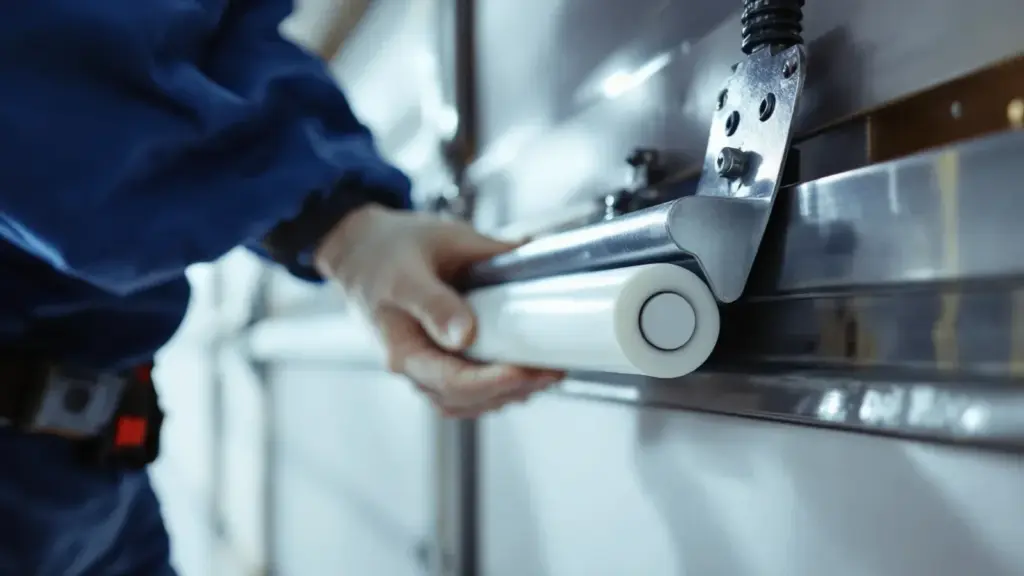
Traditional garage doors often use bare steel rollers with exposed ball bearings. In Fort Lauderdale, these rollers are a recipe for trouble. Moisture and salt find their way into the unsealed bearings, causing them to lock up. When a roller stops rolling, it slides along the metal track instead, creating immense friction, putting excess strain on the opener, and creating loud, grating noises.
In contrast, heavy-duty nylon rollers feature sealed ball bearings. The nylon wheel itself runs quietly and does not rust, while the sealed bearing chamber keeps salt, humidity, and grit out of the lubricated inner workings. This simple upgrade prevents premature roller failure and ensures smooth, quiet operation even when the air is thick with humidity.
Standard Steel Hinges vs. Heavy-Gauge Galvanized Hinges
Hinges connect the door panels together and hold the roller stems in place. Standard thin-gauge steel hinges will rapidly develop a layer of red rust, which can bind the hinge joint and lead to panel cracking. To prevent this, coastal systems should utilize heavy-duty, high-gauge hot-dipped galvanized steel hinges or, in extreme coastal exposures, stainless steel hinges. If you are already noticing brown stains running down your door sections, it may be time to seek professional hinge replacement before the structural integrity of your panels is compromised.
Coastal Grade Material Comparison
This table compares the performance of various garage door materials when exposed to the humid, salty conditions typical of Fort Lauderdale coastal zones.
| Material / Component | Rust & Corrosion Resistance | Durability & Impact Resistance | UV Degradation Resistance | Maintenance Requirements |
|---|---|---|---|---|
| Powder-Coated Steel | Moderate (Requires intact coating) | High (Excellent wind load strength) | High (With UV-stable coatings) | Moderate (Must touch up scratches immediately) |
| Vinyl Panels | Excellent (Inherent immunity) | High (Flexible and dent-resistant) | Moderate to High (Requires UV inhibitors) | Low (Occasional washing with mild soap) |
| Anodized Aluminum | High (Resists pitting) | Moderate (More susceptible to dents) | Excellent (Will not fade or degrade) | Low (Regular rinsing recommended) |
| Nylon Rollers (Sealed) | Excellent (Bearings are protected) | High (Long service life) | Not Applicable (Shielded inside track) | Very Low (No lubrication required for bearings) |
| Standard Steel Rollers | Poor (Prone to seizing) | Moderate (Degrades quickly when rusted) | Not Applicable | High (Requires frequent lubrication) |
Which Material is Right for Fort Lauderdale Homes?
Many Fort Lauderdale homeowners rely on expert garage door installation and maintenance tips palm beach florida in Fort Lauderdale for exactly this.
Choosing the ideal material depends largely on your home’s proximity to the water and your willingness to perform regular maintenance. For properties situated directly on the Intracoastal or within a mile of the beach, vinyl, fiberglass, or anodized aluminum panels paired with stainless steel hardware and sealed nylon rollers provide the ultimate defense against salt spray. These materials minimize the physical impact of the salty air, ensuring your door continues to run smoothly without constant oversight.
For homes situated further inland, high-quality galvanized and powder-coated steel panels can perform exceptionally well, provided you remain diligent about keeping them clean. No matter where your home is located, upgrading to sealed nylon rollers and heavy-duty galvanized hinges is always a smart investment. These small upgrades protect the mechanical function of your door and reduce the load on your automatic opener. Understanding the corrosive effects of marine air helps you make proactive choices to keep your system safe and reliable.
Ultimately, a garage door is only as good as the components holding it together. If your current door is showing signs of rust, making squeaking noises, or struggling to open, it is wise to consult a specialist. A professional technician can inspect your tracks, springs, and hinges to determine if a simple hardware upgrade or a full-system replacement is the best path forward to ensure your home remains protected. When scheduling assistance, choosing a licensed local expert ensures your system is set up to meet all Broward County wind-load requirements.
Frequently Asked Questions
Can I use standard WD-40 to lubricate my coastal garage door?
No, standard WD-40 is a degreaser and solvent rather than a long-lasting lubricant, and it can attract dirt, salt, and sand, creating an abrasive paste that wears down moving parts. Instead, use a high-quality silicone spray or a specialized lithium-based garage door lubricant that repels moisture and salt.
How often should I wash my coastal garage door to prevent rust?
It is recommended to gently rinse your garage door panels and exterior hardware with fresh water and mild soap at least once every three months, or more frequently if you live directly on the waterfront. This simple step removes accumulated salt crystals before they can penetrate the protective coatings.
Are nylon rollers really better than steel rollers in humid climates?
Yes, nylon rollers with sealed ball bearings are far superior for humid climates because the sealed casing keeps salty moisture and debris out of the bearings. Steel rollers feature open bearings that rust and seize quickly when exposed to high humidity and ocean air.
Does a rust-resistant garage door still need hurricane reinforcement?
Yes, rust resistance and wind-load rating are entirely different specifications. Any new or modified garage door in Fort Lauderdale must comply with strict local building codes for hurricane wind loads, regardless of whether it is made of steel, vinyl, or aluminum.
Protect Your Home with Expert Coastal Care
Keeping your garage door functioning perfectly in South Florida’s unique climate requires specialized knowledge and high-grade materials. If your door is starting to show its age, squeak loudly, or struggle against the salt air, let the local experts evaluate your system. Feel free to contact Eric’s Garage Door Repair Service for professional, reliable support tailored to our coastal environment. You can reach out directly via our garage door service page to schedule an inspection, or learn more about finding the right assistance in our guide on selecting a coastal garage door specialist.