
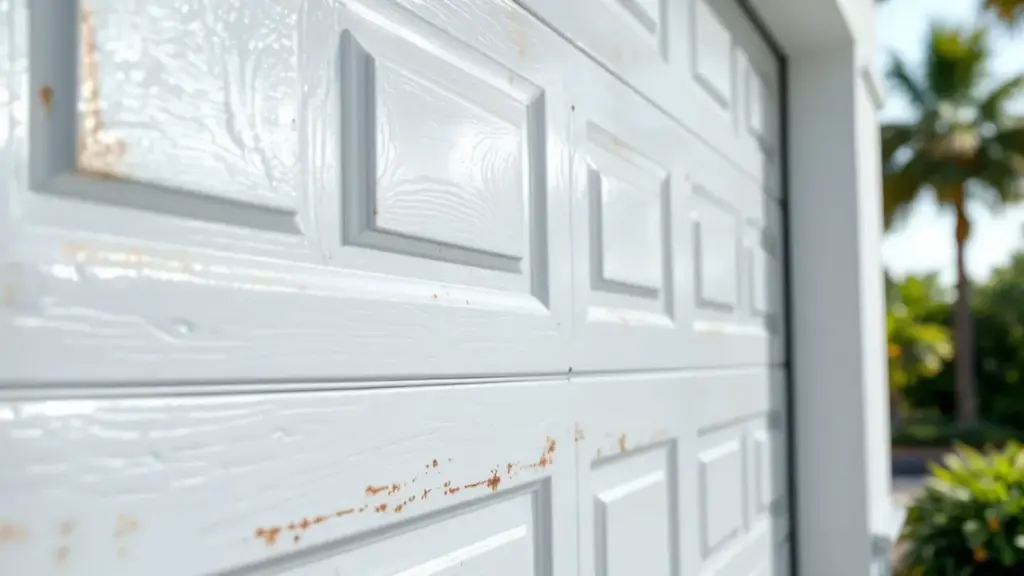
Debunking Myths About the Effects of Salt Air on Garage Doors in Fort Lauderdale
According to atmospheric research, marine salt aerosols can travel miles inland, carried by persistent coastal winds. In a coastal city like Fort Lauderdale, where the Atlantic Ocean meets miles of inland canal systems, this airborne salt acts as a constant, invisible corrosive force. For homeowners across Broward County, the garage door is often the largest moving piece of metal on the property, making it highly vulnerable to these environmental factors.
Despite the physical reality of coastal living, many homeowners rely on outdated advice or common misconceptions when it comes to maintaining their garage entryways. Misunderstanding the chemical relationship between sea salt, high humidity, and metal alloys can lead to unexpected mechanical failures and expensive structural damage. By addressing these misconceptions head-on, property owners can implement more effective, long-term strategies for coastal garage door care to keep their systems running smoothly for years.
The Reality of Coastal Corrosion in Broward County
Fort Lauderdale features a unique microclimate characterized by high relative humidity, intense solar radiation, and wind-driven sea salt. This combination creates an ideal environment for electrochemical oxidation, commonly known as rusting. Unlike dry climates where metal remains stable, the moisture in the air dissolves airborne salt particles, forming a thin electrolyte film on exposed metal surfaces. This film accelerates the breakdown of zinc coatings on galvanized steel and eats away at unprotected aluminum components.
This environmental reality affects every neighborhood, from the direct oceanfront properties along A1A to homes miles inland along the New River and Middle River canals. Because salt air penetrates deep into residential neighborhoods, no local home is entirely exempt from its effects. Understanding the science behind this corrosion is the first step in protecting your property and making informed decisions about home upkeep.
Myth 1: Salt air only affects homes within sight of the beach.
Reality: Many inland Fort Lauderdale residents believe that if they cannot see the ocean waves from their driveway, their home is safe from marine corrosion. In reality, wind patterns and coastal storms push salt micro-particles miles inland. The extensive network of saltwater canals throughout Fort Lauderdale, from Las Olas to the Isles, acts as a local highway for humid, salt-laden air.
Even homes located west of Federal Highway or closer to Interstate 95 experience measurable salt deposition on exterior fixtures. While the concentration of salt is highest immediately adjacent to the shoreline, the high humidity levels of South Florida ensure that even lower concentrations of salt inland can still cause significant oxidation over time. Neglecting your system because you live a few miles inland often results in premature component failure and an unexpected need for fort lauderdale rusting garage door hinges replacement.
Myth 2: Standard galvanized steel doors are completely rust-proof.
If you want it handled correctly the first time, consider professional garage door installation and maintenance tips palm beach florida in Fort Lauderdale.
Reality: Galvanization is a process where steel is coated with a thin layer of protective zinc. While this coating provides excellent protection against basic freshwater exposure, it is not an absolute barrier against marine salt. Salt ions actively break down the protective zinc oxide layer on the steel surface, exposing the raw, vulnerable steel underneath.
Once the zinc barrier is breached, the underlying steel rapidly oxidizes, leading to bubbling paint, blistering, and deep structural pitting. Standard builder-grade galvanized doors installed in South Florida require additional protective coatings and regular cleaning to survive the local climate. Believing that a galvanized rating makes a door impervious to the elements often leads to neglected maintenance and rapid deterioration of the bottom sections where salt and moisture accumulate.
Myth 3: WD-40 is the best lubricant to protect coastal garage door parts from salt.
Reality: Spraying standard WD-40 on your rollers, hinges, and springs can actually accelerate wear in a coastal environment. Standard WD-40 is primarily a solvent and water displacer, not a heavy-duty lubricant. When applied to garage door components, it leaves behind a thin, sticky residue that acts like a magnet for salt dust, sand, and airborne grime.
This abrasive mixture creates a grinding paste inside the bearing races of your rollers and between the joints of your hinges, accelerating physical wear every time the door operates. Instead of household solvents, coastal systems require high-quality, non-tacky silicone or lithium-based lubricants specifically designed for garage door hardware. These professional products repel moisture and salt without attracting destructive grit, ensuring smooth mechanical operation during routine garage door maintenance.
Myth 4: If the door opens and closes quietly, the salt air isn’t doing any damage.
Reality: Corrosion is often a silent process that starts in hard-to-see areas long before it produces squeaks, grinding noises, or operational failures. Salt air tends to settle in the hidden pockets of the system, such as inside the hollow tracks, behind the hinge plates, and deep within the tightly wound coils of the torsion springs.
By the time a homeowner notices grinding sounds or physical resistance during operation, the structural integrity of the metal may already be compromised. This is especially dangerous for high-tension parts like torsion springs and lifting cables, which can snap suddenly under load due to microscopic salt pitting. Regular visual inspections and proactive care are essential to identify these hidden hazards before they turn into major structural failures.
Myth 5: Aluminum garage doors are immune to salt water and marine environments.
Many Fort Lauderdale homeowners rely on expert garage door installation and maintenance tips palm beach florida in Fort Lauderdale for exactly this.
Reality: While aluminum does not rust in the traditional sense like steel, it is highly susceptible to a different form of corrosion known as oxidation or pitting. When exposed to salt air, aluminum develops a powdery, white coating of aluminum oxide. Over time, this oxidation can eat tiny pinholes into the metal, weakening the panels and ruining the exterior finish.
Additionally, aluminum doors contain steel fasteners, hinges, and tracks. When these dissimilar metals touch in the presence of salty moisture, a process called galvanic corrosion occurs, rapidly destroying the softer metal. Choosing the right material requires weighing these distinct chemical vulnerabilities, which is discussed in our detailed coastal garage door material comparison.
Myth 6: Pressure washing is the best way to clean salt build-up off a garage door.
Reality: Using a high-pressure washer on your garage door is a recipe for system damage. The intense water pressure can strip away protective clear coats, lift the edges of vinyl weather stripping, and force salty water deep into the sensitive mechanical parts of the system.
Water forced into the sealed bearings of the rollers or inside the electric garage door opener housing can cause immediate rust and electrical short circuits. The proper way to clean salt residue from a coastal garage door is with a gentle rinse from a standard garden hose, a soft microfiber cloth or sponge, and a mild, non-abrasive detergent. Gentle washing removes the salt crust without compromising the physical integrity of the door’s protective coatings or mechanical assemblies.
Myth 7: Rainwater naturally cleans salt off the door, so manual washing is unnecessary.
Reality: While rain can wash some surface salt off the front face of the door, it rarely cleans the critical areas where salt does the most damage. Rainfall does not reach under the door joints, inside the tracks, or behind the weather stripping. In fact, light rain can dissolve airborne salt and wash it directly into these tight crevices, where it settles and concentrates as the water evaporates.
Relying on Florida’s frequent summer rainstorms to clean your garage door actually increases the risk of localized corrosion. Homeowners must manually rinse and wipe down the entire door assembly, paying special attention to the bottom seal, the vertical tracks, and the hinges, to ensure salt is completely cleared from the system.
Ready for the next step? Learn how garage door installation and maintenance tips palm beach florida services in Fort Lauderdale can help and reach out to the team.
Frequently Asked Questions
How often should I clean my garage door to prevent salt damage in Fort Lauderdale?
For homes within a mile of the coast, we recommend rinsing the door exterior and wiping down the internal tracks at least once a month. For homes located further inland, a thorough cleaning every three to six months is typically sufficient to prevent salt build-up.
Can I paint over rusted spots on my garage door to stop the salt damage?
Simply painting over rust will not stop the corrosion process. You must first scrape away the loose rust, clean the area with a wire brush, treat it with a rust-inhibiting primer, and then apply a high-quality, marine-grade exterior paint to seal out the salt air.
Why are my garage door cables fraying so quickly near the bottom of the door?
The bottom of the door is highly exposed to puddling salt water and damp sea breezes. Since steel lifting cables are under immense tension, salt corrosion quickly weakens the individual wire strands, causing them to fray and eventually snap if not serviced during regular garage door service visits.
Does salt air affect the electronic components of my garage door opener?
Yes, humid salt air can penetrate the housing of your garage door opener, leading to corrosion on the circuit board, sensors, and wiring terminals. Keeping the garage relatively dry and ensuring seals are intact helps protect these electrical parts.
Protect Your Fort Lauderdale Home from Coastal Corrosion
Living in Fort Lauderdale offers incredible waterfront views and a vibrant coastal lifestyle, but it also demands proactive home maintenance. The continuous exposure to salt air and high humidity means your garage door requires targeted attention to prevent rust, mechanical failure, and premature wear. Ignoring the early signs of salt damage can compromise your home’s security and lead to costly repairs down the road.
Rather than waiting for a broken spring or a jammed track to disrupt your day, schedule a professional inspection and tune-up. Our experienced technicians understand the unique demands of the South Florida climate and can help you keep your system running smoothly. Contact us today to book a comprehensive service appointment and ensure your garage door is fully prepared to withstand the coastal elements.