
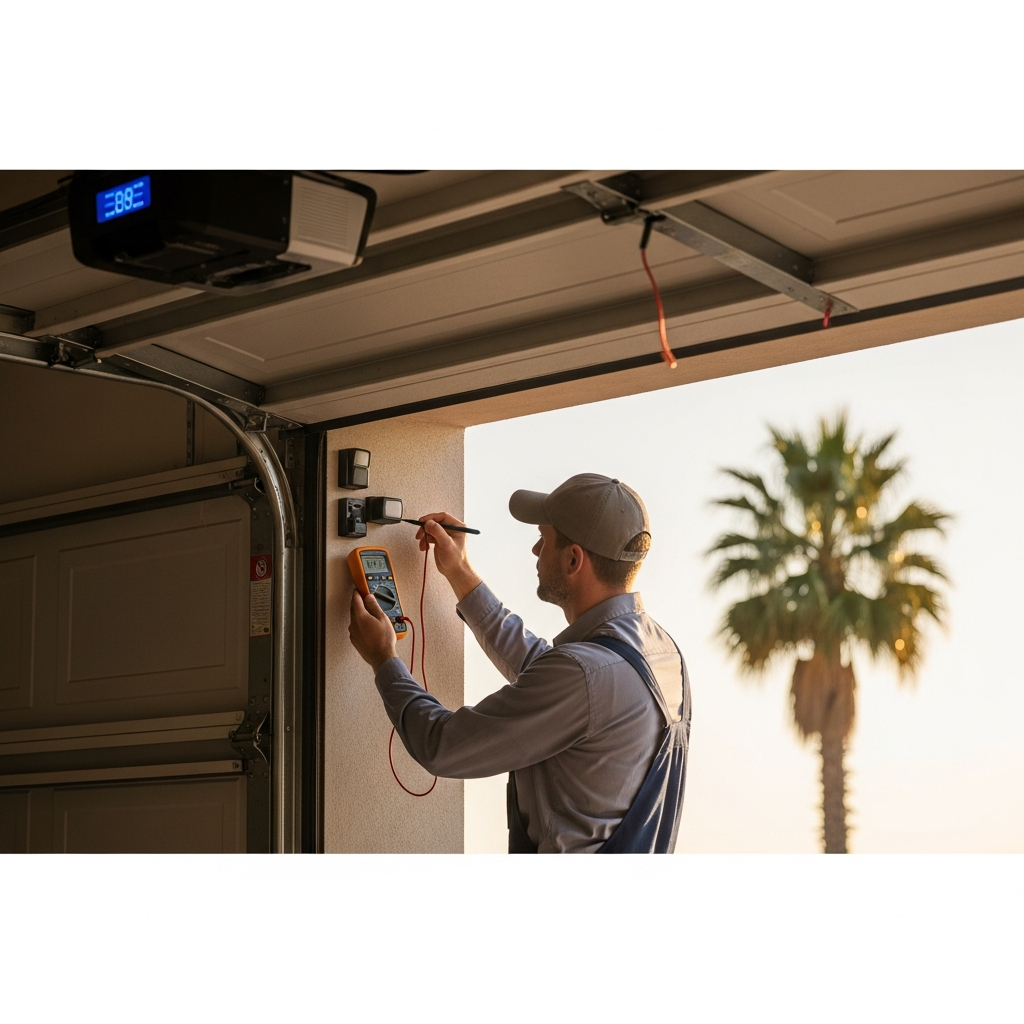
Troubleshooting a recently replaced garage door in Palm Beach, Florida, requires a methodical approach. Environmental factors like humidity, salt air, and occasional storms can affect performance, and new installations sometimes need minor adjustments after settling. This troubleshooting guide helps homeowners diagnose common issues, perform safe basic checks, and determine when to call a professional. If you are researching professional assistance, local specialists and installers often publish troubleshooting tips and service options—one example is garage door replacement services, which can connect you with experienced technicians.
Use this guide to walk through diagnostics for noise, misalignment, power and opener issues, sealing problems, and safety sensor malfunctions. Keep in mind that repairs involving springs, cables, and structural elements should be handled by trained professionals due to safety risks.
Before You Begin: Safety First
Safety should always come first when troubleshooting garage doors. Follow these precautions:
- Disconnect power to the opener when inspecting electrical components.
- Keep hands and fingers clear of moving parts, and never place body parts under a suspended door.
- Do not attempt to adjust or remove springs or cables yourself; they are under high tension and can cause serious injury.
- If you are unsure about any step, contact a licensed technician.
Common Problem: Door Won’t Open or Close
When a newly installed door fails to operate properly, begin with basic checks before moving on to mechanical diagnostics:
- Check power: Ensure the opener is plugged in and the circuit breaker has not tripped. If the opener has a battery backup, check battery condition.
- Remote and wall control: Replace batteries in remotes and confirm the wall button functions. Test with multiple remotes to rule out a faulty transmitter.
- Safety sensors: Inspect the photo-eye sensors at the bottom of the door opening for alignment and obstructions. Clean lenses with a soft cloth and verify that indicator lights show proper alignment.
- Manual release: Verify the manual release is connected and not engaged. If the door can be operated manually, the issue may be opener-related.
If basic checks do not resolve the issue, technicians will inspect opener electronics, limit switch settings, or motor conditions.
Problem: Door Reverses Before Closing
If the door reverses before reaching the floor, common causes include sensor misalignment, obstructions, or incorrect force/limit settings on the opener:
- Check sensors for dirt or misalignment; even small misalignments can trigger reversal.
- Inspect the bottom seal for debris or damage that might obstruct closing.
- Have a technician adjust opener limits and force settings to ensure correct operation without creating a safety hazard.
Consistent reversals are often resolved by cleaning sensors and adjusting settings rather than replacing components.
Issue: Unusual Noises During Operation
New doors may occasionally make noises as parts settle. Persistent or loud noises can indicate mechanical issues:
- Rattling: Loose hardware, brackets, or bolts can produce rattling sounds. Tighten fasteners and inspect mounting points.
- Squeaking: Lack of lubrication or worn rollers can cause squeak. Apply recommended lubricant to moving parts, avoiding overuse on nylon components if advised by the manufacturer.
- Grinding or screeching: These sounds can indicate failed bearings, misaligned tracks, or damaged rollers. Contact a professional to diagnose and replace worn components.
Early identification of noise sources prevents accelerated wear on parts.
Concern: Door is Off-Track or Misaligned
An off-track door is a serious issue that requires immediate attention. Causes include obstructions, impact damage, or loose bracket attachments. Troubleshooting steps include:
- Stop using the opener to avoid further damage.
- Visually inspect for obvious obstructions or impact damage to panels and tracks.
- Contact a professional to realign tracks and repair or replace damaged sections. Track realignment often requires specialized tools and expertise.
Do not attempt to force the door back onto the track, as this can cause injury or further damage.
Problem: Door Feels Heavy or Imbalanced
A door that is difficult to lift manually or is imbalanced may have spring or cable issues. Since springs counterbalance the door weight, any malfunction with these components affects manual operation. Steps include:
- Test balance by disconnecting the opener and manually lifting the door halfway; it should remain in place. If not, springs may need adjustment or replacement.
- Look for broken springs, frayed cables, or loose anchor points and call a technician for immediate service.
Never attempt to adjust springs yourself—this can be extremely dangerous.
Problem: Gaps, Water Intrusion, and Seal Problems
Gaps at the door bottom or sides can allow moisture, pests, and drafts into your garage. Troubleshooting steps include:
- Inspect bottom seal and threshold for wear or misalignment and replace as needed.
- Check side and header seals for tears or compressed sections and replace the weatherstripping to ensure a tight fit.
- Confirm the floor is level; uneven floors can create gaps despite new seals. Consider a threshold plate to improve the seal on uneven surfaces.
Addressing sealing issues promptly reduces humidity intrusion and potential damage to stored items.
Opener-Specific Troubleshooting
If the opener is the suspected source of the problem, focus on electrical and setting checks:
- Reset controls and reprogram remotes if they lose sync with the opener after power interruptions.
- Check the opener’s diagnostic lights or error codes (if applicable) and consult the manual for guidance.
- Inspect gear and drive systems for wear in belt or chain-driven models; worn gears can cause slipping or inconsistent movement.
When in doubt, a qualified technician can test the opener’s electrical and mechanical systems safely.
When to Call a Professional
Some issues require professional intervention without delay. Call a licensed technician if you encounter:
- Broken or loose springs and cables.
- Door off-track or visibly damaged panels that affect operation.
- Persistent electrical issues with the opener that basic resets cannot fix.
- Structural damage to the header or framing that compromises anchor points.
Professionals have specialized tools and training to address these risks safely and bring the system back to code-compliant operation.
FAQ Section
Q: Why does my new door need adjustments after installation?
A: New doors often settle and may require minor adjustments to spring tension, opener limit settings, or sensor alignment after initial operation. These tweaks ensure consistent, safe performance.
Q: Can I lubricate parts myself?
A: Yes, homeowners can lubricate moving parts with manufacturer-approved lubricants. Avoid lubricating sealed components or parts specified as maintenance-free. Always follow the installation manual or consult a technician when uncertain.
Q: What causes sensors to stop working?
A: Sensor misalignment, dirty lenses, damaged wiring, or power interruptions can cause sensors to fail. Clean and realign lenses first, then check wiring and power if problems persist.
If troubleshooting steps do not resolve your issue, or you identify any damaged spring or cable components, schedule a professional service. Experienced installers and technicians familiar with Palm Beach conditions can provide fast, safe repairs and preventive recommendations. For professional support and emergency service options, contact providers known for local experience such as garage door replacement services.
Taking a careful, methodical approach to troubleshooting preserves the safety and function of your garage door. When problems are beyond simple fixes, calling a licensed technician protects you and your property from further harm. With prompt attention to issues and regular maintenance, your replaced garage door will continue to serve reliably in Palm Beach’s coastal environment.