
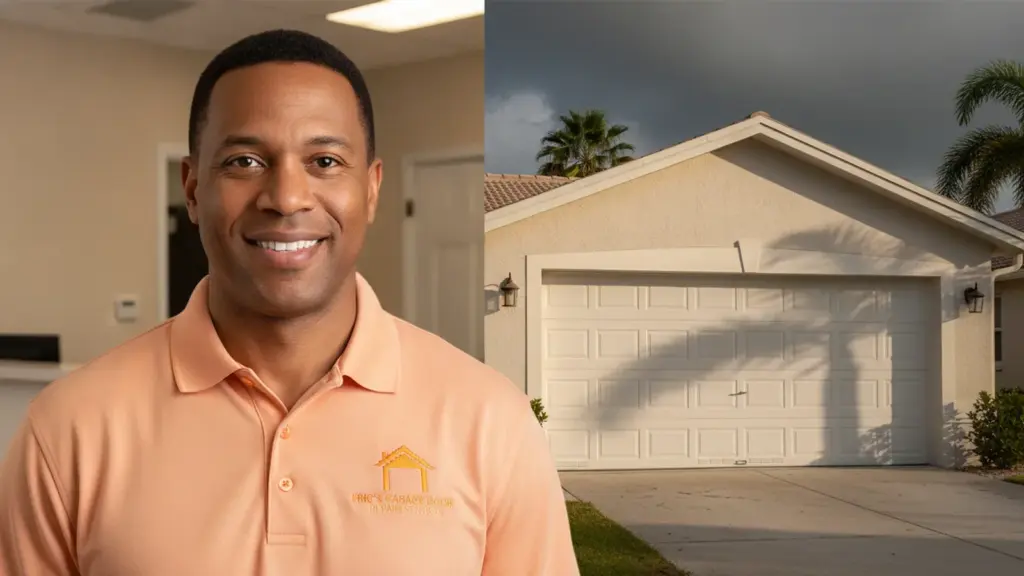
Hurricane Rated Garage Doors in Fort Lauderdale: A Complete Guide to Wind Load Requirements
That low, pressurized silence right before a storm band rolls over Fort Lauderdale is something every local homeowner knows. In those moments, your garage door is the largest opening in your home, and the one most likely to fail first under hurricane-force winds. Choosing the right hurricane rated garage door in Fort Lauderdale is not just a comfort decision, it is a code requirement, an insurance factor, and the single most effective step you can take to protect your home’s structural envelope. This guide covers everything you need to know, from Broward County wind load standards to door construction and the installation details that make compliance real.
Why Garage Doors Are the Weak Link in a Fort Lauderdale Home
Structural engineers consistently identify the garage door as the most vulnerable large opening in a residential structure during a hurricane. When a garage door fails under high wind, the resulting pressure change can lift a roof, compromise interior walls, and allow rain to destroy everything inside within minutes. Fort Lauderdale sits in a high-velocity hurricane zone, and the Florida Building Code reflects that reality by setting some of the most demanding wind load requirements in the country.
Standard garage doors sold in other parts of the country are not designed for the wind speeds Fort Lauderdale regularly sees. A door rated for 90 mph winds offers very different protection from one rated for 150 mph or higher. Understanding that difference before you purchase is the foundation of a smart buying decision. For a closer look at the specific code thresholds that apply to your property, see Broward County’s garage door code requirements.
Broward County Wind Load Requirements: What the Numbers Mean
Broward County falls within a Wind-Borne Debris Region, and the Florida Building Code mandates that all new and replacement garage doors meet specific wind load ratings expressed in pounds per square foot (psf). The required rating depends on several variables.
- Design wind speed for your location: Fort Lauderdale’s basic wind speed is mapped at 170 mph or higher depending on your specific parcel’s proximity to the coast. Properties closer to the Intracoastal or the beach face higher design wind speeds than those further inland.
- Exposure category: Open terrain near water (Exposure D) requires higher-rated doors than suburban terrain (Exposure B). Many Fort Lauderdale neighborhoods qualify as Exposure C or D.
- Door size: Larger openings must withstand greater total force even at the same psf rating. A three-car garage door needs a structurally heavier design than a single door facing the same wind speed.
- Building height: Wind pressures increase with elevation, so doors on upper-level garages or elevated homes require correspondingly higher ratings.
Every compliant door sold and installed in Broward County must carry a Florida Product Approval (FPA) number, which confirms that the specific door model has been tested to meet the required wind load at the specified dimensions. That approval number must appear on the permit application. Requirements vary by parcel, so always verify your specific wind load calculation with a licensed contractor or the Broward County Building Division before purchasing. Our team at Eric’s Garage Door Repair Service pulls the correct calculations for every installation we handle in Fort Lauderdale.
Understanding Wind Load Ratings and Impact Ratings
Two terms cause the most confusion when Fort Lauderdale homeowners start shopping: wind load rating and impact resistance. They are related but not the same.
Wind Load Rating
A wind load rating measures how much positive and negative pressure a closed door can withstand without deflecting beyond a safe threshold or failing structurally. It is expressed in psf and applies to the door panel, the hardware, the track, and the attachment to the framing. A door with a high wind load rating is engineered to stay in its opening and remain functional after the storm passes.
Impact Resistance
Impact resistance, sometimes called missile resistance, measures the door’s ability to withstand debris carried by hurricane-force winds. The Florida Building Code uses two impact levels: large missile (a 9-pound 2×4 fired at high speed) and small missile (steel balls). Doors that pass large missile testing are typically designated as impact-resistant and may allow homeowners to forego separate hurricane shutters over the garage opening, depending on local jurisdiction. Not every high wind load door is also impact-rated, so confirm both specifications when selecting a door for Fort Lauderdale.
If you want it handled correctly the first time, consider professional broward county in Fort Lauderdale.
When comparing options, ask your supplier for the Florida Product Approval number and look up the specific test conditions on the Florida Department of Business and Professional Regulation’s product approval database. That step removes all guesswork about whether a door is genuinely compliant for your address.
Fort Lauderdale’s Local Market: Older Homes, Coastal Exposure, and Replacement Cycles
Fort Lauderdale’s housing stock tells a story that matters for garage door selection. A significant portion of the city’s single-family homes were built between the 1950s and the early 1990s, before the post-Andrew strengthening of the Florida Building Code in 1994 and the major revisions that followed in 2002 and 2006. Homes in neighborhoods like Coral Ridge, Lauderdale Isles, and Edgewood often still have original or early-replacement garage doors that predate modern wind load requirements entirely.
The salt air environment along the Intracoastal and near the beach accelerates corrosion on springs, tracks, and door skins. Steel doors with inadequate coating degrade faster here than in inland Florida markets, and aluminum or fiberglass options often make more sense for properties within a mile of the water. Additionally, Fort Lauderdale’s density of two-car and three-car garages on newer construction in areas like the Tarpon River corridor or Rio Vista means larger door openings that require heavier structural engineering to achieve the same psf rating as a single-car door.
Permit history also matters locally. Broward County’s building department maintains records of prior permits, and an unpermitted door replacement can create complications at resale or during an insurance claim. Every installation Eric’s Garage Door Repair Service performs in Fort Lauderdale is fully permitted, with the Florida Product Approval documentation submitted as part of the permit package.
Choosing the Right Hurricane Garage Door: Materials and Construction
The material and construction of the door panel itself determine how well it achieves its wind load rating and how long it holds up in Fort Lauderdale’s climate. Here is a comparison of the most common options.
| Material | Wind Load Capability | Corrosion Resistance | Maintenance Level | Best For |
|---|---|---|---|---|
| Steel (heavy gauge) | Very high (with reinforcement) | Moderate (requires coating) | Low to moderate | Inland Fort Lauderdale neighborhoods |
| Aluminum | High (with proper bracing) | Excellent | Low | Coastal and Intracoastal properties |
| Fiberglass | Moderate to high | Excellent | Low | Coastal properties, wood-look aesthetics |
| Wood | Lower (requires significant reinforcement) | Poor without regular sealing | High | Historic/architectural homes with close monitoring |
Beyond the panel material, the internal bracing system is what separates a genuinely hurricane-rated door from one that merely looks the part. Hurricane-rated doors use horizontal steel struts, thicker gauge end stiles, and reinforced bottom brackets. The track gauge and the anchoring method into the surrounding framing are equally critical. A high-rated door attached to a weak header or improperly anchored track will not perform to its rated specification. This is why professional installation by a licensed contractor matters as much as the door specification itself.
If you are still deciding whether replacement is the right move or simply want to understand the signs that your current door is no longer up to the task, this guide on signs your garage door needs replacement walks through the indicators Fort Lauderdale homeowners should watch for.
The Installation Process: What Code Compliance Actually Requires
Many Fort Lauderdale homeowners rely on expert broward county in Fort Lauderdale for exactly this.
Purchasing a Florida Product Approved door is the first step. Proper installation is where compliance becomes real. In Broward County, replacing a garage door requires a permit when the work involves structural changes, a new door system, or a change in door size. The permit process includes submitting the Florida Product Approval number, the door’s engineering documentation, and confirming that the installation method matches the tested conditions under which the FPA was granted.
Key installation elements that inspectors verify include:
- Header and jamb attachment: The door frame must be anchored to the structural framing of the garage, not just the drywall or sheathing. Fastener type, size, and spacing are specified in the product approval.
- Track gauge and mounting: The track system must match the door’s FPA documentation. Substituting a lighter track to save cost voids the approval.
- Spring and hardware sizing: Springs must be sized for the actual door weight, which increases with hurricane-rated doors due to heavier gauge steel and bracing. Undersized springs create safety hazards and shorten the life of the opener.
- Bottom seal and weatherstripping: Proper sealing at the bottom and sides reduces water intrusion and contributes to the door’s tested performance under pressure.
After installation, a Broward County building inspector will verify the work before issuing a final permit. Eric’s Garage Door Repair Service coordinates that inspection as part of every permitted installation in Fort Lauderdale, so homeowners are not left managing that process on their own.
How Hurricane Garage Doors Affect Your Homeowner’s Insurance
Florida’s property insurance market is one of the most challenging in the country, and Broward County homeowners feel that acutely. Installing a code-compliant, wind-rated garage door can affect your insurance premium in meaningful ways. Many carriers offer credits or discounts for homes that have completed a wind mitigation inspection showing that all openings, including the garage door, meet current standards.
A wind mitigation report is completed by a licensed inspector and documents the construction features of your home that reduce hurricane risk. A garage door that carries a valid Florida Product Approval and was installed with a permit is documented in that report as a protected opening. For older Fort Lauderdale homes that were built before modern codes, upgrading the garage door is often the single highest-impact change a homeowner can make to their wind mitigation score.
Contact your insurance agent before purchasing a door to understand which specific ratings and approval types qualify for credits under your policy. Then reach out to us so we can confirm that the door we install matches those specifications. For a detailed look at the factors that influence what you will invest in this upgrade, this breakdown of hurricane garage door cost factors covers the variables in depth.
Preparing Your Garage Door for Hurricane Season
Even a properly rated and installed door benefits from routine attention before and during hurricane season. Mechanical components wear over time, and a door that was fully compliant at installation can develop weaknesses that reduce its real-world performance.
Before each hurricane season, have a licensed technician inspect the spring tension, cable condition, roller wear, and track alignment. Confirm that the automatic opener’s emergency disconnect works smoothly, since power outages during storms make manual operation necessary. Check that the bottom seal makes full contact with the floor across the entire width of the door, and look for any visible dents or panel damage that could compromise structural integrity under wind load.
Ready for the next step? Learn how broward county services in Fort Lauderdale can help and reach out to the team.
For a full pre-season checklist specific to Fort Lauderdale conditions, our hurricane season preparation guide covers the steps in detail. And if you want a broader framework for selecting the right door before you commit to a purchase, our guide to choosing a hurricane garage door walks through the decision process from start to finish.
Frequently Asked Questions
What wind speed rating do I need for a garage door in Fort Lauderdale?
Most Fort Lauderdale properties require a garage door rated for a design wind speed of at least 170 mph, though properties closer to the coast or in open terrain may require higher ratings. The exact requirement depends on your parcel’s location, exposure category, and building height. A licensed contractor can calculate the precise requirement for your address using the Florida Building Code’s wind speed maps.
Does a hurricane rated garage door require a permit in Broward County?
Yes. Replacing a garage door in Broward County with a new system requires a building permit in most cases, and the permit application must include the Florida Product Approval number for the specific door model and size being installed. Work performed without a permit can create complications with insurance claims and property resale. Eric’s Garage Door Repair Service handles the permitting process for every installation we complete in Fort Lauderdale.
What is the difference between a wind load rated door and an impact rated door?
A wind load rating measures the door’s ability to resist positive and negative pressure from high winds without structural failure. An impact rating measures the door’s ability to withstand debris struck at hurricane-force speeds. Some doors carry both ratings; others carry only wind load ratings and require a separate protective covering during a storm. In Broward County, impact-rated doors may eliminate the need for shutters over the garage opening, depending on your specific jurisdiction’s requirements.
How do I know if my existing garage door is code compliant?
Check for a Florida Product Approval sticker on the door panel or hardware, and confirm that a permit was pulled when the door was installed. If you cannot locate either, the door may predate modern requirements or may have been installed without a permit. A licensed garage door technician can inspect the door and identify whether it meets current Broward County standards for your location.
Can I add reinforcement to my existing garage door instead of replacing it?
In some cases, a bracing kit can improve an existing door’s wind resistance, but this approach has significant limitations. Bracing kits are only effective when the door panel, track, and framing are all in good condition and sized appropriately. They do not confer a Florida Product Approval or satisfy permit requirements for impact resistance. For most Fort Lauderdale homeowners with pre-code doors, full replacement is the more reliable and code-compliant path.
How long does a hurricane rated garage door installation take?
Most single or double door installations are completed in a single day. The permit process adds lead time before installation begins, typically several business days to a few weeks depending on Broward County’s current review queue. We provide a realistic timeline at the time of your estimate so you can plan accordingly, especially if you are working toward a pre-season deadline.
Ready to Upgrade Your Garage Door in Fort Lauderdale?
A hurricane rated garage door is one of the most consequential investments a Fort Lauderdale homeowner can make before storm season. It protects the structural integrity of your home, satisfies Broward County code requirements, and can improve your standing on a wind mitigation report. Eric’s Garage Door Repair Service has been serving Fort Lauderdale and the surrounding Broward County area with fully permitted, code-compliant installations, and our team knows the local wind load requirements, exposure categories, and inspection process inside and out. Contact us today to schedule your estimate and get the right door specified for your exact address, before the next storm season arrives.
For a complete overview of everything involved in selecting and installing a compliant door, bookmark this full hurricane garage door guide as your reference throughout the process.