Replacing a garage door in Palm Beach, Florida, is more than an aesthetic upgrade — it is a practical investment that improves safety, energy efficiency, curb appeal, and the long-term value of your home. Whether you are preparing for a planned replacement or responding to wear and tear after years of seasonal humidity and storms, a thorough checklist helps you prepare, choose, and oversee the installation process with confidence. Early in your planning, consider researching local experts and comparing options for materials and designs. One helpful resource to learn more about professional options is garage door replacement services, which can give you a sense of the scope of services available in the area.
This guide provides a comprehensive checklist tailored to Palm Beach homes. It covers assessment, materials, coastal considerations, permits, contractor selection, timeline expectations, safety checks, and post-installation care. Use it to make informed decisions, reduce surprises, and ensure your new garage door performs reliably in Florida’s climate.
1. Initial Assessment and Needs Analysis
Start with a clear understanding of why you want to replace the garage door. Common reasons include damage from storms or everyday use, outdated insulation and weatherproofing, noisy operation, malfunctioning opener compatibility, or a desire to improve curb appeal. A thorough assessment includes:
- Inspecting the existing door for rust, dents, warping, or delamination of panels.
- Checking the condition of the tracks, rollers, hinges, springs, and cables.
- Testing the garage door opener for consistent performance, responsiveness, and safety reversal.
- Evaluating insulation needs based on the garage’s use (workshop, storage, living space adjacent to the garage).
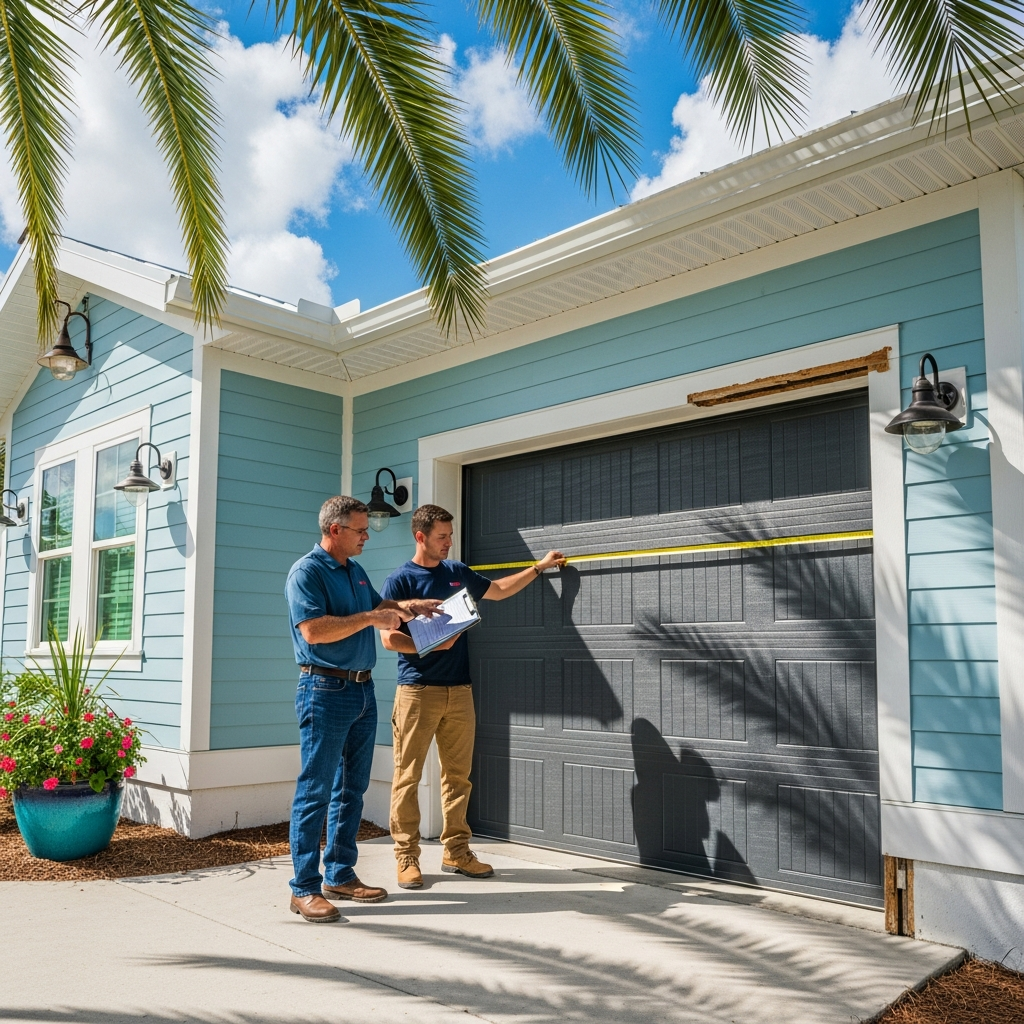
- Measuring the rough opening height, width, and headroom to determine compatibility with replacement options.
Document the issues with photos and notes. Accurate measurements and photos will make your consultations with suppliers and contractors more productive and can help avoid costly errors.
2. Material and Style Selection
Garage doors come in a range of materials—steel, aluminum, wood, and composite. Each has pros and cons for Palm Beach homeowners:
- Steel: Durable and low-maintenance; available with different insulation R-values. Choose corrosion-resistant finishes or galvanized steel for better longevity near coastal areas.
- Aluminum: Lightweight and rust-resistant, but more prone to dents. Often used in contemporary designs with glass inserts.
- Wood: Offers classic, upscale looks but requires ongoing maintenance to protect against humidity and salt air.
- Composite and fiberglass: Can mimic wood without the same level of maintenance; often a good compromise for aesthetics and durability.
Consider door panel styles, window placements, and finishes that complement your home. Decide on insulation level—uninsulated, insulated, or thermally efficient doors—based on garage use and energy goals. Remember that some materials are better suited for coastal exposure and high humidity.
3. Weather and Coastal Considerations
Palm Beach is subject to salty air, high humidity, heavy rain, and occasional severe weather. Your checklist should address these environmental stresses:
- Choose rust- and corrosion-resistant materials and hardware. Hot-dipped galvanized steel, marine-grade coatings, and stainless-steel fasteners can extend the life of your door.
- Look for doors and hardware rated for wind resistance if your home is in a high-wind zone. Local building codes may dictate requirements following recent updates to hurricane mitigation standards.
- Consider impact-rated doors or windows to protect against flying debris during storms and to meet insurance requirements in some neighborhoods.
- Include proper sealing and weatherstripping to keep out moisture and pests, and to preserve interior contents.
Addressing these factors up front decreases maintenance and increases long-term performance.
4. Energy Efficiency and Insulation
A well-insulated garage door reduces temperature swings and helps protect items in the garage. If your garage is attached to your home, insulation can also moderate interior temperature transfer. Key considerations:
- R-value: Higher R-values provide better thermal resistance. Assess whether you need heavy insulation based on the garage’s function and whether HVAC zones are adjacent.
- Thermal breaks and seals: Quality seals around the door perimeter and bottom help prevent drafts, moisture, and air infiltration.
- Type of insulation: Polyurethane foamed panels provide high R-values in thinner profiles, while polystyrene is a common cost-effective option.
Choosing energy-efficient options contributes to comfort and may indirectly reduce strain on HVAC systems in attached homes.
5. Measurements and Site Preparation
Accurate measurements and site readiness are crucial. Confirming exact dimensions avoids ordering the wrong-sized door and ensures proper fit. Checklist items include:
- Measure the width, height, and depth of the door opening, including headroom above the opening and side clearances.
- Measure the ceiling height and any obstructions such as beams or lighting that may affect track or opener installation.
- Confirm the garage floor is level and identify any repairs needed to prevent alignment issues during installation.
- Clear the work area and create safe access for installers, including parking, drop zones for the old door, and a clear path for larger components.
Keep pets and children away from the work area during installation for safety.
6. Permits and Local Codes
Many municipalities around Palm Beach require permits for structural changes, replacements, and installations. Verify whether you need a permit and what documentation is required:
- Check local building codes for wind-load requirements, impact-resistance standards, and permit processes.
- Determine whether the replacement requires a structural inspection or signed plans, especially for impact-rated or high-wind doors.
- Confirm whether the installer will pull permits or if that responsibility falls to the homeowner.
Proper permitting ensures compliance and may be necessary for insurance claims related to storm damage.
7. Contractor Selection and Quotes
Choosing the right contractor is a vital step. Use the checklist to compare candidates and evaluate professionalism and experience:
- Ask for references, license numbers, proof of insurance, and examples of similar installations in Palm Beach.
- Obtain multiple detailed written quotes that list materials, insulation, hardware, opener compatibility, warranties, timeline, and cleanup expectations.
- Confirm warranty terms for both product and labor. Understand what is covered and for how long, including corrosion or finish failures for coastal installations.
- Check reviews and local reputation. Reliable contractors will provide clear communication, timelines, and post-installation service options.
Clear documentation of agreed work helps prevent disputes and ensures the installation meets your expectations.
8. Garage Door Opener Compatibility
If you plan to keep or upgrade your garage door opener, verify compatibility with the new door’s weight, size, and balance. Consider modern opener features for convenience and safety:
- Ensure the opener can handle the door’s weight—heavier insulated doors may require stronger units.
- Consider openers with rolling code technology, battery backup for power outages, and integrated smart features for remote access and monitoring.
- Confirm safety sensors and auto-reverse functions are compatible and properly calibrated during installation.
Discuss opener upgrades with your contractor to avoid unexpected performance issues after installation.
9. Day-of-Installation Checklist
On installation day, ensure the site is ready and expectations are clear:
- Confirm arrival window with the contractor and review the planned work sequence.
- Verify that installers have the correct door, hardware, and opener components before work begins.
- Keep a clear area around the garage and inside where installers will work to prevent damage to vehicles or stored items.
- Request that the contractor demonstrate operation, explain maintenance tasks, and show how to use safety features and manual release mechanisms.
Ask questions if anything is unclear and ensure the installers leave a clean worksite when complete.
10. Post-Installation Inspection and Final Checks
After installation, complete a thorough inspection and confirmation checklist to ensure the door meets expectations and is safe:
- Test opening and closing multiple times, checking for smooth operation and proper balance.
- Confirm the auto-reverse feature functions by placing a small object in the path to simulate obstruction.
- Inspect seals, weatherstripping, and alignment. Verify the finish is free from scratches or defects.
- Obtain all warranty information, permits final sign-offs, and maintenance recommendations from the contractor.
Document the installed door with photos and retain all paperwork for future reference and for potential insurance or resale needs.
11. Routine Maintenance Tips
A new door requires regular maintenance to extend its life and maintain performance:
- Lubricate rollers, hinges, and springs with manufacturer-recommended lubricants every six months.
- Inspect weatherstripping for signs of wear and replace when needed to keep moisture and pests out.
- Test balance and safety features quarterly and call a professional for spring or cable repairs, as these components are hazardous.
- Rinse salt residue periodically if you live close to the coast to slow corrosion and preserve finishes.
Proactive care reduces unexpected failures and keeps your door functioning smoothly for years.
12. Common Pitfalls to Avoid
Homeowners often encounter a few recurring issues during replacement that the checklist helps you avoid:
- Ordering before measuring: Always measure the actual opening rather than relying on approximate figures.
- Ignoring local codes: Wind-load and impact requirements can affect which products are acceptable.
- Overlooking header and track clearances: Inadequate headroom can make certain track systems impossible without modification.
- Choosing appearance over durability: Coastal environments demand corrosion resistance; prioritize material and hardware suitable for the climate.
Being mindful of these pitfalls will streamline the project and reduce surprises.
Frequently Asked Questions
Q: How long does a garage door replacement typically take?
A: Most standard residential garage door replacements take between four and eight hours, depending on door complexity, whether the opener is being replaced, and site conditions. Specialized doors, impact-rated systems, or additional framing work can extend the timeline.
Q: Will I need to reinforce the garage structure for a new door?
A: Reinforcement is not typically required for like-for-like replacements, but if you are installing impact-rated doors or altering the opening size, structural reinforcement might be necessary to meet code. Your contractor should advise if additional work is needed.
Q: Can I replace the door myself?
A: While some homeowners with mechanical experience perform DIY replacements, garage door springs and cables are under extreme tension and can be dangerous. For safety and code compliance, hiring a licensed, insured professional is recommended.
Q: What should I look for in a warranty?
A: Look for distinct product and labor warranties. Product warranties should cover panel failure and hardware defects; labor warranties protect the installation work. Be sure to understand exclusions and requirements for proper maintenance to keep warranties valid.
Q: How do I choose the right insulation level?
A: Base your choice on how you use the garage and whether it shares a wall with conditioned living space. If you want reduced noise, temperature moderation, and energy efficiency, select a higher R-value and a seal system designed for Florida’s climate.
Q: How often should a garage door be inspected?
A: A professional inspection every 12 to 24 months is a good rule of thumb, with homeowner visual checks and basic tests every few months to catch issues early.
Final steps before you move forward: create a clear timeline, confirm measurements and permit needs, and have a signed contract that documents the agreed-upon materials and warranty details. If you want a professional assessment and local service options, consider reaching out to a qualified provider that specializes in local needs and standards like garage door replacement services.
When you are ready to move forward, prepare your home and schedule the installation at a convenient time. On completion, perform the final checks and establish a maintenance routine based on the checklist. A properly chosen and installed garage door will deliver peace of mind and reliable performance for years to come.
Ready to upgrade your garage door with local expertise? Contact a trusted team for guidance and scheduling to ensure your replacement meets Palm Beach standards and performs well in the coastal climate. For professional assistance, view available options and arrange a consultation with experienced technicians at garage door replacement services. Our professionals will walk you through every item on the checklist, from measurement and permit coordination to final inspection and maintenance guidance.