
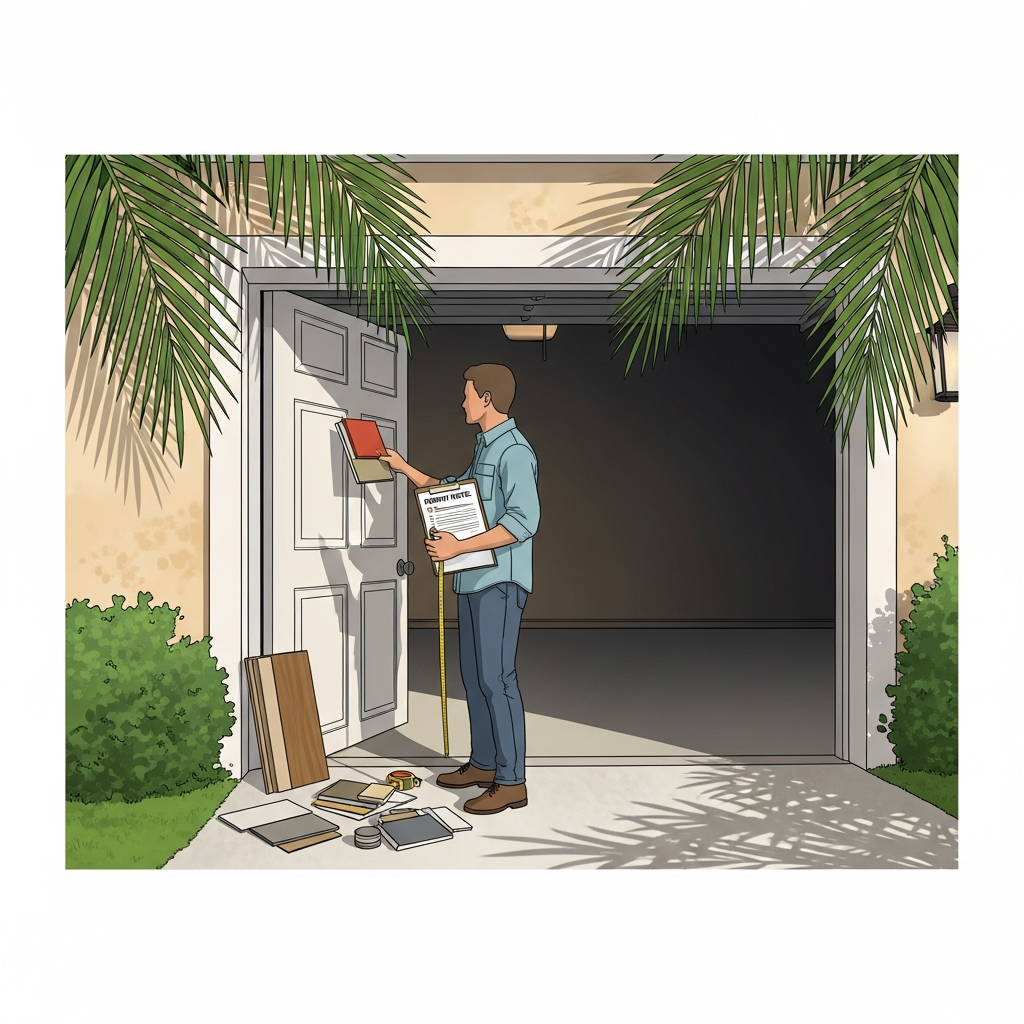
As a homeowner in Palm Beach, Florida, replacing your garage door is a meaningful investment that impacts safety, efficiency, and curb appeal. Proper planning and understanding of local standards are essential for a smooth replacement. To begin exploring options and requirements, many homeowners start by reviewing professional offerings, including companies that specialize in garage door replacement. This helps frame decisions about materials, insulation, and compliance with wind-load regulations common to coastal communities.
This homeowner guide provides practical advice tailored to Palm Beach conditions. It covers identifying when to replace, choosing materials and styles, scheduling permits and inspections, and maintaining the new door for long-term performance. Whether you plan to engage a licensed contractor for a full-service approach or coordinate parts of the project yourself, this guide will help you make informed choices and prepare for each stage of the process.
Understanding Why Replacement May Be Necessary
Homeowners typically replace a garage door due to damage, aging components, or a desire to update the home’s appearance. In Florida, exposure to salt air, sun, and occasional storm events can accelerate wear on surfaces and moving parts. Replacing a compromised door reduces the risk of failure during severe weather and can be part of a broader upgrade to meet current building codes.
Replacement also allows for modern features that improve daily convenience and safety. Insulation upgrades, quieter openers, and enhanced safety sensors contribute to a better user experience and can protect adjacent living spaces from heat and humidity. Consider replacement if the existing door requires frequent repairs or cannot be brought into compliance with modern wind-load standards.
Assessing Your Current Door
Begin your assessment by checking for visible signs of wear: dents, rust, separation of panels, loose hardware, and damaged seals. Operate the door and listen for grinding noises or observe inconsistent movement, which can indicate worn rollers or misaligned tracks. Additionally, verify that the door reverses when the safety beam is interrupted; if not, this is a critical safety issue that should be addressed immediately.
In some cases, the door frame and header may be compromised by water intrusion or previous storm damage. Document any structural concerns and share them with your installer, as frame repairs can be necessary before installing a replacement door to ensure secure anchoring and proper operation.
Selecting Door Materials and Styles
Your choice of material affects longevity, maintenance, and appearance. Steel doors are durable and low-maintenance, often with insulation options. Wood doors provide a warm aesthetic but require periodic painting or staining and are more susceptible to moisture-related issues. Aluminum is lightweight and resists rust, although it typically needs reinforcement for high wind-load ratings. Composite doors offer the look of wood with reduced maintenance.
Style choices include raised panel, carriage-house, and flush styles. Windows can enhance natural lighting but should be ordered with performance glazing if energy efficiency and security are priorities. Coordinate hardware finishes to complement your home’s exterior for a cohesive look.
Permits and Compliance Specifics
In Palm Beach County, permit requirements depend on the scope of work. Replacing a door without altering the opening might not always require a permit, but changes to header, framing, or wind-load upgrades typically do. Wind-borne debris and hurricane codes in Florida can drive specifications for reinforcement and glazing. Work with contractors that understand local building department expectations and can prepare documentation for plan review and inspection.
HOA rules may also play a role. Many associations require approval for changes visible from the street, including color and style. Obtain HOA approval before ordering custom doors to prevent delays in installation.
Working with Contractors
When selecting a contractor, verify licensing and insurance, and request references. A reputable installer should provide written estimates, clear timelines, and a scope of work that outlines permit handling, material lead times, and warranty information. Ask about the installer’s experience with wind-rated doors and local inspection processes, since mistakes in these areas can lead to significant problems after installation.
Obtain multiple bids to compare product offerings and labor assumptions. Look for contractors who provide manufacturer-backed installation warranties and who demonstrate an understanding of Palm Beach’s climate-driven maintenance needs.
Preparing for Installation Day
On installation day, clear the garage of vehicles and obstructions. Protect adjacent surfaces by covering floors and delicate fixtures. Installation crews will need access to electrical outlets and may require parking space for material staging. Expect noise from cutting, drilling, and sawing if frame modifications are necessary.
Communicate with the crew about desired final alignment and operation. After installation, the crew should demonstrate safety features, remote programming, and maintenance tips. Ask for documentation of any upgraded components and keep contact information for warranty support.
Step-by-Step Process for Replacement
-
Initial inspection and measurements by the contractor to verify site conditions and structural needs.
-
Permit submission and HOA approval, if applicable. Ordering the selected door and materials.
-
Delivery and staging of materials, followed by removal of old door components.
-
Frame repair or reinforcement as needed to meet code and provide secure anchoring for new hardware.
-
Installation of tracks, springs, and new panels. Adjustment for balance and smooth operation.
-
Opener installation, programming, and safety sensor alignment.
-
Final inspection, homeowner orientation, and documentation of warranties and maintenance requirements.
Maintenance Tips for New Doors
Regular maintenance extends the service life of your door. Clean surfaces periodically to remove salt deposits and debris. Lubricate rollers, hinges, and springs with manufacturer-recommended products, and schedule annual inspections for balance and safe operation. Replace weatherstripping as it wears to maintain energy efficiency and keep pests out.
Keep a log of maintenance and service visits to maintain warranty eligibility and to provide future homeowners with a history of care. Simple preventative tasks can avoid unexpected failures and keep your door operating quietly and reliably for years to come.
Frequently Asked Questions
-
Q: How long will a garage door replacement take for a typical single family home?
A: A standard replacement can often be completed within a single day, assuming there are no unexpected structural repairs and that all parts have been delivered as ordered.
-
Q: What is the most durable material for a coastal home?
A: Treated steel or reinforced composite panels with corrosion-resistant finishes are typically recommended for coastal durability. Wood can perform well with diligent maintenance but is more susceptible to moisture-related issues.
-
Q: Should I replace the opener at the same time?
A: Replacing the opener at the same time simplifies installation and ensures compatibility with the new door’s balance and weight. Upgrading can also bring modern safety and convenience features.
-
Q: What should I ask prospective contractors?
A: Request proof of license and insurance, ask about experience with local codes and wind-load requirements, inquire about warranty coverage, and ask for references and photos of past installations.
Deciding to replace your garage door is an opportunity to improve safety, energy performance, and the overall look of your home. A careful approach to selection, permits, and installation reduces surprises and ensures a high-quality outcome.
When you are ready to move forward, request an on-site evaluation from an experienced provider who can manage product selection, permitting, and installation. If you would like to connect with professionals who specialize in garage door replacement and understand Palm Beach requirements, contact a qualified team to discuss options and schedule an assessment.
Final Notes and Next Steps
Before scheduling, collect photos of the existing opening, note any visible damage, and verify HOA rules that might affect door appearance. Preparing this information streamlines the evaluation and helps your installer provide accurate recommendations. With proper planning, a full replacement can be a smooth, single-day project that leaves your home more secure, more efficient, and more attractive.
Reach out to a trusted installer to begin the process and to receive a detailed plan that covers permits, materials, installation schedule, and post-installation maintenance advice. A professional team will guide you through each step and ensure a compliant, durable installation. For service and consultations, consider contacting specialists who offer full-service garage door replacement solutions.