
Understanding the garage door replacement process in Palm Beach, Florida, requires attention to measurements, materials, and, importantly, permitting and inspection procedures. Some replacements are minor, while others demand structural changes or confirmation of wind-load compliance. To navigate these requirements efficiently, homeowners often consult professionals who specialize in garage door replacement and are familiar with local building department expectations. Engaging an experienced installer early in the process can reduce delays and ensure that permit documentation is accurate.
This article outlines a step-by-step replacement process, details the typical permitting workflow, and explains what to expect from initial plan submission through final inspection. The goal is to help homeowners in Palm Beach anticipate timelines, prepare necessary documentation, and choose qualified contractors who handle both installation and compliance with municipal codes.
When Permits Are Required
Permits become necessary when the replacement includes changes to the structural opening, header reinforcement, or installation of doors that require verified wind-load ratings. Even cosmetic replacements can trigger permit needs if the existing door or frame is found to be compromised during inspection. Wind-borne debris and hurricane mitigation codes in Florida cause many jurisdictions to require documentation that the new assembly meets current standards.
Another scenario requiring permits is when electrical work is part of the project, such as replacing or relocating the garage door opener wiring or outlets. Always confirm permit requirements with the installer or by checking the local building department’s published guidelines.
Initial Site Inspection and Measurements
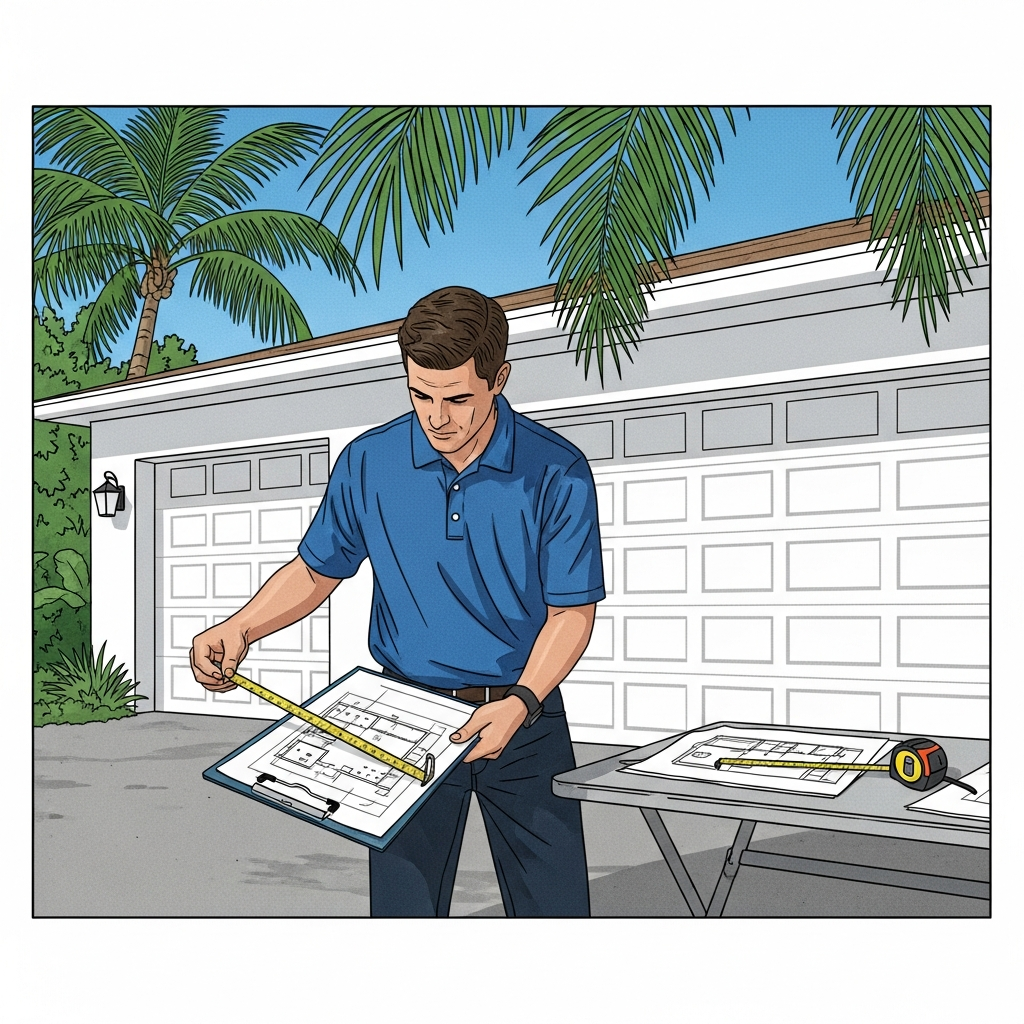
The process typically begins with a professional inspection. The installer measures the opening and evaluates header condition, framing, and interior clearances for tracks and the opener. Accurate measurements include width, height, backroom depth, sideroom, and header clearance. Assessing the frame for rot or damage is a crucial step, because hidden structural issues often necessitate repairs before door installation.
Document the location of utilities and any insulation or interior finishes attached to the garage. Photos and a written condition report assist both homeowner and contractor in planning the scope of work and preparing permit applications when needed.
Product Selection and Documentation
Homeowners choose from a variety of materials and designs: steel with or without insulation, aluminum, composite, or wood. If the door must meet a wind-load requirement, select a product with manufacturer-specified wind ratings and obtain technical documentation and installation instructions. This documentation is often part of the permit submittal package and can include engineering calculations, product approvals, and installation details.
Ask for product specification sheets and any certification that verifies compliance with Florida Building Code standards. Contractors familiar with Palm Beach County will know which forms and attachments the building department expects during plan review.
Permit Application and Plan Review
The contractor commonly submits permit applications on behalf of the homeowner. Required items usually include a completed permit form, product specifications, drawings or diagrams showing framing and anchor details, and possibly energy or wind-load calculations. The building department reviews the submission to verify compliance with structural and safety codes.
Plan review timelines vary. Simple replacements may receive same-day approval, while projects requiring structural calculations or additional documentation can take longer. Stay in regular contact with your installer during this stage so any requested revisions can be addressed promptly.
Ordering and Lead Times
Once the permit is approved or in process, order the door and hardware. Custom finishes, window configurations, and specialty colors can extend lead times. Coordinate ordering with permit approval dates to prevent storage fees or rescheduling. Many installers will not schedule installation until materials are confirmed on site and permits are issued.
Removal of Old Door and Site Prep
On installation day, the crew removes the old door, opener, and hardware. This may reveal underlying issues such as damaged jambs or header deterioration. If structural repairs are needed, the contractor will perform them before installing the new door and fastening hardware. Prepare the garage by removing vehicles and valuables and by covering nearby finishes to protect against dust and debris.
Installation Steps
-
Frame repairs and header reinforcement if necessary to meet the structural demands of the new door.
-
Installation of spring systems and tracks according to manufacturer guidelines and local code requirements.
-
Assembly and hanging of door panels, including alignment of rollers and hinges.
-
Mounting and connection of the opener, sensors, and control wiring. Confirm electrical connections meet code requirements and are performed by a qualified electrician when needed.
-
Balance testing and adjustment to ensure smooth operation and correct spring tension.
-
Operational testing and safety verification, including auto-reverse sensor alignment and remote programming.
Inspections and Final Approval
Permitted work typically requires inspection at critical milestones. For a garage door replacement, inspections may include a framing check if structural changes occurred and a final inspection to confirm the installed door and opener meet code standards. The inspector verifies that anchoring, spring installation, sensor functionality, and electrical work conform to the submitted plans and local code. After passing final inspection, the permit is closed, and documentation is available for homeowner records.
Common Permit-Related Delays and How to Avoid Them
Delays often arise from incomplete submittals or mismatches between products ordered and the documentation provided. To minimize delays, gather product approvals and technical specs at the outset, confirm the installer will submit complete drawings, and respond quickly to any additional requests from the building department.
Another common delay is unforeseen framing repairs discovered after old door removal. Budget time for possible repairs and work closely with your contractor to schedule these tasks promptly so the inspector can complete their review without repeated site visits.
Post-Installation Maintenance and Documentation
After installation and inspection, maintain a file with product manuals, warranty paperwork, and permit closure documents. Regular maintenance includes lubrication, balance checks, and sensor cleaning. Keep your installer’s contact information handy for warranty support or future service visits. Documentation of permits and inspections adds value to the property and provides reassurance that the installation meets local standards.
Frequently Asked Questions
-
Q: How long does the permit process usually take?
A: Timing varies by jurisdiction and complexity. Some straightforward replacements are approved quickly, while projects involving structural changes can take several weeks for plan review.
-
Q: Will my HOA need to approve the replacement?
A: If the door is visible from the street or alters the exterior appearance, HOA approval is commonly required. Obtain any design approvals before ordering custom doors.
-
Q: What happens if an inspector finds framing issues?
A: The contractor will typically correct those issues and schedule a follow-up inspection. This can extend the timeline but is necessary to ensure structural safety and code compliance.
-
Q: Are wind-rated doors more complicated to install?
A: Wind-rated doors require specific anchoring and reinforcement, and installers usually follow manufacturer and code-mandated details. Experienced contractors who perform these installs regularly are recommended.
Understanding the permitting and inspection process makes the replacement smoother and helps avoid surprises. Working with a contractor who handles both installation and permit administration often yields the most efficient outcome.
If you would like professional assistance managing the replacement process from measurement through permit closeout, contact a trusted team with local experience. Experienced providers of garage door replacement can prepare documentation, coordinate inspections, and complete the installation to meet Palm Beach County requirements.
Closing Recommendations
Before initiating a replacement, verify the contractor’s understanding of local codes, collect product approvals early, and plan for potential framing repairs. Keeping permits and inspection documentation organized helps maintain property records and supports a smooth resale process. With proper planning and a qualified installer, your garage door replacement can be efficient, compliant, and durable for years to come.