
Introduction
Routine inspections are essential to maintain safe, reliable garage doors in Palm Beach, Florida. Coastal humidity, salt air, and storm exposure accelerate wear and corrosion. A thorough inspection process identifies minor problems before they escalate into hazardous failures and prolongs the life of door hardware and openers. Whether you perform basic checks yourself or schedule a professional inspection, understanding what technicians look for and why each test matters helps homeowners prepare. If you need expert attention tailored to regional conditions, consider contacting a professional such as garage door service. This piece outlines a comprehensive inspection process, checklists, diagnostic tests, and recommended follow-ups for Palm Beach homes.
Inspection Overview: What Inspectors Evaluate
A professional inspection evaluates the entire door system: mechanical components, electrical elements, safety devices, and environmental vulnerabilities. Key areas of focus include spring condition, cable integrity, roller wear, track alignment, opener operation, sensor function, and weather seals. Inspectors will also look for corrosion and signs of water intrusion that can compromise wood doors and framing.
Preparation for an Inspection
Before an inspector arrives, prepare the area to facilitate an efficient review:
- Clear objects and vehicles from the garage interior and the driveway area to provide safe access to the door and overhead components.
- Have warranty documents or previous service records available to help the inspector understand prior repairs and parts changes.
- Note any unusual noises, intermittent behavior, or recent storm exposure to discuss during the inspection.
Visual and Mechanical Inspection Steps
Inspectors begin with a visual sweep followed by operational tests to identify immediate concerns:
- Check door panels for dents, cracks, delamination, or rot (for wood doors).
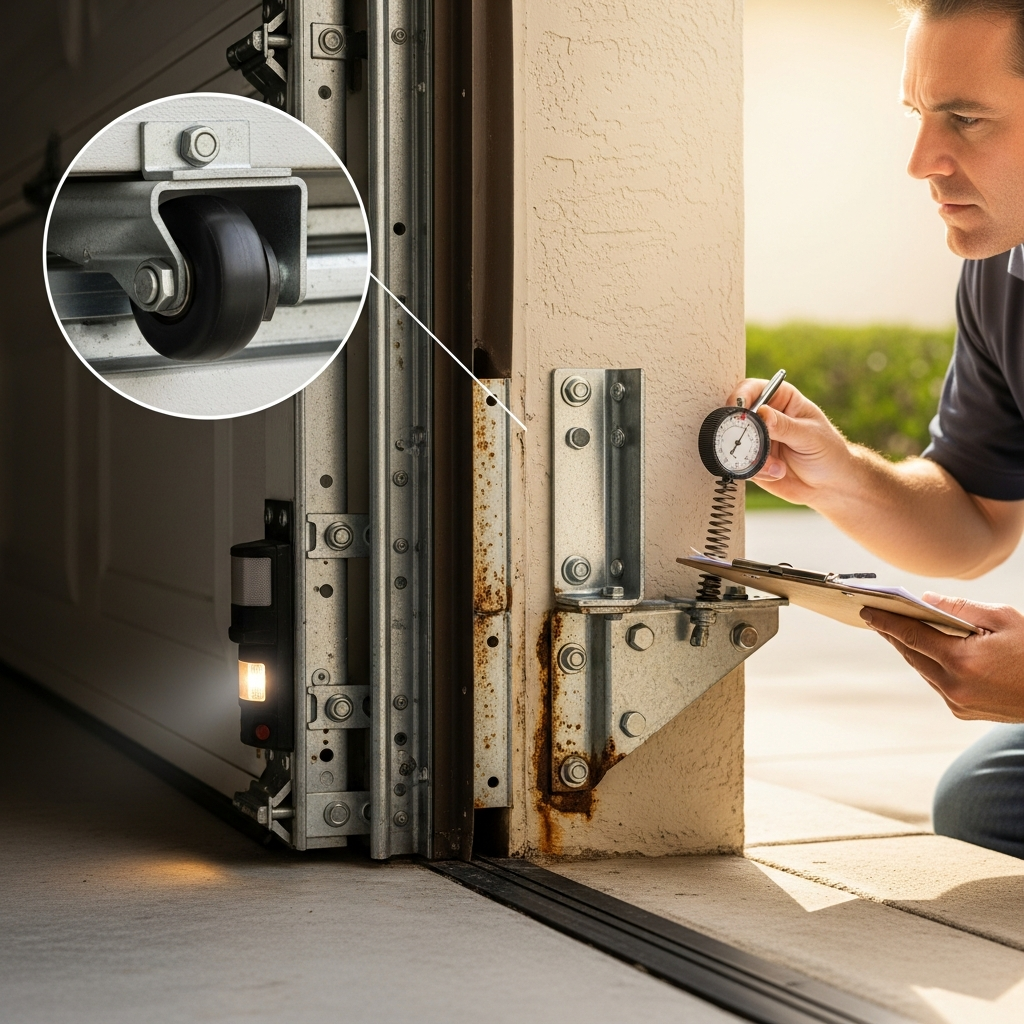
- Inspect springs for gaps in torsion springs, broken coils, or significant rust. Extension springs are checked for frayed strands and proper safety cables.
- Examine cables, drums, and anchor brackets for wear, fraying, or corrosion.
- Assess rollers and tracks for pitting, wear, dents, and proper alignment.
Balance and Spring Load Tests
Balance tests determine whether springs are providing correct counterbalance. A misbalanced door increases stress on the opener and hardware and creates safety risks:
- Disconnect the opener to allow manual operation.
- Lift the door halfway. If it holds position, springs are likely balanced. If it drifts up or down, tension adjustments or spring replacement may be required.
- Inspect torsion or extension springs for signs of wear and measure spring size and rating when replacements may be needed.
Opener and Electrical System Check
Inspectors evaluate the opener’s electronics and mechanical operation to ensure safe performance:
- Test the opener for smooth start and stop operation, and listen for abnormal noises indicating gear wear or motor strain.
- Check the travel limit settings and force adjustments to ensure the door reverses appropriately on contact.
- Inspect wiring for frayed insulation, loose connectors, and corrosion, particularly in coastal environments.
Safety Sensor and Auto-Reverse Testing
Safety sensors and the auto-reverse mechanism are critical for preventing injury and property damage:
- Inspect sensor lenses for dirt, moisture, or salt buildup and clean as necessary.
- Ensure sensors are level and have power indicator lights functioning correctly.
- Test auto-reverse with an object (such as a 2×4) placed in the door’s path to confirm the door reverses on contact.
Hardware, Fasteners, and Anchor Points
Anchor points and fasteners must be secure to maintain alignment and withstand wind loads:
- Inspect mounting brackets, track anchors, and header attachment points for looseness or corrosion.
- Tighten or replace missing, stripped, or corroded bolts as needed.
- Check garage wall framing and header for structural weaknesses or moisture damage that could undermine anchor strength.
Weatherseals and Water Intrusion Check
Inspect the bottom seal, side seals, and header rubber to ensure effective protection against water and pests. In Palm Beach, watch for signs of water staining or mold near the base of the door and threshold:
- Replace cracked or compressed seals that no longer provide a tight barrier.
- Inspect thresholds for gaps and ensure proper contact with the bottom seal to prevent water intrusion during storms.
Corrosion and Environment-Specific Observations
Coastal exposure accelerates rust on springs, cables, and hardware which can compromise safety. Inspectors evaluate corrosion severity and make recommendations:
- Prioritize replacement of heavily corroded parts with stainless or galvanized alternatives.
- Recommend protective coatings or more frequent cleaning cycles to mitigate salt buildup.
Diagnostic Tests: Advanced Evaluations
Professional inspectors may perform specialized tests to ensure optimal operation:
- Motor amp draw test to assess motor strain under load and detect internal resistance indicating wear.
- Spring cycle count estimation and documentation of remaining expected life based on type and visible wear.
- Vibration and noise analysis during operation to locate rattles or imbalances not obvious during a simple run test.
Reporting and Recommendations
After inspection, professionals typically provide a written report including findings, prioritized recommendations, and a proposed service or replacement plan. Reports may include photographs of worn or corroded parts for homeowner records. Common recommendations include spring replacement, roller upgrades, stainless hardware swaps, track realignment, and opener servicing.
Follow-Up Maintenance Plan
Inspectors often provide a custom maintenance schedule based on the door’s condition and local environmental stressors:
- Monthly homeowner checks for visible corrosion, sensor alignment, and unusual noises.
- Semi-annual lubrication and hardware tightening — quarterly in high-salt areas.
- Annual professional inspections with spring and balance evaluations.
When Immediate Repairs Are Warranted
Certain findings require prompt attention to maintain safety and prevent further damage:
- Broken springs or cables
- Severe rust that compromises a component’s structural integrity
- Track separation, major alignment issues, or cracked panels that affect structural performance
Frequently Asked Questions
How long does a professional inspection take?
Inspections typically last 30–60 minutes depending on the complexity of the door, the presence of multiple doors, and any specialized diagnostic tests performed.
Is a professional inspection necessary every year?
Annual professional inspections are recommended, with more frequent checks in coastal areas due to the increased risk of corrosion. Inspectors will recommend a cadence based on observed conditions.
What should I expect in the inspection report?
A good inspection report includes photographic evidence of issues, prioritized recommendations (safety versus cosmetic), estimated timelines for expected part life, and suggested maintenance intervals.
Can inspection findings affect home insurance or code compliance?
Yes. Severe structural issues or non-compliant wind-load protections can affect insurance coverage or require remediation to meet local codes. Inform your insurance agent and check with local building officials for compliance requirements.
Closing Recommendations and Next Steps
Regular, thorough inspections are the best defense against sudden garage door failures in Palm Beach. A combined regimen of homeowner checks, semi-annual maintenance, and yearly professional inspections preserves functionality and safety. Replace heavily corroded parts with stainless or galvanized options, perform seasonal seal checks, and maintain an inspection log. If inspection uncovers immediate or complex issues such as broken springs, significant corrosion, or structural vulnerabilities, schedule professional repairs right away. For comprehensive inspections and maintenance plans tailored to Palm Beach conditions, contact a reliable local service provider who can assess, recommend, and perform necessary repairs. To arrange a professional inspection or learn more about service offerings, contact experienced technicians at garage door service.
Preparing for Long-Term Care
After addressing recommended repairs, set up a long-term maintenance schedule with reminders for lubrication, seasonal checks, and annual professional inspections. Keeping your garage door in top condition protects your home, improves daily convenience, and ensures that safety features reliably prevent accidents. Maintain records of all inspections and services to support warranties and resale value.