
How to Protect Coastal Garage Doors From Broward County Rust
Ignoring the subtle buildup of salt film on your home’s exterior does more than just dull its appearance. In Fort Lauderdale, the combination of high humidity, intense heat, and airborne salt crystals creates a relentless corrosive environment. When salt deposits sit on metal moving parts, they slowly eat through protective zinc coatings, leading to binding hinges, frayed cables, and structurally compromised panels. Over time, this quiet degradation can leave your home vulnerable during a major wind event and result in an unexpected, costly system failure.
Maintaining your home’s exterior entry points is essential for long-term durability. By establishing a routine preventive care schedule, you can protect your investment and preserve the structural integrity of your system. This step-by-step guide walks you through the exact process of cleaning, lubricating, and inspecting your system to prevent coastal rust and keep your door operating safely year-round.
Before You Start: Coastal Maintenance Prep
Before you begin servicing your garage door, gather the necessary supplies. Using the wrong cleaning agents or lubricants can actually attract more dust and salt, accelerating the corrosion process rather than preventing it.
- A bucket of warm water mixed with a mild, biodegradable car wash soap or dish soap (avoid harsh chemical solvents or acidic cleaners).
- A soft-bristle brush, microfiber cloths, and a non-abrasive sponge.
- A garden hose equipped with a standard spray nozzle (never use a high-pressure power washer, which can force water into sealed bearings and behind weatherstripping).
- A high-quality, professional-grade silicone spray or white lithium grease (never use WD-40 as a lubricant, as it acts as a degreaser and attracts salt air grime).
- A clean, dry rag to wipe away excess lubricant.
- Safety glasses and work gloves.
Step 1: Perform a Visual Inspection for Salt and Corrosion
Begin by closing the garage door completely and inspecting the entire system from both the inside and outside. Examine the bottom panel, the horizontal joints between sections, and the tracks for any white, powdery salt residue or early signs of bubbling paint. Pay close attention to the tracks, hinges, rollers, and springs, as these steel components are highly susceptible to the coastal elements. If you notice advanced structural degradation during your inspection, read our guide on signs of coastal salt air damage to determine if a component needs immediate replacement.
Step 2: Rinse the Exterior Panels Gently
Using your garden hose on a gentle shower setting, rinse the exterior of the door starting from the top and working your way down. This initial rinse flushes away loose salt crystals, sand, and surface dust without grinding them into the finish. Be sure to spray the bottom seal area thoroughly, as road grime and coastal salt accumulate heavily near the driveway level. Avoid spraying water directly at the garage door opener motor, wall buttons, or safety sensors to prevent electrical issues.
Step 3: Wash with a Mild Soap Solution
If you want it handled correctly the first time, consider professional fort lauderdale rusting garage door hinges in Fort Lauderdale.
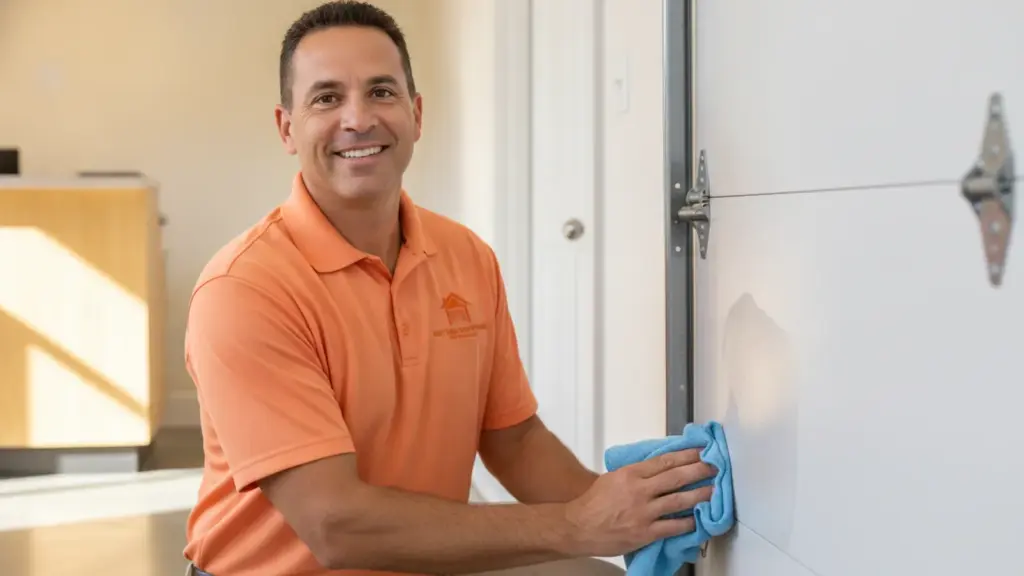
Dip your soft sponge or microfiber cloth into the warm, soapy water and gently wash the panels. Clean the horizontal joints where the panels overlap, as these recessed areas trap moisture and salt deposits easily. Wipe down the external weatherstripping on the sides and top of the door frame, as clean rubber seals prevent salty air from blowing into the garage interior. For stubborn dirt, use a soft-bristle brush to gently scrub the surface without scratching the protective powder coat.
Step 4: Clean the Tracks and Internal Hardware
Open the garage door manually (after pulling the red emergency release cord) to access the interior tracks and hardware. Dampen a clean microfiber cloth with soapy water and wipe down the interior metal tracks to remove grease, salt film, and debris. Clean the hinges, roller stems, and the bottom bracket assembly. Ensuring these tracks remain clean prevents friction, which can scratch protective metal platings and expose raw steel to oxidation.
Step 5: Rinse Thoroughly and Dry completely
Use your hose on a low-pressure setting to rinse away all soap residue from the panels, tracks, and hardware. Any leftover soap film can hold onto moisture and accelerate rust. Once rinsed, take a dry, clean microfiber cloth and dry the hinges, rollers, and bottom brackets. Letting these metal parts air-dry in Broward County’s humid climate allows moisture to sit in tight crevices, promoting rust development.
Step 6: Apply a Coastal-Grade Lubricant
Once all metal parts are completely dry, apply your specialized silicone or white lithium lubricant. Spray the metal rollers at the bearings, the hinges at their pivot points, and the full length of the torsion springs. Avoid lubricating nylon rollers directly; only lubricate the steel stems that slide into the hinges. Keep the inside of the tracks dry, as oil or grease in the track track will collect dust and salt, creating an abrasive paste that grinds down your hardware. Wipe away any dripping or excess lubricant with a clean rag.
Step 7: Inspect and Clean the Weatherstripping
Examine the bottom rubber seal and the perimeter weatherstripping for cracking, dry rot, or flattening. A tight, flexible seal is your home’s primary defense against salt spray, driving rain, and humid air. Wipe down the rubber seals with a silicone-based protectant to keep them pliable. If you find that your underlying hardware has already suffered severe corrosion, you may want to compare the differences between coastal vs traditional garage door hardware to see how specialized materials hold up far better against the salt air.
Many Fort Lauderdale homeowners rely on expert fort lauderdale rusting garage door hinges in Fort Lauderdale for exactly this.
Step 8: Re-engage and Test the Door
Pull the emergency release cord back toward the door to re-engage the automatic opener. Cycle the door open and closed two or three times. Listen closely for any grinding, squeaking, or scraping sounds, which indicate friction or misaligned parts. The door should move smoothly and quietly along the tracks. Regular, smooth movement ensures that the protective lubricants are evenly distributed across all moving contact points.
The Fort Lauderdale Coastal Climate and Your Garage Door
Homes in Fort Lauderdale, especially those situated east of Federal Highway or along the Intracoastal Waterway, face unique environmental challenges. The local air carries a constant mist of corrosive sodium chloride, which is carried inland by prevailing Atlantic breezes. When combined with our high relative humidity, which regularly hovers above eighty percent, this salt mist creates an active electrolyte solution that accelerates the chemical reaction of rusting.
Furthermore, older homes in neighborhoods like Las Olas, Rio Vista, and Coral Ridge often have older structural configurations that require careful monitoring. When replacing or servicing these systems, homeowners must ensure their setups comply with Broward County’s strict wind-load and impact standards. Keeping your door’s hardware clean and free of rust is not just an aesthetic priority; it ensures that your heavy-duty system will lock down and perform as engineered during high-wind events.
When to Call a Professional in Fort Lauderdale
While routine cleaning and light lubrication are safe and effective DIY tasks, certain maintenance scenarios require professional intervention. Garage door systems operate under extreme tension, particularly the torsion springs and bottom brackets. Attempting to adjust, repair, or replace these highly charged components yourself can lead to severe injury or major property damage.
You should contact a professional if you observe:
Ready for the next step? Learn how fort lauderdale rusting garage door hinges services in Fort Lauderdale can help and reach out to the team.
- Deep rust pitting or structural thinning on the torsion springs, lift cables, or bottom brackets.
- A garage door that feels heavy to lift manually or is visibly out of balance.
- Frayed, unravelling, or rusted lift cables that are under high tension.
- Severe rust on the bottom panels that has eaten through the metal skin.
If your door is showing signs of advanced corrosion, structural weakness, or failing wind-resistance, it may be time to transition from maintenance to a modern upgrade. Explore our comprehensive guide on garage door replacement fort lauderdale to learn how to choose a durable, wind-rated, and rust-resistant system built to survive our unique coastal environment.
Frequently Asked Questions
How often should I wash my garage door in Fort Lauderdale?
If you live within one to two miles of the ocean, you should wash your garage door panels and rinse the tracks at least once every three months. For homes located further inland, a thorough cleaning every six months is typically sufficient to prevent salt and grime buildup.
Can I use WD-40 to lubricate my coastal garage door?
No, you should avoid using standard WD-40 on your garage door tracks, rollers, and hinges. WD-40 is a solvent and degreaser rather than a long-lasting lubricant; it dries quickly and leaves behind a thin, sticky residue that actively attracts salt, sand, and dust, which accelerates wear.
What is the best garage door material to prevent rust near the beach?
For coastal areas, high-grade vinyl, fiberglass, or heavy-duty aluminum doors with powder-coated finishes offer the highest resistance to salt-air corrosion. If you prefer steel, ensure it has a hot-dipped galvanized steel core protected by multiple baked-on primer and polyester finish coats.
Should I grease my garage door tracks?
No, you should never apply grease or oil inside the garage door tracks. Grease collects dirt, sand, and airborne salt particles, forming a abrasive paste that binds the rollers, increases friction, and can cause the door to slip off its tracks.
Protect Your Investment Today
Maintaining a rust-free garage door in South Florida requires consistent care, but the effort pays off in reliable performance and enhanced home security. By implementing a simple quarterly cleaning and lubrication routine, you protect your system from the destructive effects of the Atlantic salt air. If you notice persistent operational issues, heavy corrosion on your high-tension components, or want to explore modern, low-maintenance options like hurricane proof garage doors, contact a local specialist. Our team at Eric’s Garage Door Repair Service is here to assist with expert maintenance, repairs, and professional installations tailored to Broward County’s demanding coastal climate.