
Understanding Broward County Garage Door Wind Load Requirements
According to structural engineering data from the Florida Department of Business and Professional Regulation, garage doors are the single most common point of structural failure in residential buildings during a major windstorm. When high winds compromise an unrated door, the sudden change in internal pressure can lift a home’s roof and cause devastating structural damage. In Fort Lauderdale and the surrounding coastal communities, meeting the strict local building codes is not just a regulatory hurdle, it is the primary line of defense for your entire property during hurricane season.
What are the Broward County garage door wind load requirements?
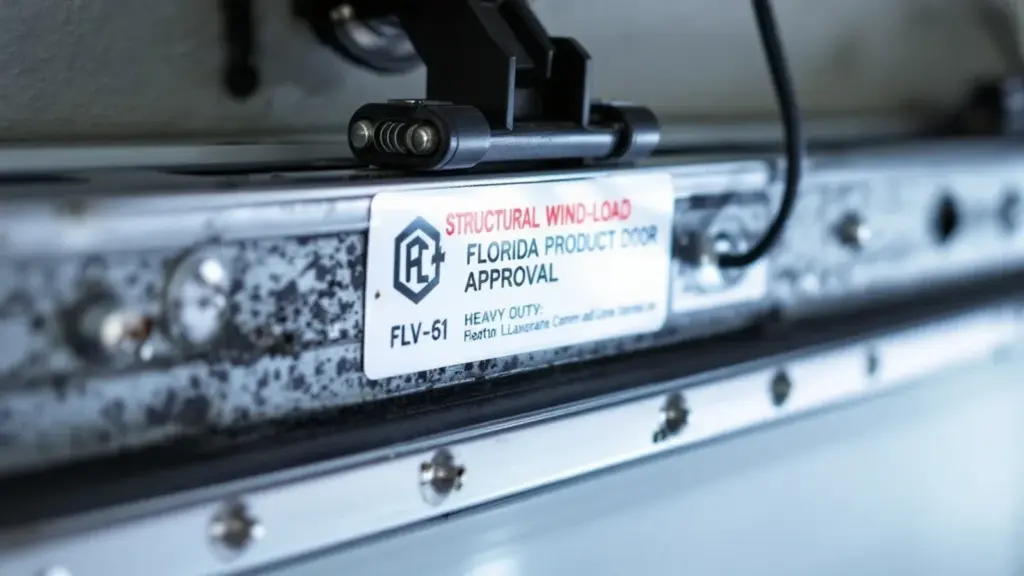
Broward County is designated as a High Velocity Hurricane Zone (HVHZ) under the Florida Building Code. This means any exterior opening, including residential garage doors, must be engineered to withstand incredibly high wind pressures. The specific wind velocity requirements in our region generally start at 170 miles per hour, depending on the exact distance from the coastline and the height of the structure. To comply with these standards, a garage door must carry an official Product Approval number (either from the State of Florida or a Miami-Dade Notice of Acceptance, also known as an NOA). These approvals prove the door system has been tested to survive both positive and negative wind pressures as well as large-missile impacts, which simulate flying debris during a storm.
How does the High Velocity Hurricane Zone (HVHZ) designation affect Fort Lauderdale homeowners?
Living within the HVHZ means you cannot simply purchase a standard, off-the-shelf garage door designed for inland states. In Fort Lauderdale, every replacement door must be fully engineered, tested, and certified to meet the highest safety standards in the country. This designation dictates everything from the gauge of steel used in the door tracks to the reinforcement U-bars installed across the back of the door panels. It also means that a professional installation must include heavy-duty commercial-grade hinges, heavy-gauge rollers, and specific anchor configurations that secure the tracks deep into your home’s concrete header and jambs. Understanding these requirements is essential when planning a garage door replacement fort lauderdale to ensure your home remains fully compliant and protected.
What is the difference between wind load rating and impact rating?
It is common for property owners to confuse wind load ratings with impact ratings, but they refer to two completely different protective capabilities. A wind load rating measures the static pressure a garage door can withstand without warping, bending, or blowing out of its tracks. This pressure is measured in pounds per square foot (PSF) and includes both positive pressure (pushing against the door) and negative pressure (pulling the door outward). An impact rating, on the other hand, indicates that the door has undergone projectile testing. During this test, a heavy piece of lumber is fired at the door at high speed, followed by thousands of pressure cycles to ensure the barrier is not breached. In Broward County, a garage door must have both ratings to be fully compliant.
Why is Fort Lauderdale’s coastal climate a factor in structural code compliance?
If you want it handled correctly the first time, consider professional fort lauderdale rusting garage door hinges in Fort Lauderdale.
In Fort Lauderdale, our local housing stock is heavily influenced by the immediate proximity of the Atlantic Ocean and the Intracoastal Waterway. Many neighborhoods feature mid-century concrete block stucco (CBS) homes alongside newer multi-story properties that face intense, unfiltered coastal winds. The age of a home determines the type of anchoring system required to secure the door tracks to the wall. For example, older homes with aged wood framing require different fasteners than those with poured concrete tie beams. Additionally, our high humidity and airborne salt quickly degrade sub-standard metal components, leading to corrosion that can compromise the structural integrity of the door’s wind-load reinforcement over time. This makes it vital to monitor your system for the signs of coastal salt-air damage before a major storm approaches.
What is a Notice of Acceptance (NOA) and how do you read one?
A Notice of Acceptance (NOA) is a highly detailed legal document issued by Miami-Dade County that certifies a product’s compliance with the strict HVHZ building code. It serves as the ultimate proof of structural integrity for local building inspectors. When you look at an NOA for a garage door, you will find specific structural engineering drawings, required anchoring patterns, maximum allowable door sizes, and the exact design pressures (positive and negative PSF) the door can handle. It also specifies the type of glass permitted if you choose a door with windows. Navigating these dense documents can be complex, but ensuring your product has a valid, active NOA or Florida Product Approval is a mandatory step before any building permit can be approved.
How do you calculate the correct design pressure (PSF) for your specific home?
Design pressure is not a one-size-fits-all number. It is calculated based on several variables defined by the American Society of Civil Engineers (ASCE) standards. These factors include the wind speed zone of your specific Fort Lauderdale neighborhood, the height of your building, the exposure category (such as Exposure D for direct waterfront properties versus Exposure C for inland suburban areas), and whether the garage door is located at a corner of the building where wind forces are naturally concentrated. Because these calculations require precise engineering formulas, local building departments require a licensed professional or structural engineer to determine the exact positive and negative PSF ratings required for your home’s unique footprint.
What are the consequences of installing a non-compliant garage door in Broward County?
Many Fort Lauderdale homeowners rely on expert fort lauderdale rusting garage door hinges in Fort Lauderdale for exactly this.
Choosing to install a non-compliant or unpermitted garage door carries severe risks that go far beyond regulatory fines. First, if a hurricane strikes, an unrated door is highly likely to fail, leading to catastrophic roof damage or the total loss of your home. Second, insurance providers in Florida are legally allowed to deny coverage or reject damage claims if they discover the garage door was replaced without a proper permit or did not meet local wind load standards. Lastly, when the time comes to sell your property, a home inspection will quickly flag the unpermitted work, forcing you to undergo an expensive replacement process to bring the home up to code before the title can transfer.
How does the building permit process work for garage door installations in Fort Lauderdale?
In Fort Lauderdale and across Broward County, replacing an exterior garage door requires a building permit. The permitting process exists to verify that the selected door matches the structural requirements of your specific address. When applying for a permit, you must submit detailed documentation, including the manufacturer’s installation drawings, the Florida Product Approval or NOA documents, a site plan, and a wind load calculation sheet. Once the physical expert garage door installation is complete, a city building inspector must visit your property to verify that the track anchoring, structural reinforcements, and labels match the approved plans exactly. Only after this physical inspection is passed is the permit officially closed.
How do you compare quotes for hurricane-rated garage doors?
When reviewing proposals from local contractors, it is critical to look past the bottom-line price and analyze the structural details. You must confirm that each quote specifies the exact wind load rating, the Florida Product Approval or NOA number, the inclusion of impact-resistant glass if windows are selected, and a clear breakdown of the permitting fees. A proper quote should also outline the specific heavy-duty hardware package required to support a high-pressure door. To help you navigate this complex financial and technical decision, you can refer to our detailed guide on comparing hurricane-rated garage door quotes to ensure you are comparing equivalent levels of protection for your household.
Summary and Professional Next Steps
Navigating the complex landscape of Broward County building codes and wind load requirements is essential to safeguarding your property, securing your homeowners insurance, and keeping your family safe during major storms. Ensuring your home is equipped with a properly permitted, high-velocity wind-rated door is a critical home improvement project that requires precise engineering and experienced craftsmanship. For professional guidance on choosing the right system for your home, or to schedule an inspection of your current door’s structural integrity, contact Eric’s Garage Door Repair Service in Fort Lauderdale today.