Introduction
Seasonal maintenance is essential for garage doors in Palm Beach, Florida, where the subtropical climate and periodic severe weather place unique demands on doors and hardware. Preparing your garage door for seasonal changes—particularly before hurricane season and during the humid summer months—helps prevent failures, keeps water out, and preserves mechanical components. A well-timed maintenance routine can reduce emergency repairs and protect your property and vehicles. If you prefer professional handling for thorough seasonal service, reach out to experienced garage door repair services who understand local conditions and maintenance best practices.
Spring Maintenance Checklist
Spring is a good time to inspect the door after winter and check for any damage sustained during cooler months or storms. Start with a full visual inspection of panels, seals, and hardware. Clean tracks and remove debris that may have accumulated. Inspect the torsion springs and extension springs for signs of rust or fatigue. Replace worn or corroded parts as needed. Lubricate moving metal parts with manufacturer-recommended lubricants to ensure smooth operation and to prevent squeaking. Check the opener’s batteries and test the remote controls and keypads to ensure reliable function after any cold snaps or temperature shifts.
Summer Preparations and Heat Considerations
Miami-area heat and high humidity can affect door seals and expand metal components. Inspect weather stripping and replace it if it has become brittle or separated from the door. High temperatures may influence door balance, especially if panels are warped by heat exposure. Ensure that insulated doors maintain their seal integrity and that any foam or insulation has not degraded. Check for adhesives or seals that may break down in high heat, and consider shade or ventilation strategies for garages that experience intense midday sun to reduce heat buildup that affects stored items and door materials.
Hurricane Season Readiness
Hurricane season requires special attention. Inspect the structural integrity of the door and the frame. If you live in a zone where building codes require reinforced doors or panels, verify that your door meets those standards. Consider installing hurricane-rated doors or reinforcement kits if your current door is not rated. Ensure that manual release mechanisms are functional and that family members know manual operation procedures in case of power outage. Store tools and boards needed for temporary water diversion in an easily accessible place, and keep contact information for emergency repair services on hand.
Autumn Maintenance and Storm Aftercare
After summer storms, conduct an inspection for wind or water damage. Look for warped panels, compromised seals, and signs of moisture intrusion into the garage. Clean gutters and downspouts to reduce the risk of water pooling near the garage door threshold. If you experience persistent moisture in the garage, consider adding a threshold seal. Autumn can also be a good time to check the door opener’s lighting and to replace batteries in remotes and keypads prior to winter months when conditions may be more variable.
Winter Checks and Moisture Control
Although Florida winters are mild compared to northern climates, humidity and occasional cold fronts can affect components. Inspect seals for brittleness, check for condensation at the top of the garage that could lead to rust, and ensure that ventilation prevents prolonged moisture accumulation. If you use a heater or dehumidifier in the garage, maintain those systems and ensure they do not introduce additional moisture that could damage the door. Keep an eye out for unusual condensation near hinges and tracks, and address any corrosion promptly.
Regular Lubrication Schedule
Lubrication prevents metal-on-metal wear and reduces noise. Create a lubrication schedule that coincides with seasonal checks. Use garage-door specific lubricants for springs, bearings, and hinges; avoid using oils that attract dust and debris. Apply lubricant sparingly to rollers if not sealed, hinges, and springs, and wipe away excess. In coastal areas, more frequent lubrication may be necessary to combat salt deposit buildup. Never apply lubricant inside the track rail; lubrication belongs on moving components, not the interior channel where buildup can collect.
Seals, Weatherstripping, and Thresholds
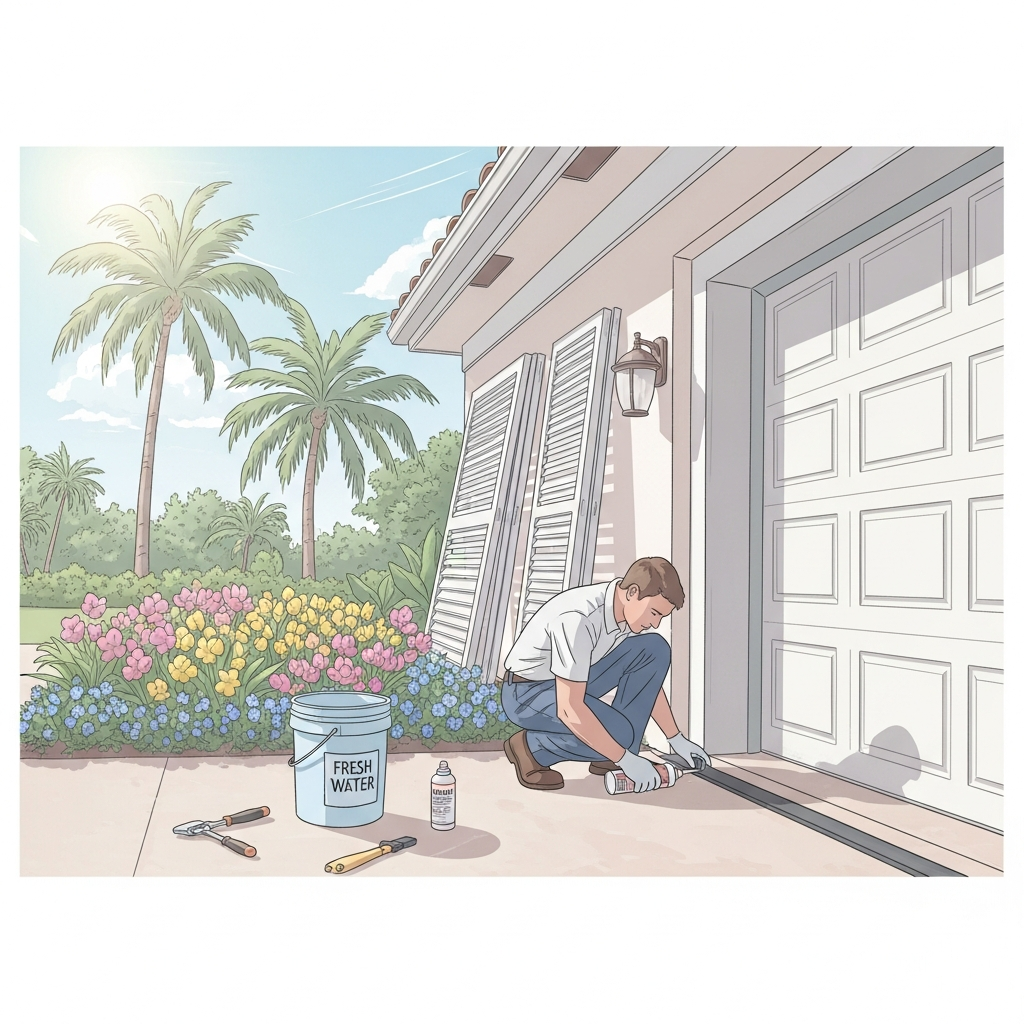
Seasonal expansion and contraction can cause seals and weatherstrips to separate or crack. Examine the bottom seal, side seals, and header seal for gaps and replace them if compromised. Consider a heavy-duty threshold seal if you experience water seepage during storms. Threshold seals create an additional barrier against wind-driven rain. Make sure the door closes fully onto the threshold without significant gaps that would allow pests or moisture to enter the garage.
Electrical and Electronic Component Care
Seasonal power surges are common during storms in Florida. Protect your opener with a surge protector designed for appliances and ensure that all visible wiring is secured away from moving parts. Inspect control panels, sensors, and keypads for corrosion and replace batteries seasonally. If your opener is older and does not offer modern safety features, discuss upgrading to a newer unit with a battery backup and improved sensor technology to protect your investment and ensure operation during outages.
Dealing with Corrosion and Coastal Exposure
Palm Beach residents should pay particular attention to corrosion from salt spray. Rinse metal components periodically with fresh water to remove salt deposits if your property is close to the ocean. Evaluate the use of stainless steel or galvanized hardware for components such as rollers and hinges. If significant corrosion is present, prioritize replacement of affected parts to prevent sudden failures. Regularly inspect springs and cables for rust and fraying and replace them at the first sign of deterioration.
Insulation and Temperature Control
Insulated doors help control garage temperatures and protect stored items from humidity and heat. Before summer, confirm that insulation materials remain intact and that seals are effective. Insulated doors can also reduce noise from the outside and provide a more stable environment for attached living spaces. If you plan to convert the garage into a workspace or to store sensitive items, invest in insulation upgrades and ensure doors and seals are in good condition before extreme temperatures set in.
Routine Testing of Safety Features
Regularly test safety features such as auto-reverse sensors and manual releases. Place a padded object under the door and command it to close—if the door does not reverse immediately on contact, stop using it and call a professional. Test the photo-eye sensors by interrupting the beam during a closing cycle; the door should stop and reverse. Keep sensor lenses clean and free from obstructions. Ensure that the manual release cord is accessible yet secure to prevent unintended activation by children or pets.
Documenting Maintenance Activities
Maintain a seasonal log of inspections, maintenance tasks, and repairs. Documenting service helps track patterns of wear and can provide useful information for technicians diagnosing recurring problems. Keep records of parts replaced, dates of lubrication, and any professional inspections. These records are useful for resale value and for planning future maintenance cycles aligned with seasonal needs.
Hiring Seasonal Professionals
Many homeowners prefer professional seasonal checkups to ensure nothing is missed. Professionals bring diagnostic tools and replacement parts that make seasonal service efficient. They can recommend corrosion-resistant upgrades and verify that safety systems perform reliably. When engaging a technician, ask about seasonal maintenance packages and what they include so you can plan ahead and ensure the door remains reliable year-round.
Frequently Asked Questions
Q: How often should I clean my garage door tracks in Palm Beach?
A: Clean tracks at least twice a year and after major storms. Wipe away debris with a dry cloth and avoid adding lubricant inside the track channel.
Q: Will routine maintenance prevent spring failures?
A: While springs have finite lifespans determined by cycles, routine inspections and lubrication help identify wear early and allow scheduled replacement before sudden failures.
Q: What is the best weather seal for flood-prone areas?
A: A heavy-duty threshold seal combined with a full perimeter seal provides the best defense against water intrusion. For severe flood exposure, discuss additional protective measures with professionals.
Q: How should I prepare my garage door before a hurricane?
A: Secure loose items, verify manual release knowledge, reinforce or replace weak panels if necessary, and consider hurricane-rated upgrades for enhanced protection.
Seasonal Maintenance Plan Example
Plan a spring inspection for cleaning and spring checks, perform a summer inspection for seals and heat-related issues, prepare for hurricane season with structural checks and reinforcement, and conduct an autumn check to address any storm aftermath and ensure batteries and electronics are in good condition for the coming months. Create calendar reminders for these checks and document each visit.
Final Recommendations and Action Steps
Seasonal maintenance keeps your garage door functioning reliably through Palm Beach’s varied climate. Follow a regular plan, use corrosion-resistant parts in coastal areas, and schedule professional inspections for complex repairs. If you would like expert seasonal service or need help preparing your door for upcoming weather, contact reputable local technicians who specialize in garage door care and understand the unique needs of Palm Beach homes.
When you are ready to arrange seasonal inspection or to discuss proactive upgrades to improve durability and safety, contact dependable garage door repair services to schedule an appointment and ensure your door is protected through every season.