
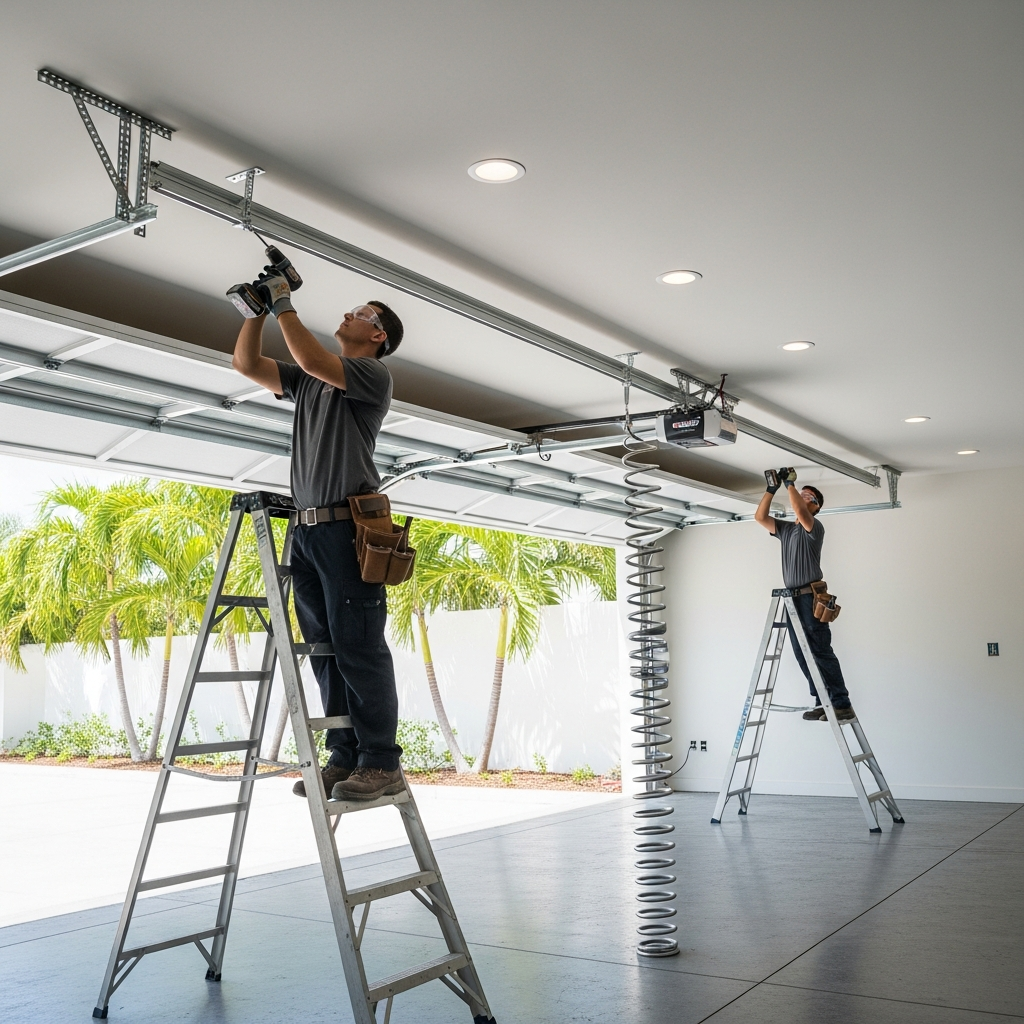
Installing a new garage door in Palm Beach, Florida, requires careful planning and professional execution to withstand coastal conditions, humidity, and potential storm forces. This installation guide covers preparation, best practices, installation steps, safety checks, and maintenance tips. If you’d like to connect with a local professional who understands the specifics of Palm Beach installations, explore trusted options such as garage door replacement services to review installation packages and expertise.
This comprehensive guide will equip you with the knowledge to oversee an installation, ask informed questions of contractors, and ensure the job meets code and performance expectations. It is written for homeowners who want a clear understanding of the installation process, from site prep to final calibration.
Preparing for Installation: Preliminary Steps
Preparation is essential for an efficient installation day. Start by confirming measurements and design choices, obtaining necessary permits, and ordering materials. Detailed planning reduces delays and ensures installers arrive with the correct parts and hardware.
- Finalize the door model, insulation, and finish.
- Confirm measurements for the opening, headroom, side room, and ceiling height to ensure track and opener compatibility.
- Ensure the delivery date aligns with the installation date to avoid storage issues or weather exposure of components.
- Clear the work area and relocate vehicles and personal items to prevent damage and allow installers sufficient workspace.
Tools and Materials Typically Needed
Professional installers bring specialized tools for safety and precision, but here are common materials and items used during installation:
- Door panels, tracks, rollers, hinges, springs, cables, and brackets.
- Mounting hardware, screws, bolts, and reinforcement struts where necessary.
- Weatherstripping for the sides, top, and bottom of the door.
- Garage door opener unit if being replaced, and associated rail, trolley, and safety sensors.
Make sure your contractor confirms all required components before starting work.
Installation Step 1 — Removing the Existing Door and Components
The first on-site activity is the safe removal of the existing door and hardware. Professionals follow strict safety protocols for springs and cables which store dangerous tension. Steps include:
- Disconnecting the opener and ensuring power is off.
- Releasing tension from torsion or extension springs using appropriate tools.
- Disassembling panels, tracks, and hardware in a controlled manner.
- Removing old seals and preparing the opening for new installation.
Never attempt to adjust or remove springs without proper training and tools — these components can cause serious injury.
Installation Step 2 — Assessing and Repairing the Opening
With the old door removed, installers inspect framing, header integrity, and anchor points. Any rot, damage, or misalignment is corrected before the new door is installed. This step is critical for ensuring the new tracks and springs are mounted securely and perform as intended.
Installation Step 3 —Mounting Tracks and Brackets
Track mounting dictates smooth operation. Installers plumb and level tracks so rollers run freely without binding. Side and top brackets are anchored into solid framing or reinforced plates. For heavier or impact-rated doors, additional struts and supports are mounted to prevent flexing under load or wind pressure.
Installation Step 4 —Spring and Cable Installation
Springs provide the counterbalance that makes doors manageable. Technicians select springs rated to match the new door’s weight and balance. Torsion springs are mounted above the opening on a torsion bar; extension springs are installed along the track length. Proper calibration and safety cable installations are essential for preventing failures and protecting people and property.
Installation Step 5 —Hanging Door Panels and Aligning
Panels are installed from the bottom up, with each section secured and aligned. Installers check alignment and level at each step to avoid skewed panels or binding during operation. Windows or decorative elements are added according to the design while ensuring weatherproofing and sealing around openings.
Installation Step 6 —Opener Installation and Alignment
After the door is fully assembled, the opener is installed or reconnected. Installers mount the opener rail, attach the trolley to the door, and align sensors across the door opening for correct auto-reverse operation. They set force and travel limits so the door stops and reverses reliably under obstruction.
Installation Step 7 —Weatherstripping and Threshold Seals
Installers add perimeter seals and base thresholds to minimize drafts, pests, and water intrusion. Proper weatherproofing prolongs the life of stored items and maintains garage interior conditions, which is particularly important during Florida’s rainy seasons.
Installation Step 8 —Final Safety Checks and Tests
Final testing includes multiple open/close cycles, inspection of all hardware, a balance test, and verification of auto-reverse function by placing an object in the door’s path. Installers also check the manual release mechanism, ensuring you can safely open the door in a power outage.
Quality Assurance: What to Expect After Installation
Following installation, expect a formal walkthrough. Installers should provide:
- Documentation on warranties and maintenance recommendations.
- Demonstrations of opener features, keyless entry, and manual release operations.
- Information about periodic maintenance intervals and recommended service tasks to keep the system performing well.
Keep all manuals and warranty information in a safe place and schedule an initial follow-up inspection if recommended.
Safety Practices for Homeowners
To keep family members safe around the garage door, implement these practices:
- Teach children not to play with the door or remote controls.
- Test the auto-reverse mechanism monthly to ensure sensors are functioning.
- Never attempt to adjust springs or cables — always call a professional for spring repairs.
- Keep the opener on a regular maintenance schedule to detect potential problems early.
Maintenance and Long-Term Care
Regular maintenance preserves the performance and extends the life span of your new garage door. Recommended tasks include lubricating moving parts, checking and replacing weatherstripping, inspecting for corrosion especially in coastal climates, and testing safety systems regularly. Consider a professional inspection annually to catch issues early.
FAQ Section
Q: How long does installation usually take?
A: Typical installations for standard single or double doors often take a half to a full day, depending on complexity and whether structural repairs are needed. Custom or impact-rated doors can take longer.
Q: Are special permits required in Palm Beach?
A: Local requirements vary. Impact-rated doors or installations that alter the structure often require permits. Your installer should advise and handle permit pulls if that is included in your contract.
Q: How can I protect my new door from coastal corrosion?
A: Choose corrosion-resistant materials and finishes, rinse salt residue periodically, and use stainless-steel fasteners where possible. Schedule regular inspections to address early signs of corrosion.
Q: What should I do if the door starts making unusual noises after installation?
A: Noise often indicates loose hardware, misaligned tracks, or a need for lubrication. Contact your installer promptly to diagnose and repair the issue before it becomes a larger problem.
Midway through the life of your door, you may want to upgrade opener features or refresh the finish. Keep documentation of the installation and parts for warranty claims and future service calls. If you need professional guidance or want to schedule an installation with technicians experienced in Palm Beach conditions, review specialized local providers such as garage door replacement services for options and consultations.
Final thoughts: a careful installation performed by experienced professionals will yield a durable, safe, and attractive garage door that resists Palm Beach’s coastal challenges. With proper maintenance, your new door will provide reliable function and improved curb appeal for years.