
Understanding the repair process for garage doors helps homeowners and property managers in Palm Beach, Florida, make informed decisions and communicate effectively with technicians. Whether you face a broken spring, a misaligned track, or electrical issues with the opener, knowing the steps professionals follow ensures transparency and confidence in the repair work. If you prefer a service that handles inspection through repair with attention to regional challenges, consider reaching out to experienced garage door repair services. This article walks through the typical step-by-step repair workflow, explains common diagnostic methods, and highlights what to expect at each stage when working with a trusted local provider.
Initial Contact and Scheduling
The repair process begins when you contact a provider. A reliable company will gather basic information about the problem, such as symptoms, any unusual noises, whether the door opens or closes, and whether a spring or cable failure is visible. They may ask about the door type, the opener model, and whether the issue occurred suddenly or developed over time. Accurate information during this stage helps technicians prepare the right tools and parts for the visit.
For urgent situations, providers typically offer emergency scheduling to secure the door and prevent further damage. In non-emergency cases, they will arrange a convenient appointment for a comprehensive inspection and estimate.
On-Site Arrival and Safety Assessment
Upon arrival, technicians perform a safety assessment before starting any work. They check for visible hazards like broken springs or loose cables, evaluate the structural stability of the door and frame, and ensure the area is clear of obstructions. Safety procedures may include disabling the opener to prevent accidental activation and stabilizing the door if it is in a precarious position.
Technicians will explain safety precautions to the property owner and outline the steps they plan to take. Clear communication at this stage is important, and a reputable company will answer questions and confirm authorization before proceeding with repairs.
Diagnostic Inspection
The diagnostic phase involves a thorough inspection of mechanical and electrical components. Technicians inspect springs and cables, examine the tracks for bends or misalignment, assess rollers and hinges, test the opener and remote controls, and check safety sensors. They may operate the door under controlled conditions to observe behavior and identify intermittent problems that don’t appear in a static inspection.
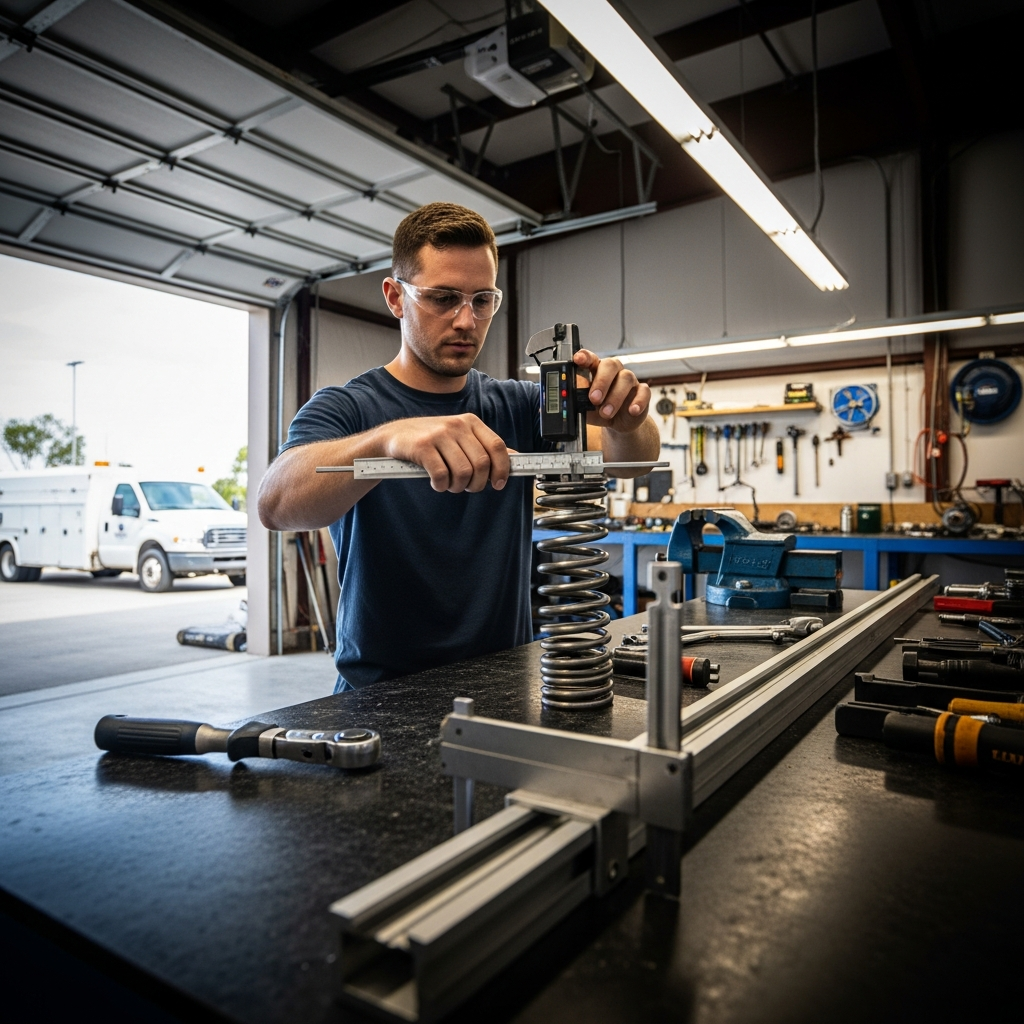
Technicians also evaluate the door balance, measure spring tension, and look for signs of wear such as fraying cables or worn rollers. Documenting the condition of components helps provide an accurate estimate and informs recommendations for repair or replacement.
Estimate and Repair Plan
After diagnostics, the technician presents an estimate and repair plan. This includes the parts that need replacement, the recommended sequence of work, and expected timelines. A clear plan distinguishes between immediate safety repairs and long-term fixes, allowing homeowners to prioritize if necessary. Reputable companies offer transparent explanations of why each repair is necessary and what outcomes to expect.
If temporary stabilization is required to make the door safe, technicians will discuss the need for follow-up work to complete the repair properly. They will also notify you if permit requirements or building code considerations apply to structural modifications or replacements.
Performing Repairs
Technicians carry out repairs according to the plan, following established safety protocols. Common tasks include replacing torsion springs, swapping worn rollers with corrosion-resistant replacements, straightening or replacing damaged tracks, adjusting or replacing cables, and repairing opener components. For corrosion-affected parts, technicians may recommend stainless steel hardware and protective coatings to mitigate future issues in Palm Beach’s coastal climate.
Precision matters: springs must be sized and tensioned correctly to balance the door, and tracks must be aligned within exact tolerances to ensure smooth operation. Professionals use specialized tools and measurement techniques to achieve these outcomes safely.
Testing and Adjustments
After parts are installed or adjusted, technicians perform comprehensive tests. They cycle the door multiple times to confirm smooth travel, verify that the opener engages properly, and test safety sensors for correct interruption response. They also check the manual release mechanism and confirm that the door remains balanced when disconnected from the opener.
Any minor adjustments needed for alignment, spring tension, or sensor positioning are performed during this phase to ensure reliable operation and safety compliance.
Cleanup and Final Walkthrough
After repairs and testing, technicians clean the work area, remove old parts, and ensure no debris remains in the tracks or near mechanisms. They conduct a final walkthrough with the homeowner to explain the repairs completed, demonstrate door operation, and provide maintenance recommendations. A reputable technician will also advise on potential future issues and schedule follow-up inspections if needed.
Documentation and Warranty
Good companies provide written documentation summarizing the work performed, parts replaced, and warranty terms. This record is important for future service and for homeowners who may sell the property. Warranties vary by part and labor, so review the terms carefully and ask questions if anything is unclear.
Middle Section: Handling Complex or Structural Repairs
Some repairs go beyond hardware replacement and require structural attention. Damaged panels, compromised frames, or header issues may necessitate coordination with contractors or building inspectors. For instance, reinforcing the header to support a heavier door or correcting frame warping caused by impact requires careful planning and possible permits. In such cases, technicians coordinate with homeowners to develop a solution that meets safety standards and local building codes.
Complex repairs often take longer and may require specialized parts. A reputable company explains the timeline, coordinates delivery of materials, and provides progress updates throughout the project.
When Replacement Is Recommended
Technicians recommend full door replacement if repairs are frequent, if multiple components show significant wear, or if the door’s structural integrity is compromised. Replacement may also be the best option when upgrading to a more durable or hurricane-rated design that better suits local requirements. A replacement offers a fresh baseline for maintenance and can reduce long-term service needs when modern materials and protective features are selected.
FAQs
Q: How long does a typical garage door repair take? A: Repair times vary depending on complexity. Simple fixes like roller replacement or sensor alignment can be completed in an hour or two, while spring replacement, track realignment, or opener diagnostics may take longer. Structural or replacement projects require more time and scheduling.
Q: Will the technician explain the problem and options? A: Yes. A reputable technician will explain the diagnosis, outline repair options, and discuss short-term and long-term implications so you can make an informed decision.
Q: Are emergency repairs handled differently? A: Emergency repairs focus on safety and stabilization first, followed by permanent fixes. Technicians prioritize securing the door to prevent hazards and then schedule or complete comprehensive repairs as the situation permits.
Q: What should I do to prepare for a repair visit? A: Clear the work area, provide access to the garage, and have information about the door brand and opener model available. Inform technicians of any prior issues or recent symptoms to assist diagnosis.
Understanding the step-by-step repair process helps you set expectations and work more effectively with professionals. From initial contact and safety assessment through diagnostics, repairs, testing, and documentation, each stage plays a role in achieving a safe and reliable result. Local Palm Beach technicians bring region-specific knowledge that helps in selecting corrosion-resistant materials and appropriate protective measures for long-term performance.
If your garage door needs inspection, repair, or a full replacement, trust experienced technicians who follow transparent, safety-first processes and provide thorough documentation. For reliable service that covers everything from diagnosis to follow-up, consider scheduling a visit with reputable garage door repair services experienced in Palm Beach conditions. A professional approach ensures your door operates smoothly, safely, and reliably for years to come.
Maintaining clear communication with your repair provider, understanding warranty terms, and following recommended maintenance will keep your system in good working order. When you need professional assistance or a comprehensive inspection, reach out to technicians who prioritize safety and local expertise to achieve the best outcomes for your property.