
Introduction
Installing a garage door in Palm Beach, Florida requires more than selecting an attractive panel. The right installation accounts for coastal weather, wind loads, material durability, proper hardware, and correct alignment. A meticulous installation ensures safe operation, long service life, and adherence to local codes and wind-load requirements. If you prefer professional installation or want guidance on what to expect, consult a qualified provider such as garage door service to help plan and execute a successful installation. This checklist covers site preparation, material selection, hardware considerations, safety features, and post-installation testing tailored to Palm Beach conditions.
Pre-Installation Considerations
Before installation begins, evaluate the following items to prevent surprises and ensure a smooth process:
- Measure the opening accurately: width, height, jamb depth, and headroom. Record measurements for door panel sizing and track placement.
- Check the condition of the framing and header. Reinforce or repair any rot, cracks, or structural issues.
- Review local building codes and wind-load requirements. Palm Beach often requires wind-rated doors or reinforcements to meet hurricane and storm standards.
- Decide on material and insulation levels for thermal performance and durability: steel, aluminum, wood, or composite doors each have pros and cons in coastal climates.
Selecting the Right Door Material
Choose materials suited for a salt-air environment and the homeowner’s priorities:
- Steel doors with protective finishes resist warping and provide strength. Look for galvanized or coated steel for better corrosion resistance.
- Aluminum is lightweight and resists rust but may dent more easily. Consider thicker profiles for added durability.
- Composite doors or fiberglass can offer wood-like aesthetics with better resistance to moisture and rot.
- Wood doors offer classic looks but require more maintenance in humid climates to prevent warping and rot.
Wind-Load and Reinforcement Requirements
Palm Beach building codes may require wind-loaded doors or reinforcements for certain zones. Confirm local requirements before ordering:
- Wind-rated doors include reinforcement struts and stronger hardware to resist uplift and lateral forces during storms.
- For existing openings, ensure the header and jambs can support reinforced doors. Add steel reinforcement to meeting codes if necessary.
- Consider adding impact-resistant glass or panels if your design includes windows, to protect against flying debris in storms.
Hardware and Opener Specifications
Select hardware that complements the door’s intended use and longevity in coastal conditions:
- Choose stainless steel or galvanized brackets, bolts, and fasteners in coastal installations to minimize corrosion.
- Pick a garage door opener with sufficient torque for your door’s weight and a durable drive system — belt drives are quieter and often preferred for residential properties.
- Opt for openers with safety features such as rolling code remotes and built-in diagnostic systems to monitor performance.
Preparing the Site
Proper site preparation prevents delays and ensures a secure installation:
- Clear the work area inside and outside the garage for safe access and staging of door panels and tools.
- Ensure a level floor and a solid mounting surface for brackets and opener hardware.
- Verify electrical access for the opener and plan conduit or wiring paths. Install dedicated circuits if recommended by the opener manufacturer.
Installation Steps Overview
Follow a structured process for installing sectional doors to ensure proper alignment and balanced operation:
- Assemble the bottom section and install weatherstripping. Secure it temporarily to allow for alignment adjustments.
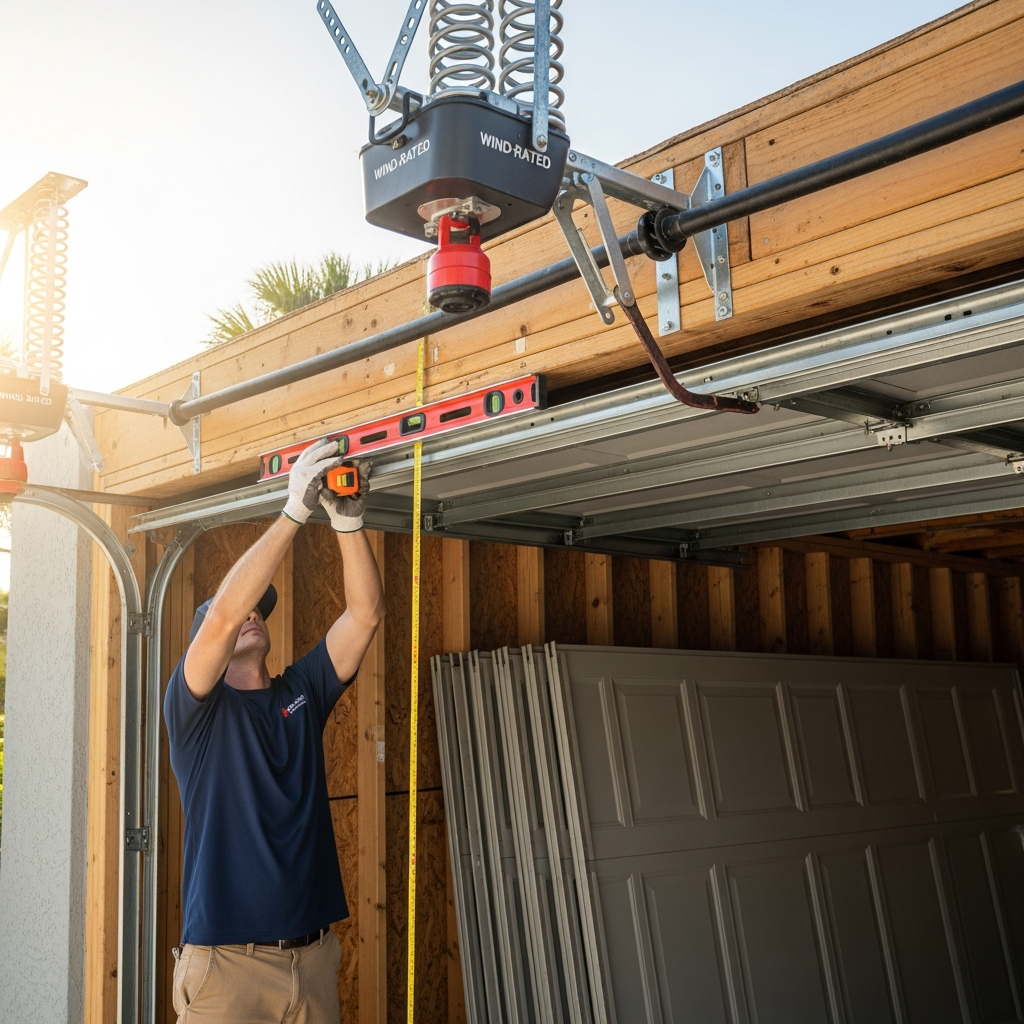
- Install vertical tracks and ensure plumb alignment with a level. Use shims or reinforce as necessary.
- Attach remaining panels, aligning hinge points and securing with bolts. Keep panels square and even during installation.
- Install horizontal tracks and secure them to the ceiling joists or support brackets.
- Install rollers, hinges, and hardware, ensuring smooth movement within the tracks.
- Mount torsion spring assembly or extension springs according to manufacturer specifications. This step often requires specialized tools and expertise — most homeowners should rely on trained installers for spring setup.
- Attach cables to the bottom brackets and spool them correctly on the drums for torsion systems.
- Connect the opener, test travel limits, and adjust force settings so the door reverses reliably on encountering obstructions.
Sealing and Weatherproofing
Proper sealing enhances comfort and prevents water intrusion — especially critical in coastal Florida:
- Install bottom seals and threshold plates to form a tight barrier against water and pests.
- Fit vinyl or rubber side seals to prevent drafts and moisture entry around the jambs.
- Ensure any windows are properly flashed and sealed to prevent leaks.
Electrical and Safety Integration
Openers and safety devices must be installed and tested carefully:
- Install photo-eye sensors at the recommended height and verify they are aligned and unobstructed.
- Wire and secure the opener unit to the overhead structure. Ensure proper grounding and adhere to local electrical code.
- Test remote controls, keypad entries, and homelink compatibility for smooth operation.
Quality Checks and Testing
Following installation, perform comprehensive testing to verify safe, reliable performance:
- Check door balance by disconnecting the opener and lifting the door halfway — it should remain in place without drifting.
- Test auto-reverse by placing an object like a 2×4 on the floor in the door’s path and confirming the door reverses when contact occurs.
- Operate the door several times and listen for rubbing, binding, or irregular noises that indicate misalignment.
- Inspect hardware tightness and recheck all bolts and mounting brackets.
Documenting the Installation
Keep records of parts, installation dates, and warranty information. Provide homeowners with operating instructions, maintenance tips, and an inspection schedule to keep the door performing well in Palm Beach conditions.
When to Hire a Professional Installer
While experienced DIYers may install some doors, complex installations or those requiring wind-load reinforcement are best left to licensed professionals. Reasons to hire a pro include:
- Torsion spring assembly and precise tensioning
- Custom-sized doors and complex hardware configurations
- Compliance with local building codes and wind-load requirements
- Electrical hookup and troubleshooting for openers
Frequently Asked Questions
How long does a typical installation take?
Installation time varies by door complexity and any preparatory work needed. A straight swap of a sectional door by a professional typically takes 4–6 hours, but custom or reinforced installations may take longer.
Do I need a permit for garage door installation in Palm Beach?
Permitting requirements depend on your location and whether your door requires wind-load reinforcement. Check with local building authorities or ask your installer to obtain necessary permits.
What should I look for in warranty coverage?
Look for warranties on panels, springs, and openers. Confirm the length of coverage and whether installation labor is included. Also check for corrosion-related exclusions in coastal areas.
Can I replace only the opener and keep my existing door?
Yes, many homeowners replace openers while keeping the existing door. Ensure the new opener matches the door’s weight and drive requirements for safe operation.
Conclusion and Next Steps
A successful garage door installation in Palm Beach blends thoughtful material selection, code compliance, precise hardware installation, and attention to sealing and wind resistance. Whether you plan to hire a professional or coordinate a DIY project, prepare with accurate measurements, local code knowledge, and the right materials. If you prefer expert guidance or full-service installation, consult a local installer familiar with coastal conditions and wind-load requirements. For detailed service options and professional installation assistance, visit garage door service.
Final Inspection and Handover
After installation, ensure homeowners receive a thorough walkthrough including demonstration of operating features, safety tests, and maintenance recommendations. Provide contact information and warranty paperwork so the homeowner can schedule future maintenance and inspections. Proper handover ensures long-term performance and peace of mind for Palm Beach residents.