Troubleshooting garage door issues starts with observing symptoms and understanding the likely mechanical or electrical causes. This guide is designed for Palm Beach, Florida homeowners who want to perform safe preliminary checks before calling a professional. Coastal conditions can influence symptoms, so this guide emphasizes safe practices and clear signs that professional garage door repair is required.
Before attempting any checks, ensure the area is safe: keep children and pets away, and do not touch tensioned springs or frayed cables. Many problems can be diagnosed with a combination of observation and simple tests; others will require a trained technician. Below are common symptoms, likely causes, and what you can safely test at home.
Problem: Door won’t open or close
Likely causes include power issues, remote battery failure, disengaged opener carriage, or broken springs and cables. Start with straightforward checks: verify power to the opener, replace remote batteries, and test wall switches. If the opener hums but the door does not move, or the door is off-balance, do not attempt to lift it manually; call a professional due to potential spring or cable failure.
Problem: Door reverses unexpectedly
When the door reverses as it closes, sensors may be misaligned, the path might be obstructed, or the force settings on the opener may be incorrect. Inspect the photo-eyes at the bottom of the track to ensure lenses are clean and properly aligned. You can test the reversal by placing a small object in the path of the door and observing response, but do not use a person or animal. If sensors appear aligned and clean, a technician can inspect force settings and opener sensitivity.
Problem: Door makes loud or unusual noises
Grinding, squealing, or banging noises usually indicate worn rollers, loose hardware, or failing opener components. Lubrication can reduce some noises, but persistent or worsening sounds should be evaluated by a professional. In the Palm Beach climate, corrosion can accelerate wear and create distinct grinding sounds as parts rub against each other or corroded surfaces catch.
Problem: Door moves unevenly or gets stuck
Uneven movement often points to track misalignment, a bent track, damaged rollers, or unequal spring tension. If the door is off-balance, do not continue to operate it. A technician will assess track straightness, roller condition, and spring tension and perform the necessary realignment and replacement to restore smooth function.
Safe diagnostic steps you can perform
Here are safe checks that will not interfere with tensioned components or electrical parts when performed carefully.
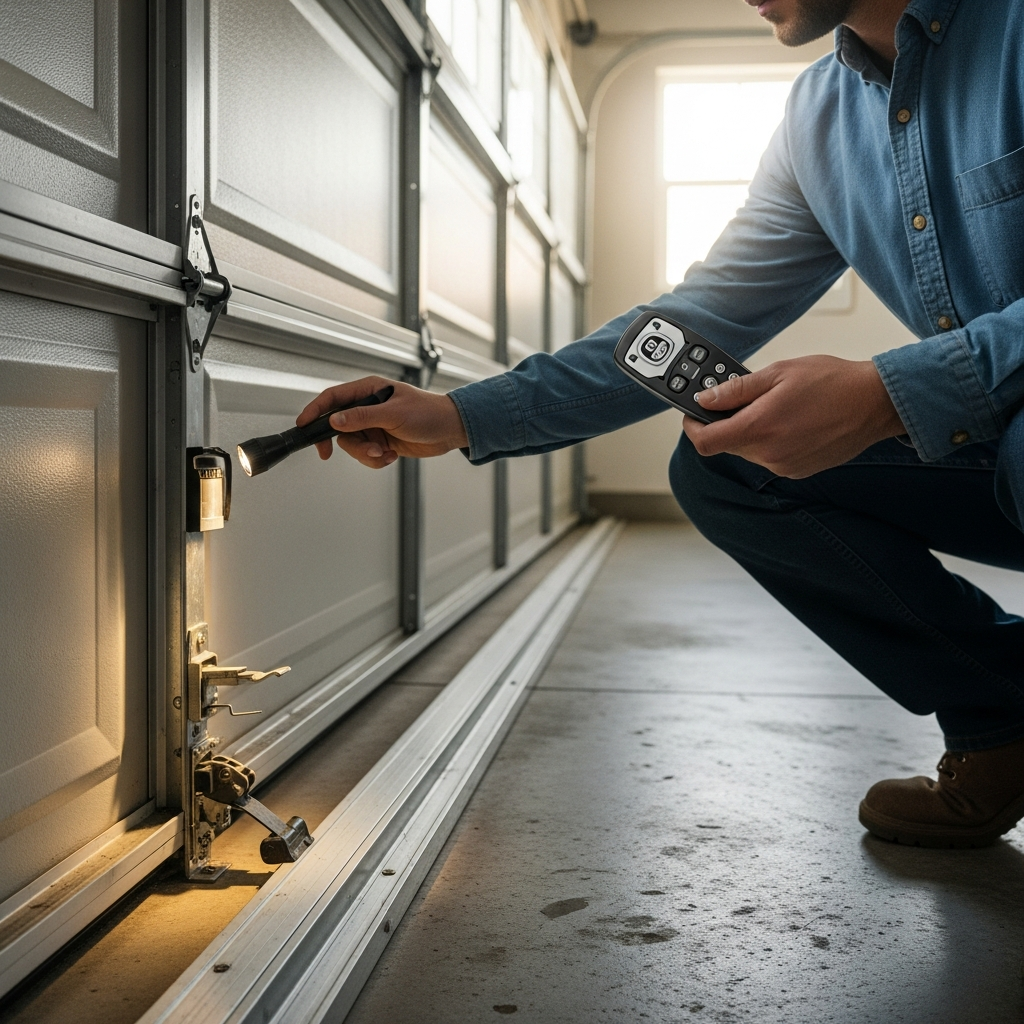
Check power and remote batteries: Ensure the opener is receiving power, and replace remote batteries as needed. Test the wall switch to isolate whether the problem lies with the remote or the opener itself.
Inspect sensors and test reversal: Clear any debris and clean sensor lenses. Align the sensors visually and test the safety reverse operation with a small obstacle.
Look for visible damage: Inspect tracks from a distance for obvious bends or dents and check the door panels for signs of impact. Note any frayed cables or visible spring issues and do not touch them.
When to call a professional
Call for professional repair if you encounter any broken springs, frayed or detached cables, a door that is significantly off-balance, or electrical issues with the opener that cannot be resolved by simple checks. Also call if you hear alarming noises that indicate metal-on-metal grinding or if sensors and limit switches cannot be calibrated through basic adjustments.
Tools and equipment professionals use
Technicians bring specialized tools to handle tensioned springs safely, repair or replace cables, align tracks, and service openers. They use spring winding bars for torsion springs, cable tension gauges, and diagnostic equipment for opener circuit boards. Attempting to use such tools without proper training is dangerous and not recommended.
Preventive troubleshooting — signs to watch for
Early signs of trouble include slowing operation, louder-than-usual noise, intermittent opener response, and minor binding or sticking in one area of the track. Monitoring these signs and acting early — through lubrication, tightening hardware, or scheduling a professional inspection — can prevent sudden failures. In Palm Beach, increased inspection frequency during humid months helps catch corrosion-related issues early.
Emergency procedures
If the door becomes stuck in a position that compromises security or safety, secure the area and call for professional emergency service. For power failures, most openers have a manual release that allows you to disengage the opener and lift the door manually. Only attempt manual lifting if you are certain the springs and cables are intact and you can safely manage the door’s weight.
Upgrades that reduce troubleshooting frequency
Modern upgrades can reduce the need for frequent troubleshooting. Consider upgrading to long-life torsion springs, nylon rollers, and corrosion-resistant hardware. Smart openers with diagnostic features can alert you when performance deviates from normal, allowing you to schedule maintenance before a breakdown. Talk with your technician about which upgrades suit Palm Beach conditions and your usage patterns.
Frequently Asked Questions
Is it safe to test the reverse mechanism myself? Yes, testing the reversal with a small object is safe if performed carefully. However, do not attempt adjustments to springs or cables on your own.
How do I know if the opener or the door is the problem? Simple tests—like operating the door using the wall switch versus the remote, and listening for the opener motor—help isolate the source. If the motor runs but the door does not move, the issue is likely mechanical (springs, cables, or track).
What are the most common causes of failure in coastal areas? Corrosion, salt buildup, and humidity-related wear accelerate failure of metal parts. Upgrades to corrosion-resistant components and more frequent maintenance reduce incidence.
Final steps and timely action
Regular observation and quick response to early warning signs reduce downtime and extend the life of your garage door system. If troubleshooting steps don’t resolve the issue or if you identify dangerous conditions like broken springs or frayed cables, schedule professional garage door repair immediately. Timely action keeps your home secure and prevents further damage to the door and opener system.