
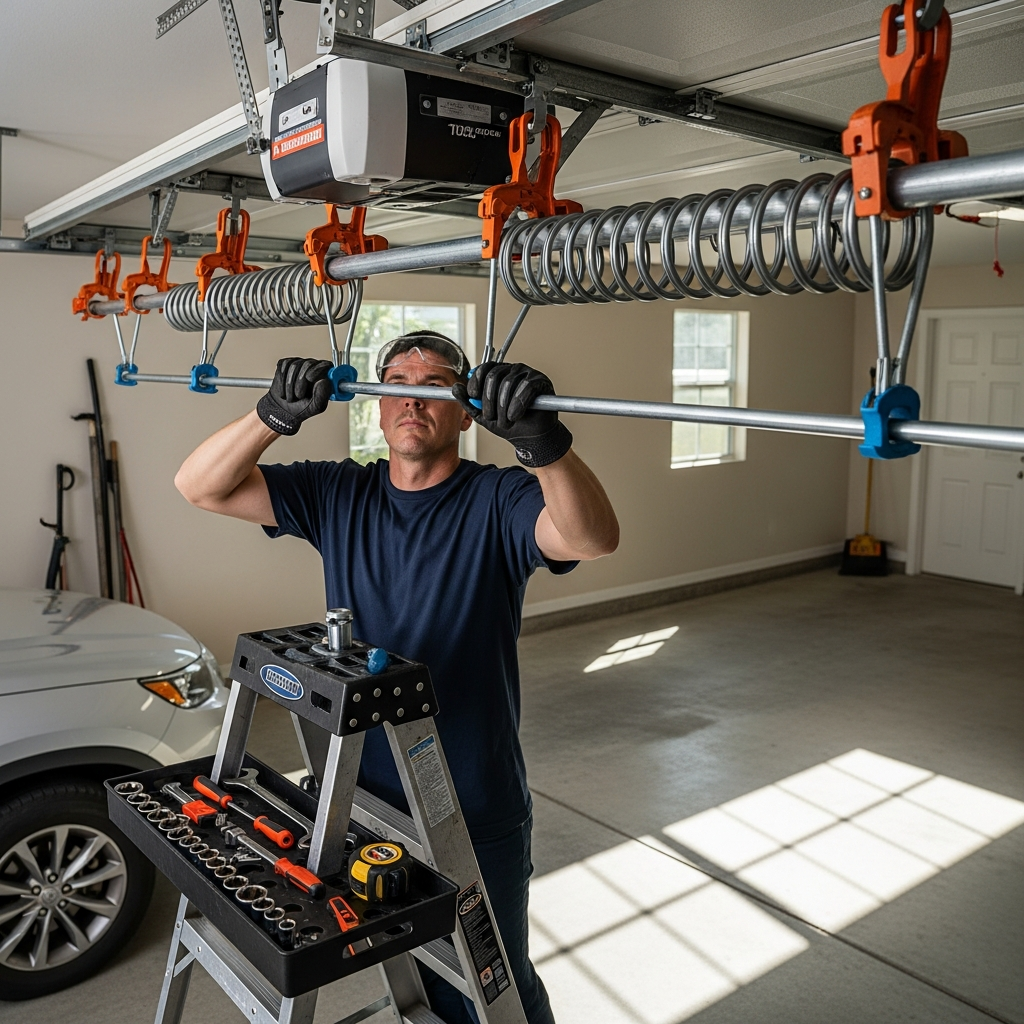
Replacing garage door springs is one of the most critical maintenance tasks for homeowners, particularly in Palm Beach, Florida where corrosion and heavy use can shorten component life. Springs are under extreme tension and must be handled by trained professionals. This guide explains the typical steps professionals follow for safe spring replacement, what homeowners should prepare for, and why choosing an experienced technician matters. For safe, reliable service, schedule professional garage door repair when spring wear or failure is suspected.
This article outlines the process technicians use for both torsion and extension spring replacement, safety precautions taken during service, and post-replacement testing and calibration. It also discusses how Palm Beach’s coastal climate affects spring lifespan and suggests preventive maintenance practices to extend component life. Note: spring replacement is dangerous and not suitable for DIY — read these steps to understand the service and what to expect when a professional performs it.
Why springs fail and why professional replacement is essential
Garage door springs counterbalance the weight of the door and make operation possible. Over time, springs fatigue due to repeated stress cycles, corrosion, and temperature changes. In coastal areas like Palm Beach, salt exposure can accelerate corrosion and weaken springs faster than in less humid climates. Because springs store a large amount of energy, mishandling them can lead to severe injury or property damage. Technicians have the proper tools, such as winding bars for torsion springs, and they follow strict procedures to control tension during replacement.
Initial assessment and preparation
When a technician arrives, they begin with a visual and mechanical assessment. They check spring condition, cable integrity, track alignment, and the overall balance of the door. The technician confirms the type of springs—torsion or extension—and evaluates whether any additional parts need replacement, such as cables, drums, or mounts. If spring replacement is confirmed, the technician explains the work plan and safety measures to the homeowner.
Safety protocols and securing the area
Technicians secure the work area by keeping bystanders at a safe distance and ensuring pets are controlled. The opener is disconnected to prevent accidental activation, and the door is supported as necessary. For torsion spring work, the technician uses dedicated winding bars and clamps to secure the torsion tube and manage stored energy safely throughout the process.
Torsion spring replacement steps
Torsion springs sit on a shaft above the door and are wound to provide torque. Their replacement follows a careful sequence:
1. Disconnect the opener and secure the door in the closed position if necessary. 2. Clamp the door to prevent movement during work. 3. Use winding bars to remove tension gradually and safely from the existing springs. 4. Slide the old springs off the torsion shaft and inspect the shaft, bearings, and drums for wear. 5. Install new springs of appropriate size and cycles rating, and re-tension them to match the door balance. 6. Test the door balance and adjust spring tension and limits as needed for smooth operation.
Extension spring replacement steps
Extension springs are located above the horizontal tracks and extend and contract as the door moves. Their replacement typically includes:
1. Disconnect the opener and secure the door. 2. Use a support bar or other safety device to reduce tension on the springs. 3. Unhook the old springs from their mounts and remove them. 4. Inspect and replace worn pulleys, cables, and safety containment if applicable. 5. Install new springs and reapply tension, ensuring springs on both sides are balanced for even door movement. 6. Conduct multiple tests to verify safe and level operation.
Post-replacement testing and adjustments
After springs are replaced, technicians conduct a series of tests to verify balance and safe operation. They check the door’s manual lift, adjust opener force and limit settings, and ensure sensors trigger reversal properly. Technicians also inspect hardware and recommend replacements for worn drums, cables, rollers, or hinges discovered during the service.
Additional parts commonly addressed during spring replacement
While replacing springs, technicians frequently find additional parts that need service. Common issues include frayed cables, worn drums, damaged rollers, and loose brackets. Replacing these components during the same visit reduces future service calls and ensures the whole system works together reliably. In coastal environments, upgrading to corrosion-resistant parts is often recommended to extend component life.
Signs your springs need replacement
Recognize the signs of failed or failing springs so you can request timely professional service. These signs include visible gaps in the spring coils, the door feeling heavy or unbalanced, a sudden loud bang when a spring breaks, and difficulty opening the door manually. If you notice any of these symptoms, secure the area and contact a professional promptly.
Frequently Asked Questions
Can I replace garage door springs myself? No. Replacing springs involves managing high tension and requires specialized tools and training. DIY attempts are risky and can result in severe injury.
How long does spring replacement take? The duration depends on the type of springs and whether additional parts need replacing. A professional can often complete the job in a single visit if the proper parts are available.
Should both springs be replaced at the same time? Many professionals recommend replacing both springs together, even if only one has failed, because they often age similarly. Replacing both reduces the chance of another failure shortly after the first replacement.
What maintenance extends spring life? Regular inspections for corrosion, lubrication of moving parts, and replacing worn cables and hardware can extend spring life. In coastal climates, more frequent inspection and consideration of corrosion-resistant parts help significantly.
Final recommendations and scheduling service
Because of the risks involved, do not wait to schedule professional service if you suspect spring damage. Prompt action protects your home and family. Technicians familiar with Palm Beach conditions can recommend appropriate parts and preventive steps to reduce future failures. To arrange safe, efficient spring replacement and comprehensive garage door repair, contact a qualified local professional and discuss available warranties and maintenance options. Secure your garage door today and make sure it operates safely for years to come.