
Introduction
When your garage door behaves unexpectedly, simple troubleshooting can often identify the issue and determine whether professional service is required. Palm Beach homeowners may face unique challenges due to humidity, salt air, and storm exposure that affect components differently than in other regions. Before calling for repairs, it helps to understand common symptoms and safe inspection steps. If you need professional support after preliminary checks, consider contacting a trusted garage door service provider who can diagnose and resolve more complex problems efficiently.
Safety First: Before You Inspect
Always prioritize safety when inspecting or troubleshooting a garage door. Never attempt to adjust springs, cables, or other high-tension components on your own. These parts can cause serious injury if handled incorrectly. Disconnect the opener and keep hands and tools clear of moving parts. If the door is off its tracks or a spring is visibly broken, secure the area and seek professional help immediately.
Common Problems and Initial Checks
Many garage door issues present with specific symptoms. Here are common problems and initial steps you can take safely yourself to narrow down causes:
- Door won’t open or close: Check the opener power source, examine remotes and wall switches, and ensure the safety sensors are clean and aligned. Replace remote batteries if needed and verify that the opener is plugged in and receiving power.
- Door reverses after touching the floor: Inspect sensors for dirt or misalignment, and check that the tracks are clear and unobstructed. Test the auto-reverse feature by placing a small object in the door’s path to ensure safe operation.
- Door is noisy or jerky: Lubricate rollers, hinges, and exposed metal parts with a recommended lubricant. Check for loose hardware and tighten bolts and brackets where safe to do so. If noise persists, a professional can assess rollers, bearings, and opener mounts.
- Door moves unevenly or is off track: Visually inspect for bent tracks, debris, or loose fasteners. Avoid attempting to force the door back onto track; this is a job for trained technicians who can realign and secure tracks safely.
- Broken spring or visible cable damage: Do not attempt to repair or replace springs or cables yourself. These components are under high tension and must be serviced by licensed professionals to avoid injury.
Diagnosing Opener Issues
Opener-related problems often stem from power or sensor issues. Begin by confirming that the opener receives power and that any remote or wall controls have working batteries. Check the opener’s indicator lights for error codes referenced in the manual. If the opener hums but does not move the door, there may be a mechanical obstruction, a disengaged carriage, or a motor malfunction.
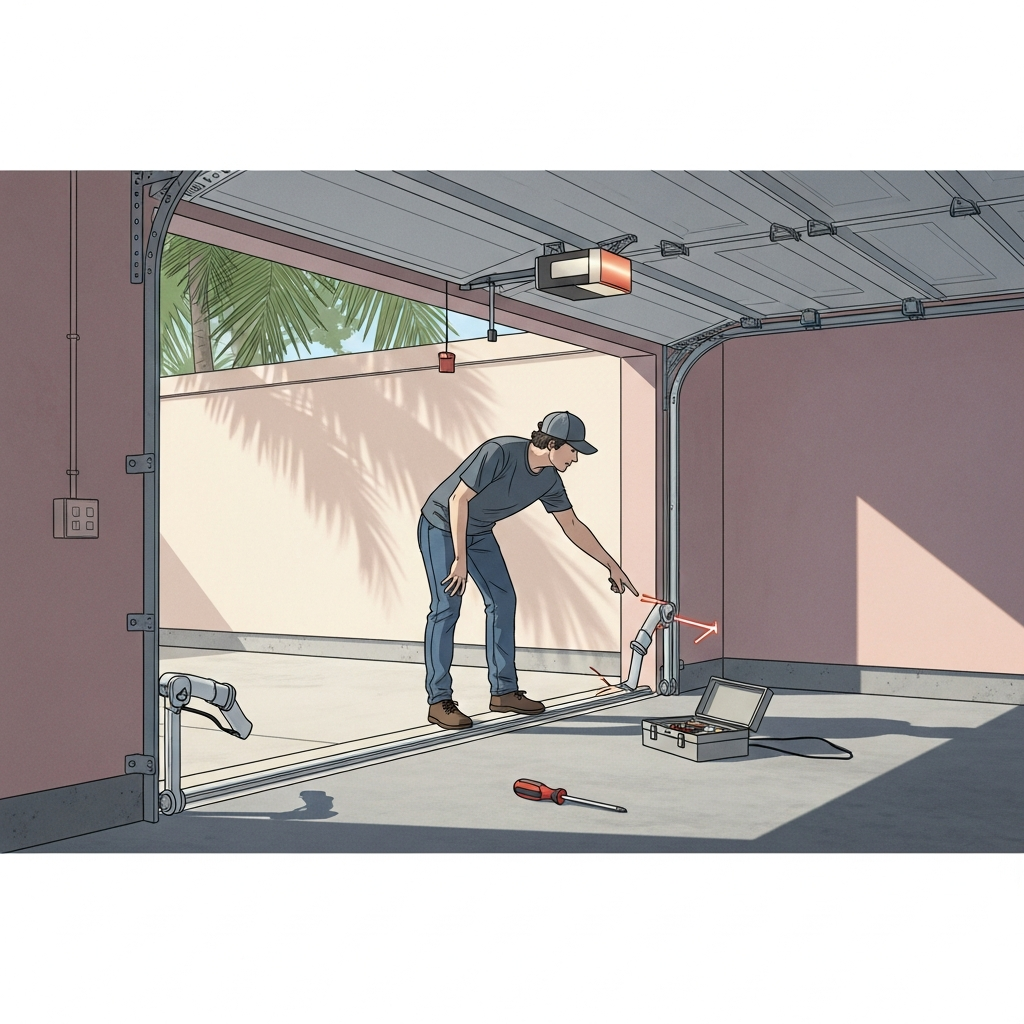
Ensure safety sensors mounted near the floor on either side of the door are clean and properly aligned. These sensors prevent the door from closing when something is in the path; if misaligned, they will prevent operation. Clean lenses with a soft cloth and test alignment by watching indicator lights, typically located on the sensor housing or the opener unit.
Electrical and Power Considerations
Electrical issues can mimic mechanical failures. Verify that the circuit breaker feeding the opener is on and that outlet connections are secure. If you have intermittent power, consider whether recent storms or flooding may have affected outdoor wiring or outlets. For safety and code compliance, electrical issues beyond simple checks should be handled by licensed electricians and coordinated with your garage door technician when necessary.
Handling Weather-Related Problems
In Palm Beach, high humidity and salt air can accelerate corrosion on hardware. Inspect exposed metal for rust and ensure weather seals are intact to prevent water intrusion. After storms, check tracks and bottom seals for debris or damage. If the door struggles to operate following heavy rain, confirm that water has not pooled near the tracks or foundation, which can impede smooth operation.
Addressing Sensor and Safety Feature Failures
Safety sensors and the auto-reverse mechanism are critical for protecting people and property. If the door fails safety tests, do not continue to use it until the issue is corrected. Clean sensor lenses, ensure they are level and unobstructed, and verify wiring connections. If alignment indicators show an error or the system still fails to engage properly after cleaning, request professional service to recalibrate and replace faulty components.
When to Call a Professional
Some issues require professional attention, including broken springs, snapped cables, significant track damage, repeated opener malfunctions, and any problems involving structural repairs. Technicians have specialized tools and training to safely handle high-tension components and can provide long-lasting repairs rather than temporary fixes. If an initial safe inspection does not reveal a clear cause or you feel uncertain about the problem, contacting a professional is the safest course.
How Professionals Diagnose Problems
Experienced technicians use a systematic approach to diagnose issues, including:
- Detailed inspection of springs, cables, tracks, rollers, and hardware for wear or damage.
- Functional testing of the opener and safety sensors, including manual operation and auto-reverse tests.
- Evaluation of door balance to determine spring tension and whether adjustments or replacements are needed.
- Electrical testing for consistent power delivery and checks for motor or circuit issues within the opener.
After diagnosis, a technician should explain findings, recommended repairs, and expected outcomes. They will prioritize safety and present options that align with the homeowner’s needs.
Preventive Steps to Reduce Future Problems
Preventive maintenance minimizes unexpected failures. Homeowners can follow simple routines such as regular cleaning of tracks and sensors, lubrication of moving parts, and visual inspections for early signs of wear or corrosion. Scheduling professional inspections annually or more frequently in harsh environments helps catch issues early and maintain warranty coverage.
DIY Maintenance Tasks You Can Safely Perform
There are safe, non-technical tasks homeowners can perform to keep a garage door functioning well between professional visits:
- Clean sensor lenses and remove debris from tracks and bottom seals.
- Lubricate rollers, hinges, and exposed hinges with recommended lubricants.
- Tighten loose bolts and fasteners accessible without specialized tools.
- Replace remote batteries and keep wall controls free of dust and moisture.
Always avoid attempting spring adjustments, cable replacements, or tasks that require lifting heavy door sections without assistance and proper equipment.
Preparing for a Service Call
When you schedule professional service, prepare by clearly describing symptoms, noting when the problem began, and whether any unusual noises or weather events preceded the issue. Clear the work area and secure pets. If the door is attached to a living space, inform the technician of any concerns about insulation or security that may affect repair decisions.
A good provider will arrive with appropriate tools and parts for common repairs and will provide a clear explanation of findings and recommended actions before proceeding with work. They should also provide safety testing after repairs to verify reliable operation.
Frequently Asked Questions
Below are answers to frequently asked questions to help homeowners prioritize troubleshooting steps and know when to seek professional assistance.
Q: What should I do if the door closes and then reopens immediately?
A: This commonly indicates sensor misalignment or an obstruction in the sensor path. Inspect and clean sensor lenses, check alignment indicator lights, and remove any debris. If the problem persists, contact a technician for sensor replacement or opener adjustment.
Q: Why does my opener make noise but the door doesn’t move?
A: A humming opener motor with no movement could indicate a disengaged carriage, a broken gear set, or a seized mechanism. Avoid running the motor repeatedly, and call a technician to diagnose and repair the opener.
Q: Is it safe to lubricate springs myself?
A: It is generally not recommended to lubricate high-tension springs without guidance. While light lubrication can sometimes reduce noise, adjusting or handling springs should be left to trained professionals to avoid injury and ensure proper tensioning.
Q: How often should I schedule professional maintenance?
A: An annual professional inspection is recommended, with more frequent checks in coastal or high-humidity environments. Regular maintenance helps catch early signs of wear and preserves safe operation.
Final Advice and Contact Steps
Troubleshooting can resolve many common issues or determine whether professional service is necessary. Always prioritize safety, avoid handling high-tension components, and call a licensed technician for repairs involving springs, cables, or significant structural issues. A reliable local provider can deliver timely diagnostics, quality parts, and durable repairs suited to Palm Beach conditions. If after initial checks you need expert assistance, reach out to a qualified garage door service professional who can diagnose the problem, propose solutions, and complete repairs safely and efficiently. Preparing a clear description of the issue will help the technician arrive equipped and ready to restore secure, reliable operation to your garage door.
Addressing problems quickly reduces the risk of further damage and ensures continued safety for your household. Keep a maintenance log and follow recommended inspection intervals to extend the life of your system and avoid emergencies. When in doubt, seek professional help rather than attempting risky repairs yourself. A local expert will be familiar with the common conditions and concerns in Palm Beach and can guide you through the most effective and safe repairs tailored to your home.