
Introduction
Living in Palm Beach, Florida means dealing with heat, humidity, salt air, and occasional severe weather. These conditions affect your garage door system over time, so having a reliable and comprehensive maintenance checklist is essential to keep your door operating smoothly, safely, and reliably. If you want a professional inspection or targeted maintenance, consider scheduling a garage door service that understands local climate impacts and code considerations.
Why a Dedicated Checklist Matters in Palm Beach
Palm Beach homeowners face unique challenges: corrosive coastal air accelerates metal wear, high humidity affects lubricants and electronics, and severe storms can damage tracks, panels, and weather seals. Following a targeted checklist helps you identify small issues before they become safety risks or cause a full system failure. Regular preventive care also prolongs the service life of springs, rollers, cables, openers, and weatherstripping.
Inspection Frequency and Best Times
Perform a quick visual inspection monthly and a more detailed check every six months. Consider an additional inspection after severe weather events such as tropical storms or hurricanes. Spring and fall are ideal times for thorough maintenance: spring to prepare for increased humidity and summer storms, and fall to check seals and hardware before cooler, drier months.
Tools and Materials You’ll Need
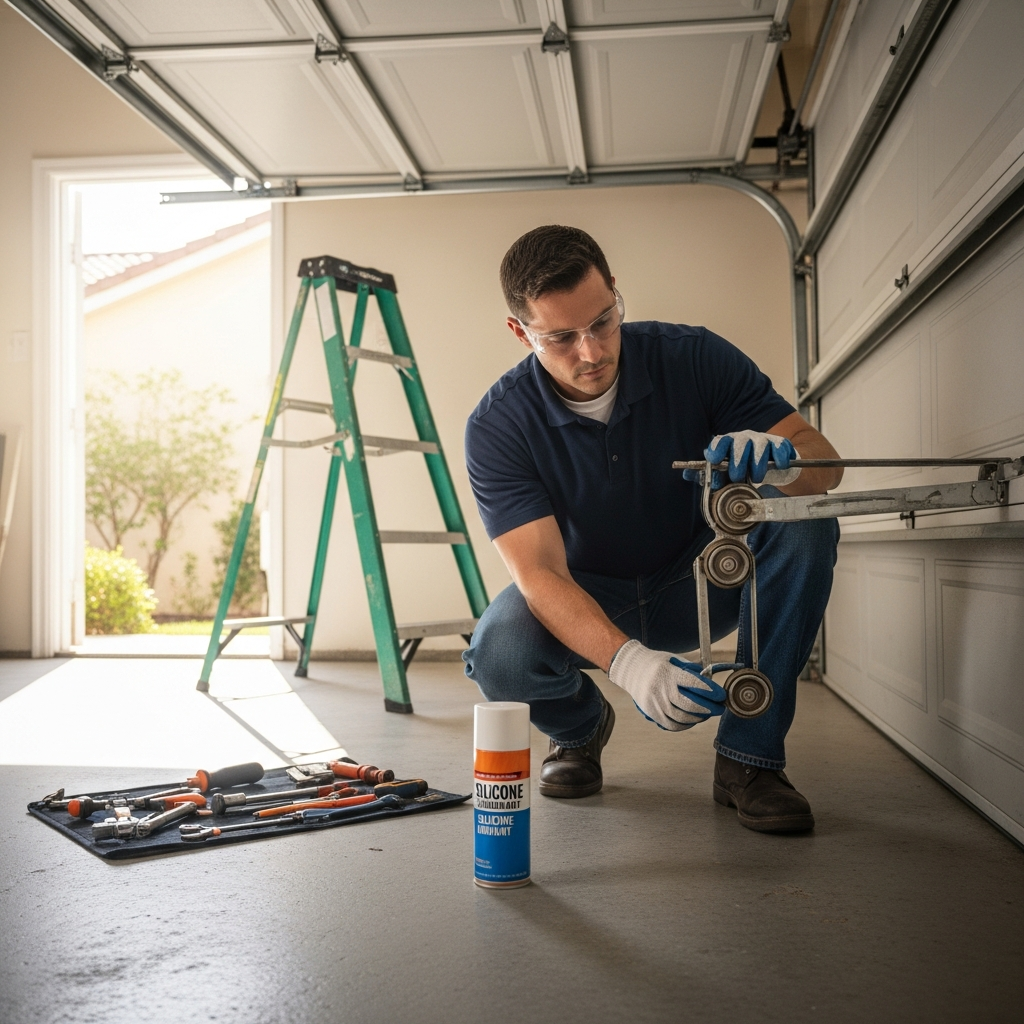
- Protective gloves and safety glasses
- Stepladder
- Rubber mallet and socket set
- Non-chlorine dishwasher soap and warm water for cleaning
- Silicone-based or lithium grease and a spray lubricant rated for garage door hardware
- Soft cloths and rags
- Replacement weather stripping and fasteners
- Voltage tester for opener troubleshooting
- Manufacturer’s manual if available
Exterior and Panel Check
Start with the door panels and exterior components. Look for dents, cracks, or warping that could allow water intrusion or weaken the door structure. In coastal areas, check painted surfaces for blistering or salt damage. If you notice significant rust or structural compromise, plan for professional service to avoid safety hazards.
Track and Roller Inspection
Examine tracks for bends, dents, and misalignment. Use a level if needed to confirm vertical alignment of the tracks. Check rollers for cracking, flat spots, or signs of excessive wear. Nylon rollers resist corrosion and are often recommended for humid coastal climates; metal rollers may corrode faster near the ocean and should be inspected more frequently.
Hardware and Fasteners
Inspect all bolts, screws, and brackets that hold the track and door to the frame. Tighten any loose hardware, but do not overtighten as this can cause stress points. Replace any fasteners that show signs of corrosion. Pay special attention to hinge plates and mounting brackets which can become loose as the door moves over time.
Springs and Cables
Garage door springs and cables are under high tension and can be dangerous to adjust without proper tools and training. Visually inspect springs for gaps, rust, or deformation, and look for fraying or wear on cables. If you suspect a problem, arrange for a trained technician to handle spring or cable replacement. Never attempt to adjust or remove springs yourself.
Opener and Electrical Components
Test the garage door opener’s manual and automatic functions. Check that remote controls and wall-mounted switches respond consistently. Inspect the opener unit for signs of overheating, water intrusion, or corrosion. If the opener is older or shows erratic behavior, consider having a professional diagnose it. For troubleshooting and repairs of electric components, a service technician with the proper training and tools is recommended.
Balance and Safety Test
Disconnect the opener and manually operate the door halfway; a properly balanced door should stay in place. If it drops or rises, the balance may be off and a professional adjustment to the springs could be needed. Also test safety reversal features by placing an object in the door’s path and ensuring the door reverses on contact. These safety systems are critical—do not disable them.
Weather Seals and Thresholds
Check the bottom seal, side seals, and any thresholds for cracking, gaps, or compression that prevents a tight seal. Replace worn weather stripping to keep out moisture, pests, and debris. A good seal improves energy efficiency and protects the garage interior during storms. In Palm Beach, ensuring a tight seal helps reduce salt-laden air ingress and limits corrosion on stored items.
Lubrication and Corrosion Control
Apply a light lubricant to hinges, rollers (if metal), and spring bearings. For coastal climates, choose products designed to resist salt spray and humidity. Avoid using heavy oils that attract dust and grit. Wipe off excess lubricant and reapply sparingly according to the manufacturer’s recommendations. If corrosion is present on metal components, clean the area with an appropriate rust remover and protect with a corrosion-resistant coating or fresh paint.
Cleaning and Aesthetic Maintenance
Regular cleaning prevents abrasive grit from damaging moving parts. Use a mild detergent solution to rinse salt deposits and grime off the door surface and tracks. Rinse thoroughly with fresh water after cleaning. Repaint or refinish panels when needed to restore protective coatings and improve curb appeal.
Garage Interior Considerations
Inspect inside the garage for water stains or signs of leaks near the door opening. Ensure that shelving and stored items do not obstruct the door’s path. Check for pest entry points and seal them. Adequate ventilation and dehumidification can reduce long-term moisture buildup in the garage space.
Seasonal Checklist Specifics for Palm Beach
- Pre-storm inspection: one week before hurricane season, check springs, tracks, weather seals, and opener emergency release to ensure rapid, safe operation if you need to secure items quickly.
- Post-storm assessment: after strong storms, inspect for dents, track damage, and panel integrity before using the door heavily.
- Salt management: rinse tracks and lower panels monthly if you live within a half-mile of the coastline to limit salt accumulation.
- Humidity control: consider desiccants or a small dehumidifier if the garage is finished or contains sensitive equipment.
Troubleshooting Common Issues
Many common problems have simple fixes: misaligned tracks can sometimes be nudged back into place, damaged weather stripping can be replaced with a few screws, and loose hardware can be tightened. However, if the opener behaves erratically, springs are damaged, or cables are frayed, call a professional technician. For qualified help tailored to local conditions, reach out to a trusted garage door service to diagnose and correct more complex issues safely.
When to Call a Professional
- If you see significant rust or structural damage to panels or tracks.
- When springs are broken or cables are frayed.
- If the door is off its tracks or the opener is smoking, making unusual noises, or repeatedly failing safety tests.
- When you need upgrades such as new weather seals, replacement rollers, or a modern opener with safety features.
Long-Term Maintenance Schedule
- Monthly: visual inspection, test reversal safety, clean off salt and grime.
- Every 6 months: lubricate moving parts, inspect rollers and hardware, test opener functions, check balance.
- Annually: professional inspection for springs, cables, and structural integrity; replace worn parts as needed.
FAQ
Q: How often should I lubricate my garage door in a coastal environment?
A: Lubricate moving metal parts every three to six months, and more frequently if you notice salt buildup or stiffness. Use a lubricant designed for marine environments when possible.
Q: Can I replace springs myself?
A: No. Springs are under high tension and can cause serious injury if handled improperly. Have a trained technician perform spring replacement and adjustments.
Q: How do I know if my opener needs replacement rather than repair?
A: Consider replacement if repairs are frequent, the unit is more than 10–15 years old, or it lacks modern safety features. A professional inspection will provide a clear recommendation.
Q: What should I do after a hurricane or storm?
A: Avoid using the door excessively until you inspect tracks, panels, and seals. If there is visible damage or the door operates oddly, schedule a professional inspection to ensure safety.
Final Reminders and Local Considerations
Taking a systematic approach to garage door maintenance in Palm Beach helps you avoid emergency repairs and extends the life of your door system. Regular checks, corrosion control, and timely professional help are key. For tailored maintenance, repairs, or a professional inspection that accounts for coastal wear and local code requirements, contact a knowledgeable garage door service. They can provide the specialized care Palm Beach homes need.
Take Action
Make these checks part of your home maintenance routine and document findings to track wear over time. If you prefer professional support, call or schedule an inspection through a trusted local provider to keep your garage door safe, functional, and prepared for Palm Beach conditions.