
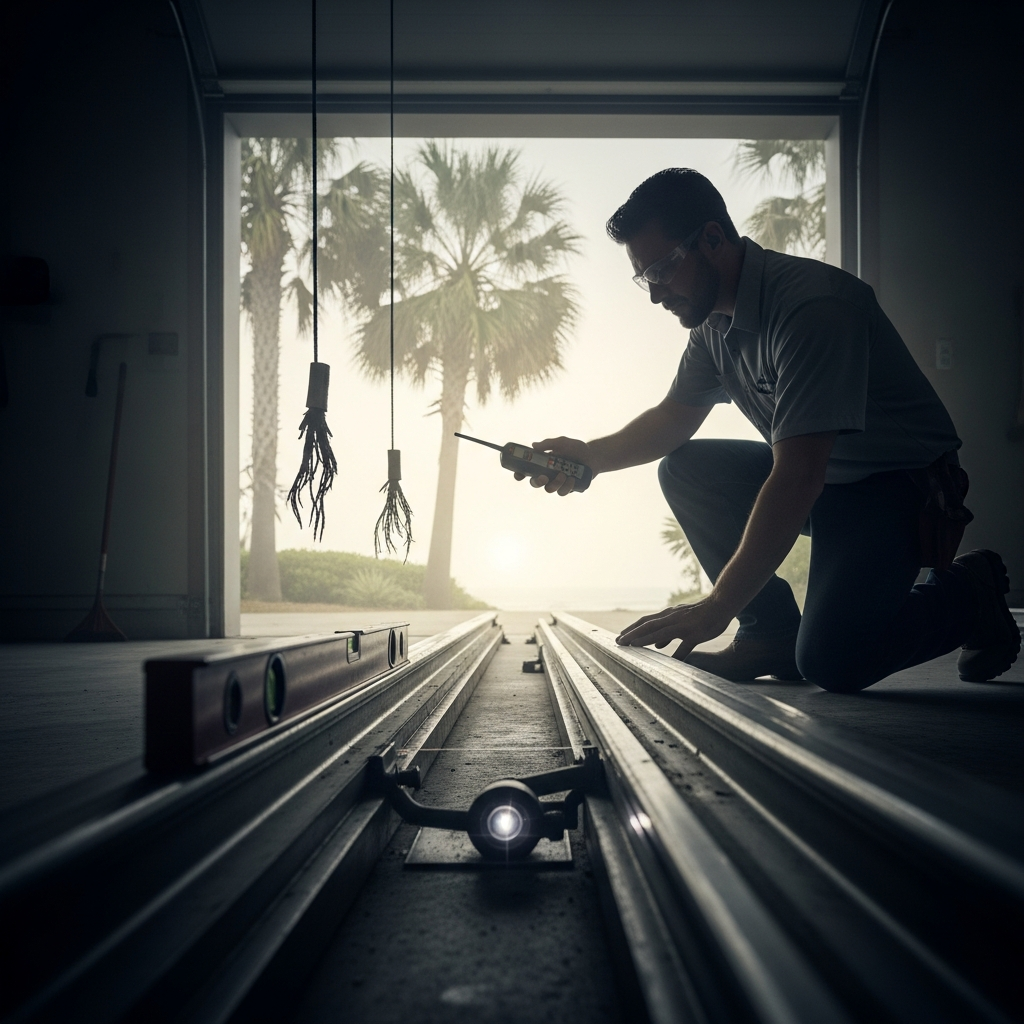
When a garage door malfunctions, it can disrupt daily routines and pose safety risks. Understanding common problems and the correct troubleshooting steps helps homeowners identify issues quickly and determine whether a DIY fix is appropriate or a professional service call is needed. This troubleshooting guide focuses on common issues encountered in Palm Beach Florida including environmental factors like humidity and salt air that can affect hardware performance. For complex problems or when you need professional assistance, consider contacting specialists experienced with garage door replacement installations to ensure reliable diagnostics and safe repairs.
Initial safety precautions
Before performing any troubleshooting, disconnect power to the opener and keep hands and tools away from springs and cables. Springs are under extreme tension and can cause severe injury if handled incorrectly. Perform simple visual inspections and diagnostic tests that do not involve spring adjustments or disassembly of major components.
Problem: Door doesn’t respond to remote or wall control
- Check power and connections: Verify that the opener has power. Check the outlet and the opener’s power cord. Inspect the wiring from the wall button to the opener if accessible.
- Replace batteries: Often remotes fail due to weak batteries. Replace remote and keypad batteries first.
- Reset opener: Some openers have a learn/reset button. Consult the manual to reset and reprogram the remote if necessary.
- Check safety sensors: If photo-eyes are misaligned or obstructed, the system will not operate. Clean the lenses and confirm alignment.
Problem: Door reverses immediately after closing
This is typically caused by misaligned photo-eyes, an obstruction sensor, or excessive closing force settings.
- Inspect and clean sensors: Remove dirt or cobwebs from photo-eyes and verify they are aligned and at the same height.
- Check travel and force settings: Adjust close force or limit switches according to the opener manual. If settings are correct but the problem persists, a technician should evaluate mechanical resistance or sensor issues.
Problem: Door is noisy or jerky
Noise and rough operation can originate from worn rollers, loose hardware, or misaligned tracks. In coastal environments, corrosion can stiffen moving parts and increase friction.
- Inspect rollers and hinges: Replace worn or damaged rollers with sealed-bearing rollers for quieter operation.
- Check track alignment: Dents or misalignment cause jerky movement. Use a level to assess vertical alignment and plumb the track if needed.
- Lubricate moving parts: Apply a manufacturer-recommended lubricant to rollers, hinges, and springs. Avoid over-application.
Problem: Door gets stuck or won’t close completely
If the door stops before closing, it may be due to obstructions, track issues, or spring tension problems.
- Remove obstructions: Check the entire path of the door both inside and out.
- Inspect springs and cables: Look for visible signs of fraying or breakage. Broken springs require professional replacement.
- Track deformation: Dented tracks may need to be repaired or replaced by a professional to restore smooth operation.
Problem: Door opens but does not stay open
This often indicates incorrect spring tension or a failing cable/attachment point.
- Test balance: Disconnect the opener and lift the door manually to the halfway point; a balanced door stays in place. If it drops or rises, spring adjustment is necessary.
- Check cable attachments: Ensure cables are properly connected and not frayed. Never attempt to replace or adjust cables under tension—call a technician.
Problem: Visible damage to panels or tracks
Dents, rust, or panel damage can affect performance and appearance. Small dents may be repairable, but significant structural damage, especially in impact zones, may require panel replacement or a full door replacement.
- Assess the extent of damage: Minor dents can often be patched; large deformations or compromised structural elements should prompt a professional assessment.
- Consider immediate fixes for weather protection: Use temporary sealing materials to prevent water intrusion until a proper repair is scheduled.
Electrical issues and opener faults
If the opener emits beeps, flashing lights, or error codes, consult the manual for diagnostics. Power surges and lightning strikes in Florida storms can damage electronic controls—unplug the unit during severe weather and inspect for visible signs of scorch or damage afterward. Circuit breakers and GFCI outlets should also be checked if the opener is powered but unresponsive.
When to call a professional
Call a professional if you encounter any of the following: broken springs or cables, major structural damage to panels or tracks, repeated safety sensor failures, or electrical faults in the opener that are not resolved by basic diagnostics. Professionals have the tools and training to handle high-tension components and complex electrical troubleshooting safely.
Preventative troubleshooting practices
Regular preventative maintenance reduces emergency troubleshooting. Keep a log of issues and repairs, clean sensors frequently, lubricate moving parts on a schedule, and monitor operation for subtle changes. A small noise or delay in response can be an early indicator of a developing issue and can often be corrected quickly to avoid a full failure.
Coastal environment tips
Salt buildup and humidity can cause accelerated wear. Rinse exposed metal hardware periodically with fresh water and dry it thoroughly. Replace corroded fasteners promptly and consider stainless hardware for long-term resilience. Protect electronic components from moisture ingress and ensure seals around the opener housing are intact.
Frequently Asked Questions
What should I do if a spring breaks? Do not attempt to open the door manually or to remove the broken spring yourself. Secure the area and call a professional because broken springs are hazardous and require specialized tools for replacement.
Why does my door suddenly start making a grinding noise? Grinding noises often indicate worn gears in the opener, failing rollers, or debris lodged in the mechanism. Inspect rollers and tracks, and if the opener is the source, have a technician examine the gear assembly.
How can I protect my garage door electronics during storms? Unplug the opener during severe storms when lightning is a risk, and use surge protectors rated for garage-door openers to help prevent damage from electrical spikes.
Is it safe to lubricate my own springs? No. Spring lubrication can be done by homeowners, but any spring adjustments or winding should be left to trained technicians due to the danger of injury.
Troubleshooting garage door issues effectively involves a balance between careful DIY checks and recognizing when to call a professional. Routine attention and early diagnosis prevent small problems from escalating into major repairs, and local professionals are familiar with the environmental challenges that Palm Beach homeowners face. If you need professional troubleshooting or repairs, a certified team specializing in garage door replacement and repairs can provide a quick, safe resolution and help restore reliable operation.
When problems begin to interfere with daily life or safety, schedule a service call to have a qualified technician perform a full diagnostic, repair or replacement as needed. Prompt attention saves time and reduces the risk of further damage to your garage door system.