
Introduction
Troubleshooting common garage door issues can save time and help homeowners determine when quick fixes are possible and when professional intervention or replacement is required. In Palm Beach, Florida, the coastal environment can contribute to unique issues such as accelerated corrosion, salt buildup in moving parts, and humidity-related effects on seals. Before deciding on a full garage door replacement, many homeowners benefit from a methodical troubleshooting approach to identify simple corrective actions and understand when it is time to call a professional.
Initial Checks Before Performing Any Work
Prior to troubleshooting, prioritize safety. Disconnect the opener using the manual release if needed and ensure the door is securely supported before attempting any adjustments or inspections. If you are uncertain about handling high-tension components like springs, do not attempt to repair them yourself. Instead, document symptoms and contact a qualified technician. For non-tension items, many homeowners can perform initial checks and simple maintenance that often resolve common issues.
Door Does Not Open or Close—Basic Diagnostics
If your door fails to respond to the remote or wall switch, verify basic electrical factors first. Check that the opener is plugged in, that the circuit breaker is not tripped, and that the remote battery is functioning. Inspect the wall switch and wiring for visible damage. If these basic checks do not restore operation, confirm that safety sensors are aligned and unobstructed; most openers will not operate if sensors detect a blockage or are misaligned.
Safety Sensor Problems
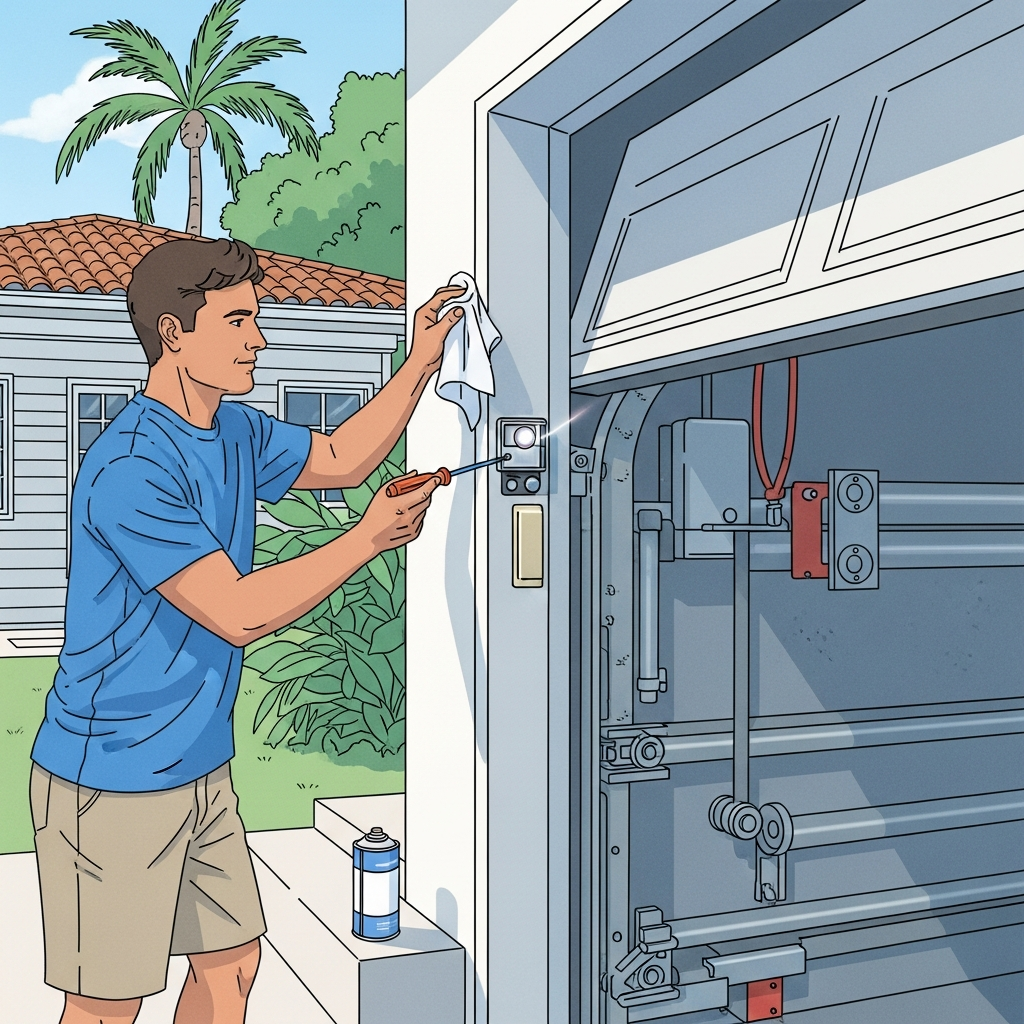
Misaligned or dirty photoelectric sensors are common culprits when doors refuse to close. Inspect sensors for dirt, salt deposits, or damage. Clean them carefully with a soft cloth and ensure that each sensor is aligned directly facing the other. If the indicator lights on the sensors show a misalignment or fault, adjust their positioning. If sensors remain nonfunctional after cleaning and realignment, professional inspection of wiring and opener electronics may be necessary.
Door Opens or Closes Partially
A door that stops or reverses partway may indicate an obstruction, an improperly set force limit, or an automatic safety reversal triggered by resistance. Inspect the track for debris and confirm that rollers move freely. Check for binding or dented panels that catch during travel. If everything appears clear, the opener’s force and limit settings may need minor adjustments, which some homeowners can perform following the manufacturer’s instructions. If adjustments do not help, consult a professional to evaluate springs, cables, and balance.
Uneven or Jerky Movement
Uneven movement, where one side lags or the door moves jerkily, can indicate misaligned tracks, worn rollers, or an imbalance in spring tension. Inspect tracks for dents or bends and look for loose fasteners on brackets and hinges. Lubrication where appropriate and tightening hardware can often restore smoother operation. However, when spring tension is out of balance, leave adjustments to professionals since springs are under dangerous tension.
Noise and Rattling
Excessive noise often comes from worn rollers, loose hardware, or lack of lubrication. In coastal areas, salt and grit can accelerate wear. Inspect rollers and consider replacing metal rollers with sealed-bearing nylon rollers for quieter operation. Tighten loose bolts and lubricate moving parts with manufacturer-approved products. If noise persists, the opener unit or misalignment may be the cause and may require professional diagnosis.
Visible Corrosion and Surface Issues
Rust on springs, cables, and hardware is a frequent issue in Palm Beach. Surface corrosion can often be addressed through cleaning and applying protective coatings, but deep pitting and compromised metal strength necessitate replacement of affected parts. Regular inspection and prompt action help prevent sudden failures, and when corrosion is widespread, consider consulting professionals about components made of stainless steel or coatings designed for coastal use.
Weather Seal and Draft Problems
Gaps at the bottom of the door or damaged weatherstripping invite moisture, pests, and drafts. Inspect the bottom seal for wear or cracking and replace it if it no longer provides a tight barrier. Ensure that the door closes evenly against the threshold and that any thresholds or sweep plates are intact. For attached garages, maintaining effective seals helps protect interior spaces from humidity and pests.
Manual Operation Difficulty
If the door is difficult to lift manually, it is often a sign of poor balance or failing springs. Test the balance by disconnecting the opener and lifting the door about halfway—if it does not stay in place, the springs may be out of adjustment or worn. Because spring adjustments are hazardous, schedule a professional inspection if the door does not hold position when tested manually.
Opener-Specific Failures
Openers can fail due to motor issues, circuit board problems, or electrical faults. If the opener hums but does not move the door, check the drive components and the manual release. For chain, belt, and screw drives, examine for broken or stretched parts. If the unit displays error codes, reference the manufacturer’s manual and consult a technician if codes persist after basic troubleshooting. Regular lens and sensor cleaning, battery checks for remotes, and verifying wifi or smart features can prevent many common opener complaints.
Middle-Stage Troubleshooting and Deciding on Replacement
After performing basic troubleshooting, weigh the findings carefully. If multiple components are failing, if corrosion is advanced, or if repairs are becoming frequent, replacement may deliver a more reliable long-term solution. A mid-stage evaluation by a professional will clarify whether replacing specific parts or installing a full new system is the most responsible option for safety and performance in a coastal climate.
When to Call a Professional
Contact a trained technician when issues involve springs, cables, significant corrosion, structural damage, or persistent electrical faults. Professionals can safely handle high-tension components, offer corrosion-resistant replacements, and recommend full system upgrades if ongoing failures indicate systemic aging. Regular professional service reduces the risk of sudden failures and helps ensure compliance with any local code requirements.
FAQ
Q: Can I replace a broken roller myself?
A: Simple roller replacements can be performed by handy homeowners if they are comfortable with basic mechanical tasks and the spring system is not disturbed. However, if more than one roller is worn or if removal risks affecting spring tension, consult a professional.
Q: How do I know if corrosion requires part replacement or just cleaning?
A: Surface rust that can be cleaned and treated may not require immediate replacement, but pitting, deep corrosion, or compromised metal integrity requires replacement. Have a professional evaluate the severity if you are unsure.
Q: What should I do if my opener suddenly stops working?
A: Check power supply, remote batteries, and sensor alignment first. If these basic steps don’t resolve the issue, disconnect the opener and verify manual operation. Persistent motor humming or failure to engage usually means a professional repair or replacement is needed.
Q: Are there preventive measures I can take to avoid frequent issues in a coastal area?
A: Regular cleaning, targeted lubrication, routine inspections, using corrosion-resistant hardware, and scheduling professional inspections more frequently than in inland areas will reduce the frequency of issues. Consider upgrading to materials and finishes designed for coastal environments.
Closing Recommendations and Next Steps
Effective troubleshooting begins with careful observation, basic safety precautions, and a methodical approach to diagnosis. Many common garage door problems are resolvable with simple cleaning, alignment, or component replacement. However, where corrosion is advanced or springs and cables are involved, rely on qualified technicians for safe, code-compliant repairs or replacements. If ongoing issues persist or if you want to explore modern, durable options built for coastal resilience, contact experienced professionals who can provide a comprehensive assessment and discuss whether a targeted repair or a full garage door replacement is the most prudent path forward.
Taking quick, informed action when problems arise preserves safety and keeps your garage door operating dependably through Palm Beach’s unique climate challenges. When in doubt, get a professional assessment to avoid risks and ensure long-term reliability.