When a garage door requires repair, knowing the typical repair process helps homeowners anticipate timelines, safety considerations, and required decisions. Whether you are repairing components of an existing door or considering a full replacement in Palm Beach Florida’s coastal climate, this guide walks through the repair process step-by-step. For many repairs, professional technicians provide the safest and most reliable outcome—if you prefer a hands-off approach, schedule a professional service for garage door replacement systems and repairs.
Initial contact and problem assessment
The repair process usually begins with a phone call or online request where you describe the issue. Provide as much detail as possible: unusual noises, whether the door opens or closes fully, whether it’s stuck, remote and keypad behavior, and any recent storm or impact events. Photos or short video clips of the door in operation can be extremely helpful for initial triage and scheduling the appropriate technician and parts.
Scheduling and dispatch
After initial contact, the provider schedules a convenient appointment. For urgent issues like broken springs or doors that won’t stay closed, request expedited service. Technicians will try to dispatch with common replacement parts and with the tools needed to diagnose and remedy most problems in a single visit.
On-site inspection and estimate
Upon arrival, a thorough on-site inspection determines the root cause of the issue. The technician evaluates safety components such as springs, cables, and photo-eye sensors, examines the physical condition of panels and tracks, and tests the opener. After diagnosing the problem, the technician explains repair options and recommends the most effective approach. If parts are required, they will inform you whether parts are in stock or need to be ordered.
Common repairs and recommended approaches
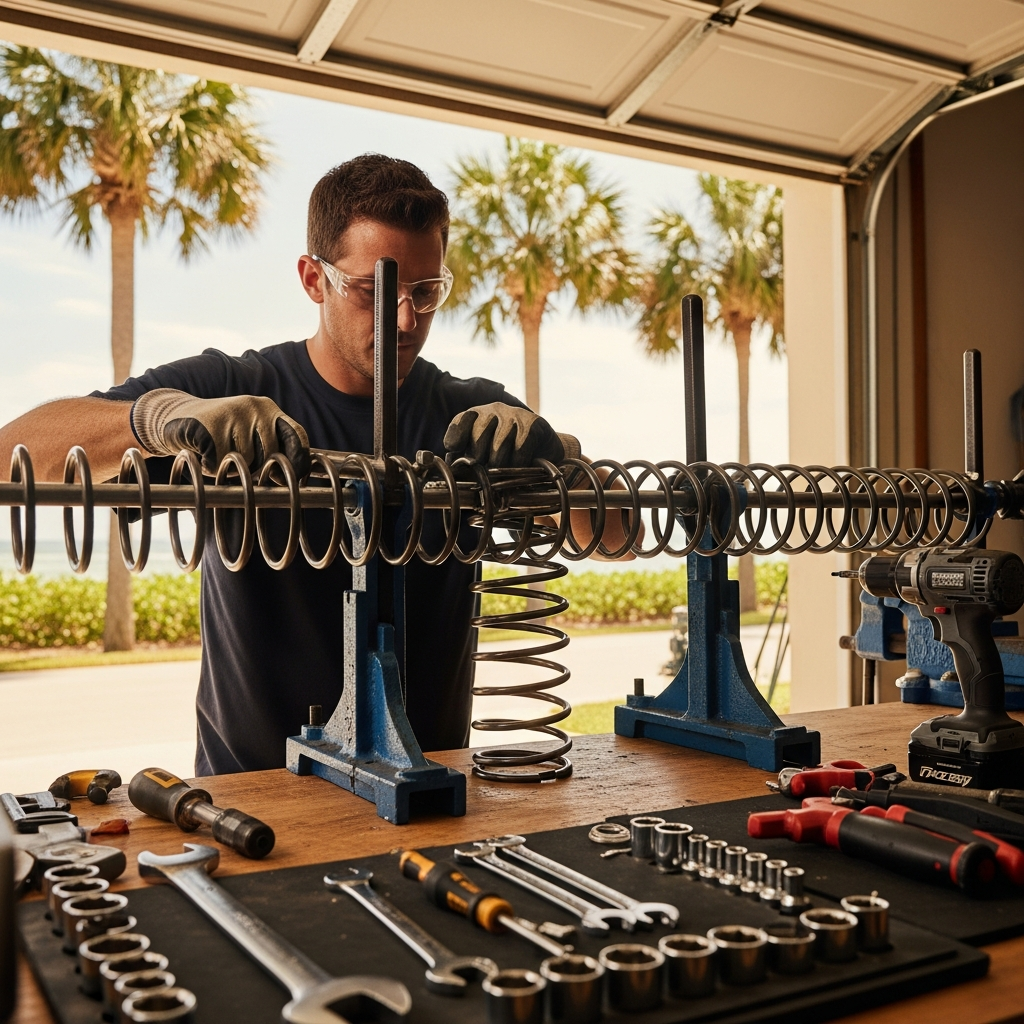
- Spring replacement: One of the most common repairs. Torsion springs and extension springs both require specialized tools. Technicians balance the door and use correct spring ratings for door weight and cycle expectations.
- Cable replacement: Worn or frayed cables are unsafe and need prompt replacement. Technicians verify drum alignment and cable tension after replacement.
- Roller and hinge replacement: Worn rollers are replaced with high-quality sealed-bearing rollers to reduce noise and friction. Hinges that are bent or corroded are replaced to restore smooth operation.
- Opener repair or replacement: Issues with gear assemblies, circuit boards, or remotes may be repaired. In some cases, replacing the opener provides better long-term reliability and updated safety features.
- Track repair: Dented or misaligned tracks may be hammered back into alignment, or sections replaced if damage is severe. Proper alignment is essential for smooth operation and to reduce wear on other components.
Parts procurement and timeline
If parts are required but not on the truck, the provider will order them. Many common parts are available from local suppliers and can be delivered quickly, but specialty or custom panels may require more time. The technician should provide an estimated timeline and explain any temporary measures to secure the door until repairs are complete.
Safety procedures during repair
Technicians take safety precautions such as securing the door, using spring-clamping tools, and testing balance. Homeowners should keep a safe distance during repairs and ensure children and pets are supervised. Reputable providers carry insurance and follow industry safety standards to minimize risk.
Testing and quality assurance
After repairs, the technician tests the door’s balance, operation, and safety features, including the photo-eye sensors and auto-reverse mechanisms. They will demonstrate the operation, explain the repairs performed, and provide care instructions. Ask the technician to show what caused the issue and what to watch for in the future.
Documentation and warranty
Good providers supply written documentation of the work performed, the parts used, and any warranty coverage. Many common replacement parts carry limited warranties—keep all paperwork and record the date of repair. Warranties vary, so ask about coverage for parts and labor, and what will void the warranty.
When repairs are not cost-effective
Sometimes repairs are frequent or the door is extensively corroded or damaged, and replacement becomes the recommended option. Signs that replacement may be more cost-effective include repeated spring failures, significant rust or rot on panels and frame, and ongoing issues with obsolete openers where parts are difficult to source. Discuss long-term options with your technician to determine whether replacement would provide better value and improved performance.
Preparing for replacement if needed
If replacement is recommended, a technician will measure the opening, discuss design and material options, and schedule an installation. Consider weather-rated doors and stainless or galvanized hardware for coastal durability. Decide on features such as insulation levels, window placement, and opener compatibility before ordering to avoid delays.
DIY vs professional repairs
While some maintenance tasks like lubrication or replacing weather seals are suitable for confident homeowners, repairs involving springs, cables, and complex opener electrics are best left to professionals. Attempting high-tension repairs without appropriate training risks severe injury and additional damage to the door system.
Cost considerations and planning
While this guide does not discuss specific pricing, it is useful to plan for periodic maintenance and unexpected repairs. Keeping a maintenance fund and scheduling regular tune-ups reduces the likelihood of emergency repairs. When comparing repair vs replacement, factor in future maintenance needs and how a newer or better-quality door might lower long-term upkeep.
Frequently Asked Questions
How quickly can a technician respond to a broken spring or emergency issue? Response time depends on provider availability and parts on hand. Many local services offer same-day or next-day emergency responses for critical failures like broken springs.
Are repairs safe during storms or wet conditions? Technicians can perform repairs in light rain, but safety and manufacturer recommendations may require postponing electrical work or complicated repairs during severe weather. After storms, prioritize inspections for damage and water intrusion.
Will my repair be covered by warranty? Coverage depends on the original warranty terms and whether the repair is due to wear or accidental damage. Ask the technician to review available warranty protection for parts and labor before repairs begin.
When should I consider replacing the entire door? Consider replacement for doors with ongoing structural issues, severe corrosion, or frequent component failures. Replacement makes sense when repair costs and frequency approach the value and benefits of a new door.
Repairs are an important part of maintaining garage door safety, reliability, and appearance. A professional approach ensures accurate diagnosis, safe execution, and reliable performance following repair. If you need a rapid diagnosis or wish to schedule a repair visit, reach out to a trusted provider experienced in garage door replacement and repairs to get timely, expert service and restore dependable operation to your garage door system.
When dealing with a malfunctioning garage door, prompt action preserves safety and limits further damage. Arrange an inspection with a qualified technician to evaluate the problem and recommend the best path forward—repair, replacement, or maintenance. Properly executed repairs restore function and help ensure your garage door provides reliable, safe operation for years to come.