Introduction
Regular inspections are foundational to garage door safety and longevity, particularly in Palm Beach, Florida where coastal conditions and local codes influence performance expectations. An inspection can reveal early signs of wear, structural weaknesses, and compliance gaps that may necessitate repair or replacement. Whether you own a recently replaced system or an older assembly, understanding inspection essentials will help you prioritize safety, plan maintenance, and determine when a professional garage door replacement might be the most reliable course of action.
Why Regular Inspections Matter
Inspections identify problems before they escalate. Small issues such as loose fasteners, misaligned tracks, or minor corrosion can lead to larger failures if left unaddressed. For coastal homes, inspections are especially important because corrosion can silently degrade critical components. Regular checks also ensure that safety features operate correctly, which is critical for preventing accidents involving children, pets, or vehicles.
Inspection Frequency and Timing
Homeowners should perform a quick visual inspection monthly and schedule a more thorough professional inspection at least annually. In coastal areas or after severe weather events, increase the frequency to catch accelerated corrosion or storm-related damage. A professional inspection typically includes detailed assessment of springs, cables, rollers, tracks, opener operation, and structural anchoring to verify safe working condition.
What Technicians Look For
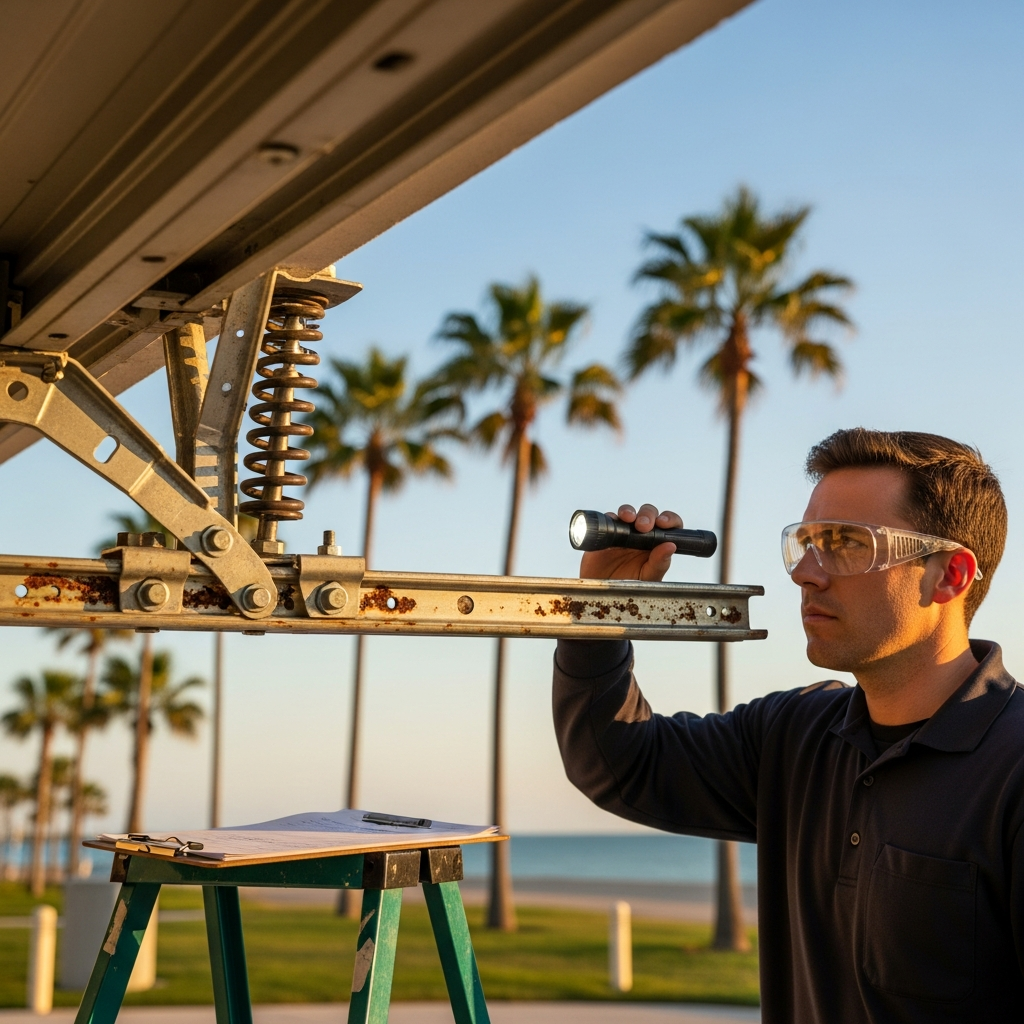
During a professional inspection, technicians evaluate the entire system. Key focus areas include spring condition and tension, cable integrity, roller wear, track alignment, hardware tightness, opener function, photoelectric sensor alignment, and the integrity of seals and weatherstripping. Inspectors also examine the condition of the door panels and frame, noting any signs of rot, corrosion, or structural movement that could compromise performance.
Wind-Load and Code Compliance Checks
Many areas of Palm Beach have specific wind-load and hurricane-resistance requirements. Inspections may include verification of the door’s rating and whether hardware and anchoring meet current code standards. If your door was installed before certain wind-load standards were established, the inspection may reveal the need for reinforcement or replacement to achieve compliance and enhance storm resilience.
Testing Safety Features
Safety features are critical components. Inspectors test auto-reverse mechanisms by placing an object in the door’s path and confirming that the door reverses upon contact. Photoelectric sensors are checked for alignment and cleanliness to make sure they detect obstructions correctly. Openers are evaluated for proper force settings so the door stops or reverses when encountering resistance, protecting people and property from injury.
Identifying Corrosion and Environmental Damage
Coastal environments introduce oxidation concerns that can compromise springs, cables, and exposed hardware. Inspectors look for pitting, rust, and weakened metal surfaces. Additionally, they examine seals and gaskets for cracks or collapse and check the finish of panels for areas where protective coatings are failing. Early detection helps prioritize maintenance and determine when component replacement or full door replacement is necessary.
Structural and Foundation Considerations
An inspection includes evaluation of the framing, header, and mounting points. Water intrusion and settling can undermine anchoring and create misalignment. Inspectors ensure that the door is secured properly and that the surrounding structure supports the hardware and the forces exerted during operation, especially for wind-rated systems where firm anchoring is essential.
Electrical and Opener Evaluation
Opener systems are inspected for proper installation, secure mounting, and effective electrical connections. Inspectors check for corrosion in wiring connections, verify that the unit’s housing is intact against moisture intrusion, and confirm that backup systems—such as battery backups—function correctly. Proper opener operation is essential both for convenience and for safety in emergency scenarios.
Documentation and Warranties
Inspectors often document the condition of the door and provide a written report listing findings and recommended actions. This documentation is valuable for warranty claims, insurance submissions after storm damage, and for maintaining a maintenance history. Keep copies of inspection reports and any service records for future reference and to aid in decision-making about repairs or replacement.
When Inspections Lead to Replacement
Inspection findings may indicate that replacement is the most practical solution. Signs that replacement may be warranted include pervasive corrosion, repeated mechanical failures, structural compromise, or lack of compliance with modern wind-load requirements. If multiple components are near the end of their service life, replacement with a modern, code-compliant unit can reduce long-term maintenance and provide improved safety and performance.
Preparing for a Replacement After an Inspection
If an inspection recommends replacement, the next steps typically include selecting a new door suited to your needs and local codes, arranging for permits if necessary, and scheduling installation. Your installer can provide recommendations for materials, finishes, and hardware that resist coastal corrosion and meet wind-load requirements. The inspection report helps prioritize structural repairs that should be completed before or during the replacement installation.
Inspection Best Practices for Homeowners
Homeowners should conduct basic monthly checks: test safety reversal, inspect for visible corrosion, confirm that rollers and tracks are clear of debris, and listen for unusual noises during operation. Keep an eye on changes in performance, such as uneven movement, binding, or difficulty in manual operation—these can be early signs of trouble. Continuing to schedule professional inspections ensures that high-tension components are assessed by trained technicians.
Middle-Project Coordination and Communication
If an inspection leads to mid-project decisions such as partial reinforcement or custom retrofitting, clear communication between the homeowner and the installer is key. Agree on scope changes, timelines, and any additional permitting. The middle phase of a project is when decisions about materials, finishes, and specific code-driven upgrades are finalized. If you are exploring replacement routes, many contractors provide detailed consultation for coastal-ready garage door replacement systems and can outline the permit steps and inspection schedule.
FAQ
Q: How often should I have a professional inspection?
A: At a minimum, have a professional inspection annually. Increase frequency in coastal settings or after storms, and consider professional checks every six months if corrosion or mechanical issues are present.
Q: What happens if my door fails inspection for wind-load requirements?
A: If the door does not meet current wind-load standards, your inspector will outline reinforcement or replacement options to achieve compliance. This may include installing reinforcing hardware, upgrading to wind-rated panels, or replacing the entire assembly.
Q: Can I rely solely on my own visual inspections?
A: Regular homeowner inspections are important, but they should complement professional inspections. High-tension components like springs and cables require trained technicians for safe evaluation and adjustment.
Q: Will inspection reports help with insurance claims?
A: Yes, thorough documentation of pre-existing conditions, maintenance history, and inspection findings can support insurance claims, particularly following storm events. Keep all reports and repair records accessible.
Final Notes and Recommendations
Inspections are a proactive step to preserve safety, performance, and compliance. They are especially valuable in Palm Beach’s coastal environment where corrosion and severe weather can quickly change a door’s condition. Regular inspection routines—combined with professional assessments—help homeowners prioritize repairs, manage permit-related requirements, and plan for replacement when necessary. If an inspection indicates that replacement is the prudent course, work with experienced local professionals to ensure the new installation meets local codes and is suited to coastal conditions.
For homeowners ready to move from inspection findings to a robust, code-compliant solution, consult with trusted installers who specialize in coastal projects and can guide you through the entire process from document preparation to final inspection and approval. Choosing the right replacement can enhance safety and resilience while contributing to long-term peace of mind.