Residential Garage Door Repair Checklist for Palm Beach Florida
Maintaining a residential garage door in Palm Beach Florida requires a combination of routine inspections, timely repairs, and awareness of how coastal conditions affect materials. This comprehensive checklist helps homeowners identify issues early, communicate effectively with technicians, and take preventive steps to reduce the need for emergency repairs. If you need professional help, start by locating qualified garage door repair experts in Palm Beach who can perform detailed inspections and make appropriate repairs.
The checklist below is organized by inspection area and includes signs to watch for, probable causes, recommended actions, and whether the task is safe for the homeowner or should be handled by a professional. Use it annually or semiannually, and more often if you live close to the coast or use the door heavily.
Visual Inspection of Panels and Weather Seals
What to look for: dents, cracks, rot, peeling paint, or swelling in wooden panels; gaps in seals; deterioration of the bottom rubber seal and side weatherstripping.
Probable causes: impact damage, water intrusion, UV exposure, or normal wear. Recommended action: clean and touch up finishes on painted surfaces, replace weather seals when cracked, and schedule a professional if panels are structurally damaged.
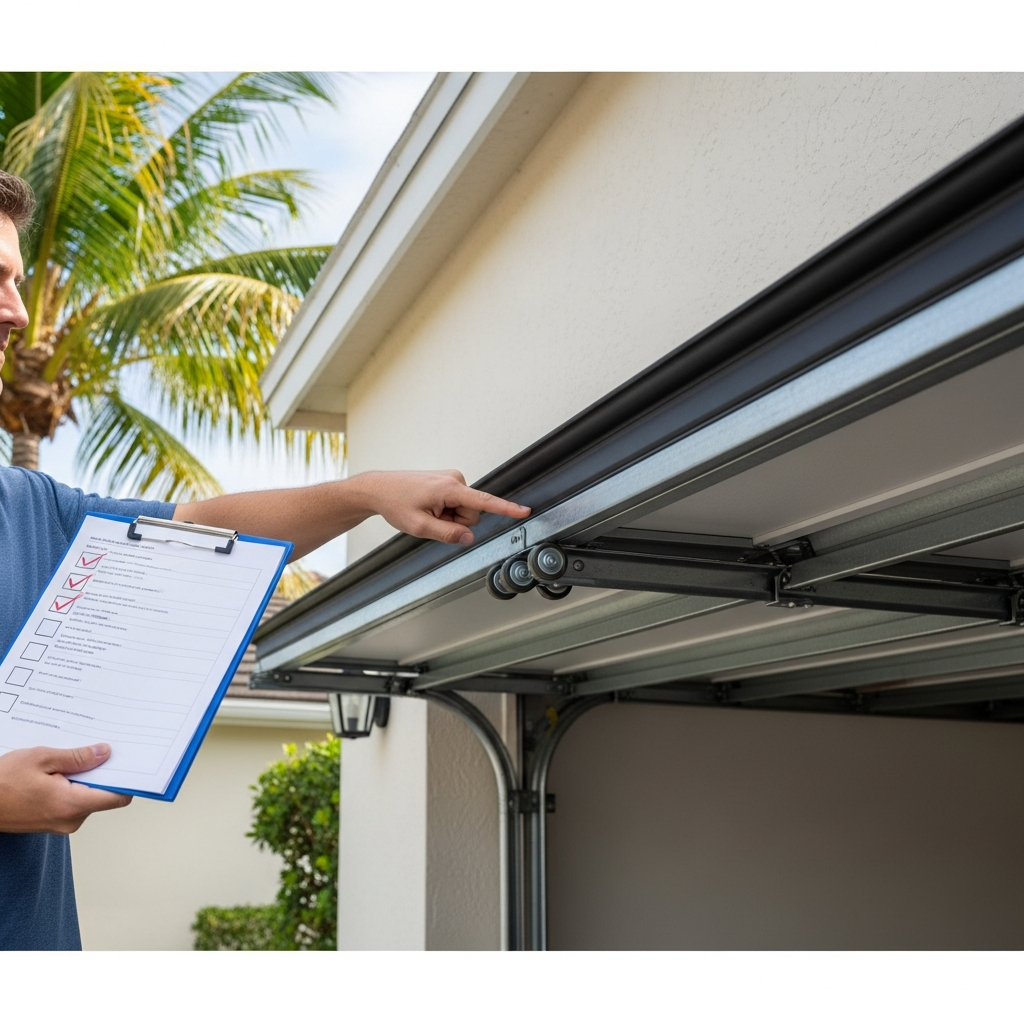
Track and Roller Inspection
What to look for: bent or misaligned tracks, missing or damaged rollers, excessive wear, or buildup of dirt and debris.
Probable causes: impacts, improper installation, or lack of maintenance. Recommended action: homeowners can clean tracks carefully and remove debris; however, do not attempt to pound bent tracks back into shape—call a technician for realignment and roller replacement to avoid compromising the door’s balance.
Hardware and Fastener Check
What to look for: loose bolts and screws on hinges, roller brackets, and track supports; rusted or missing hardware.
Probable causes: vibration, corrosion, or age. Recommended action: tighten fasteners on a regular schedule and replace corroded hardware. For significant rust or structural degradation, consult a professional.
Spring and Cable Inspection
What to look for: visible gaps in torsion springs, fraying cables, or uneven cable tension.
Probable causes: metal fatigue and wear. Recommended action: Do not attempt to adjust or replace springs and cables yourself. These components are under high tension and require professional tools and expertise for safe handling.
Opener and Electronic Component Review
What to look for: unusual noises, slow movement, unresponsive remotes, or flashing lights on the opener unit.
Probable causes: motor wear, sensor misalignment, dead remote batteries, or wiring issues. Recommended action: try simple troubleshooting like replacing batteries and resetting the opener. If issues persist, schedule a professional diagnosis to examine the motor, circuit board, and sensors.
Safety Sensor and Auto-Reverse Test
What to look for: failure to reverse when an object is placed in the door’s path or when the beam is interrupted.
Probable causes: misaligned sensors, dirty lenses, or wiring faults. Recommended action: clean sensor lenses and check alignment visually. If the auto-reverse still fails, contact a technician to evaluate sensor wiring and opener settings.
Balance and Operation Test
What to look for: the door pulls to one side, jerks during movement, or is difficult to open manually.
Probable causes: imbalance due to spring wear or track issues. Recommended action: perform a basic balance test by disconnecting the opener and lifting the door manually halfway—if it does not stay in position, call a professional to rebalance springs and adjust cables.
Lubrication and Moving Parts
What to look for: squeaks, grinding noises, or reduced smoothness in operation.
Probable causes: lack of lubrication or worn components. Recommended action: lubricate metal rollers, hinges, and bearings using a recommended garage door lubricant. Avoid heavy oils that attract dust and debris. Replace worn rollers and hardware as necessary.
Weather and Drainage Concerns
What to look for: water pooling near the garage threshold, interior moisture, or mold growth near the door frame.
Probable causes: inadequate weather seals, poor grading, or clogged gutters. Recommended action: improve drainage, replace seals, and repair threshold seals. If moisture damage extends into framing, consult a contractor to assess and repair structural issues.
Electrical Safety and Wiring Checks
What to look for: frayed wires, exposed connections, or inconsistent power supply to the opener.
Probable causes: rodents, aging insulation, or previous DIY work. Recommended action: do not attempt complex electrical repairs—hire a licensed electrician or a trained technician to address wiring issues safely.
Checklist Summary for Homeowners
- Inspect panels and seals every 3 to 6 months.
- Clean tracks and remove debris regularly.
- Lubricate moving parts quarterly.
- Test auto-reverse and sensors monthly.
- Document and photograph problems for technician review.
When to Call a Professional
Some tasks are beyond homeowner capability due to safety risks or required specialized tools. Call a professional if you notice broken springs, frayed cables, significant misalignment, structural damage to panels or frame, or persistent opener malfunctions. Professionals not only fix immediate issues but also diagnose underlying causes that lead to repeated failures.
Choosing the Right Professional for Residential Repairs
When hiring a company, verify insurance and licensing, request references or read online feedback, and ask for written estimates. Clarify warranty terms and ask whether the technician keeps common parts in inventory for faster repairs. Local Palm Beach providers often understand the best materials and finishes for coastal homes and can recommend corrosion-resistant upgrades.
Frequently Asked Questions
Q: How can I tell if a spring is close to breaking?
A: Look for gaps forming in torsion springs, rust buildup, or decreased balance in the door. If you notice these signs, contact a professional to replace springs before they fail.
Q: Can I ignore a noisy roller or hinge?
A: No. Noise often signals wear. Replace worn parts promptly to prevent more extensive damage. Lubrication may resolve mild noise, but persistent sounds usually require component replacement.
Q: How often should weather seals be replaced?
A: Inspect seals annually and replace them when cracked or compressed to maintain protection from moisture and pests.
Q: What should I do if my door no longer aligns with the tracks?
A: Do not attempt to force the door. Secure the area and contact a technician to assess and realign the tracks to avoid further damage.
Final Notes and Call to Action
Using this checklist regularly will help you catch small issues before they escalate into costly or dangerous failures. For a professional inspection, emergency repairs, or to schedule routine maintenance tailored to Palm Beach conditions, contact a reputable local provider. Professional technicians can perform a thorough assessment, recommend corrosion-resistant materials, and provide a maintenance plan that protects your door from coastal wear and tear. When you are ready to arrange an inspection or urgent service, reach out to experienced garage door repair professionals who serve Palm Beach and can restore safe, reliable operation to your residential garage door.
Keep this checklist handy and schedule checks at regular intervals to ensure your garage door remains a secure, efficient, and functional part of your home. Timely attention preserves functionality and safety for years to come.