Garage Door Repair Troubleshooting Guide Palm Beach Florida
A malfunctioning garage door can disrupt your day and create a safety concern. This troubleshooting guide helps Palm Beach homeowners identify common issues, perform safe preliminary checks, and determine when professional repair is needed. While many steps here are intended for diagnosis rather than repair, they will help you gather useful information before calling a technician, and in some cases allow you to resolve minor problems safely. If you discover signs of spring or cable failure, or if electrical faults are present, contact a professional with experience in garage door repair rather than attempting hazardous repairs yourself.
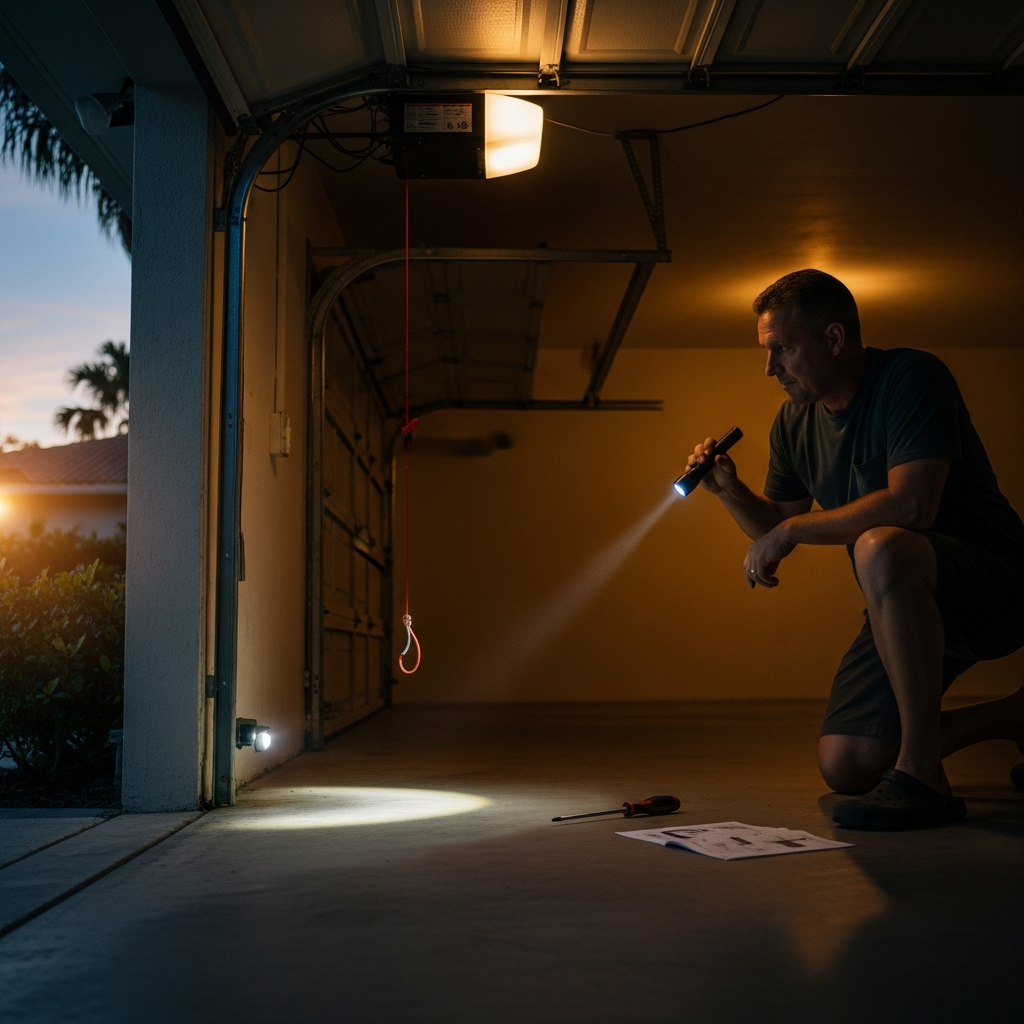
The goal of troubleshooting is to isolate the cause of the problem so repairs can be efficient and targeted. Start by observing the door’s behavior and noting unusual sounds, erratic motion, or specific error codes on modern openers. Many devices include diagnostic lights or beep patterns that indicate sensor alignment issues, limit switch problems, or overload conditions. Documenting these details will speed up the service call and increase the likelihood that the technician arrives with the necessary parts.
Door Won’t Open or Close
If the door does not respond to remote controls, keypads, or wall switches, begin by checking power to the opener. Confirm the garage’s circuit breaker is on and that the opener is plugged in. Test the wall-mounted switch to determine whether the issue is limited to remote devices. If the wall control works but remotes do not, check batteries and range issues. If none of the controls work, there may be a problem with the opener’s motor, circuit board, or power supply requiring professional service.
Next, check the emergency release rope to ensure it is engaged. If the release has been pulled, the opener will be disconnected from the door; re-engage the release according to the opener manufacturer’s instructions to restore automatic operation. If the door is physically blocked or off its tracks, do not attempt to force it; instead, secure the area and call a technician to address alignment or mechanical damage.
Door Reverses After Closing or Does Not Fully Close
When a door reverses after beginning to close, the automatic reversal system may be detecting an obstruction or the force setting on the opener may be too low. First, examine the safety sensors near the floor on both sides of the door to ensure they are properly aligned and free of dirt or spider webs. If the sensors’ indicator lights are not solid, clean the lens surfaces and realign them. If alignment does not resolve the problem, the opener’s force and travel limit settings may need adjustment — a task often best performed by a trained technician to maintain compliance with safety standards.
Additionally, check the bottom seal and threshold for debris that could be interrupting travel. Warped thresholds or damaged seals can cause false detections by the sensor system. In some cases, worn rollers or tracks that bind at certain points during travel will trigger reversal; an inspection can identify whether parts need replacement or realignment.
Noisy or Jerky Operation
Unusual noises such as grinding, squeaking, or thumping typically indicate worn rollers, loose hardware, or a need for lubrication. Start by tightening loose bolts on hinges and brackets, then lubricate designated moving parts with a suitable garage door lubricant. Avoid lubricating tracks themselves. If noise persists, rollers may have flat spots or bearings may be failing and require replacement. Nylon rollers are quieter and often recommended as an upgrade over steel rollers.
Jerky motion often results from a combination of friction points and worn components. Inspect for bent tracks, broken springs, or failing bearings at the top of the opener. If the door’s travel is uneven or it hesitates at certain points, schedule a professional evaluation to pinpoint worn parts that could pose a safety risk if left unaddressed.
Sagging or Uneven Door Movement
If the garage door appears to sag on one side or moves unevenly, the problem frequently relates to imbalance caused by spring or cable issues. Do not attempt to adjust springs on your own; instead, disconnect the opener and visually inspect cables and springs for fraying, rust, or separation. If any damage is apparent, restrict access to the area and arrange for immediate service. A technician will use specialized tools to safely replace springs and restore balance.
Uneven movement can also result from worn rollers or track misalignment. A professional will check alignment and attachment points, replace worn rollers, and adjust the system to restore smooth travel. Leaving imbalance uncorrected will accelerate wear on the opener and other components, increasing the likelihood of additional failures.
Opener Runs But Door Does Not Move
When the opener motor runs but the door does not move, the problem may be in the drive system. Chain, belt, or screw drives can experience slippage, stripped gears, or broken attachments between the opener and the door. Inspect the trolley and carriage connection to the door; if the emergency release has disconnected the carriage or if the trolley is damaged, the opener may run while the door remains stationary. A trained technician can diagnose drive system issues and repair or replace worn components.
Older openers with plastic gears may fail under load, resulting in motor noise but no movement. In these cases, the opener may require gear replacement or full unit replacement depending on severity and age. A professional can advise on the most reliable fix given your unit’s condition.
Remote and Keypad Issues
Remote and keypad problems are often the easiest to troubleshoot. Replace batteries in remotes and test with the user close to the door to rule out range limitations. For keypad issues, confirm that the entry code has not been changed or disabled. If replacements or reprogramming is needed, follow manufacturer instructions. If wireless interference is suspected, identify cordless phones, routers, or neighboring devices that may operate on similar frequencies and test operation after temporarily powering those devices down.
When to Call a Professional
Call a professional if you observe broken springs, frayed cables, significant panel damage, electrical burning smells, sparking, or if the door is dangerously off-track. Any repair involving springs, cables, or the opener’s mains wiring should be performed by trained technicians who carry appropriate tools, parts, and safety equipment. If troubleshooting steps do not resolve a problem, avoid repeated attempts that may cause further damage and call a qualified service provider for diagnosis and repair.
FAQ
Q: Can I replace garage door springs myself? A: No. Springs are under high tension and can cause severe injury if handled improperly. Have a trained technician perform spring replacement.
Q: Why does my garage door opener run but not lift the door? A: This often indicates a drive system failure, stripped gears, or a disconnected trolley. A technician will inspect the opener and drive connections to determine the cause.
Q: How often should I have my garage door inspected professionally? A: Annual inspections are recommended to ensure springs, cables, and hardware are in safe working order. Homes in coastal areas may benefit from more frequent checks due to corrosion concerns.
Closing Guidance and Next Steps
Troubleshooting helps you identify issues quickly and communicate them clearly to a technician, which speeds up repairs and reduces risks. Keep a log of symptoms, noises, and any diagnostic steps taken to provide technicians with context. For complex or unsafe conditions, schedule professional service promptly to avoid injury or escalating damage. If you need expert diagnosis and reliable repairs in Palm Beach, reach out to experienced professionals who specialize in garage door repair and can restore safe, dependable operation to your home’s garage system.
Prompt, informed action prevents minor issues from becoming emergencies, and engaging experienced technicians ensures repairs are completed safely and in compliance with local standards. When in doubt, stop and call for professional assistance rather than risking personal injury or further damage to your door and opener system.