
Introduction
When your garage door hesitates, grinds, or refuses to budge, it quickly becomes more than a minor inconvenience. In Fort Lauderdale, where coastal weather and daily use put extra stress on doors and openers, a strategic plan for care and fixes can prevent small problems from turning into big headaches. Whether you live near the beach or farther inland, understanding how the climate affects components, which warning signs matter most, and how to coordinate professional help will keep your home secure and your routine uninterrupted. If you need professional help sooner rather than later, consider scheduling trusted garage door repair so you can restore safe operation with confidence.
This guide focuses on practical tips for homeowners near Fort Lauderdale and explains the major factors that influence repair decisions. While the title mentions “costs,” the goal here is to help you understand what drives those decisions rather than list numbers. With that insight, you can choose the right timing, scope, and provider without guesswork.
How Fort Lauderdale’s Climate Impacts Your Garage Door
Humidity, salt air, heat, and seasonal storms shape the wear patterns on garage door systems in Broward County. Metal parts can corrode faster in salty conditions, rubber weather seals may harden under UV exposure, and wind loads from storms can test tracks, fasteners, and panel integrity. If you are near the coast, condensation can encourage rust on springs and hinges, while inland heat can dry out lubrication and accelerate belt wear on openers. Awareness of these factors will help you design a maintenance rhythm and anticipate which components need closer inspection throughout the year.
Key Warning Signs You Should Never Ignore
- Sudden loud bangs or snaps from the garage—often a broken spring.
- Door drifting unevenly, binding against tracks, or tilting during travel.
- New scraping, squealing, or grinding noises from rollers, hinges, or opener gears.
- Door reversing mid-cycle without obstruction, signaling sensor or balance issues.
- Visible fraying or kinks in lift cables.
- Panels cracking, warping, or separating—especially after a storm.
- Sluggish or delayed opening, light flicker on the opener, or frequent resets.
- Gaps around the door edges that invite water, pests, and hot air.
Act promptly when you see any of these symptoms. The sooner you address small malfunctions, the less stress you place on springs, cables, and the opener drive.
Safety First: What Homeowners Should and Should Not Do
Some upkeep tasks are safe for most DIYers, but others involve high-tension parts that demand professional tools and training. You can safely clean photo eyes, clear tracks of debris, test door balance, tighten visible hinge screws, and apply silicone-based lubricant where appropriate. However, spring adjustments or replacements, cable swaps, track realignment after impact, and opener gear replacements should be handled by trained technicians because of the stored energy and risk of injury. Safety matters more than speed—know your limits.
Understanding the Factors That Influence Repair Decisions
Instead of fixating on numbers, think through the drivers behind repair choices:
- Door size and material: Heavier wood or insulated steel doors demand sturdier springs, rollers, and hinges. Material also influences susceptibility to corrosion and warping.
- Extent of wear: One noisy hinge is different from a compromised torsion system, cracked panel, or bent track after a vehicle bump.
- Opener type and age: Chain, belt, screw, and direct drive systems each have unique maintenance needs, and older models may have limited replacement parts.
- Availability of parts: Some specialty doors require specific hardware or custom panels, affecting scheduling and repair scope.
- Wind-load considerations: Fort Lauderdale’s storm season may prompt reinforcement, upgraded tracks, or better fasteners to meet local wind expectations.
- Maintenance history: Well-lubricated, balanced doors experience less wear and fewer surprises over time.
- Usage pattern: Doors serving as a primary entrance can cycle dozens of times daily, escalating wear on rollers, springs, and opener gears.
DIY Maintenance to Stretch the Life of Your System
- Observe and listen monthly. Run the door and note any changes in speed, sound, or motion.
- Clean photo eyes gently with a microfiber cloth. Make sure sensors are aligned and unobstructed.
- Wipe tracks to remove grit. Do not grease the tracks; lubrication belongs on rollers and hinges, not the running surface.
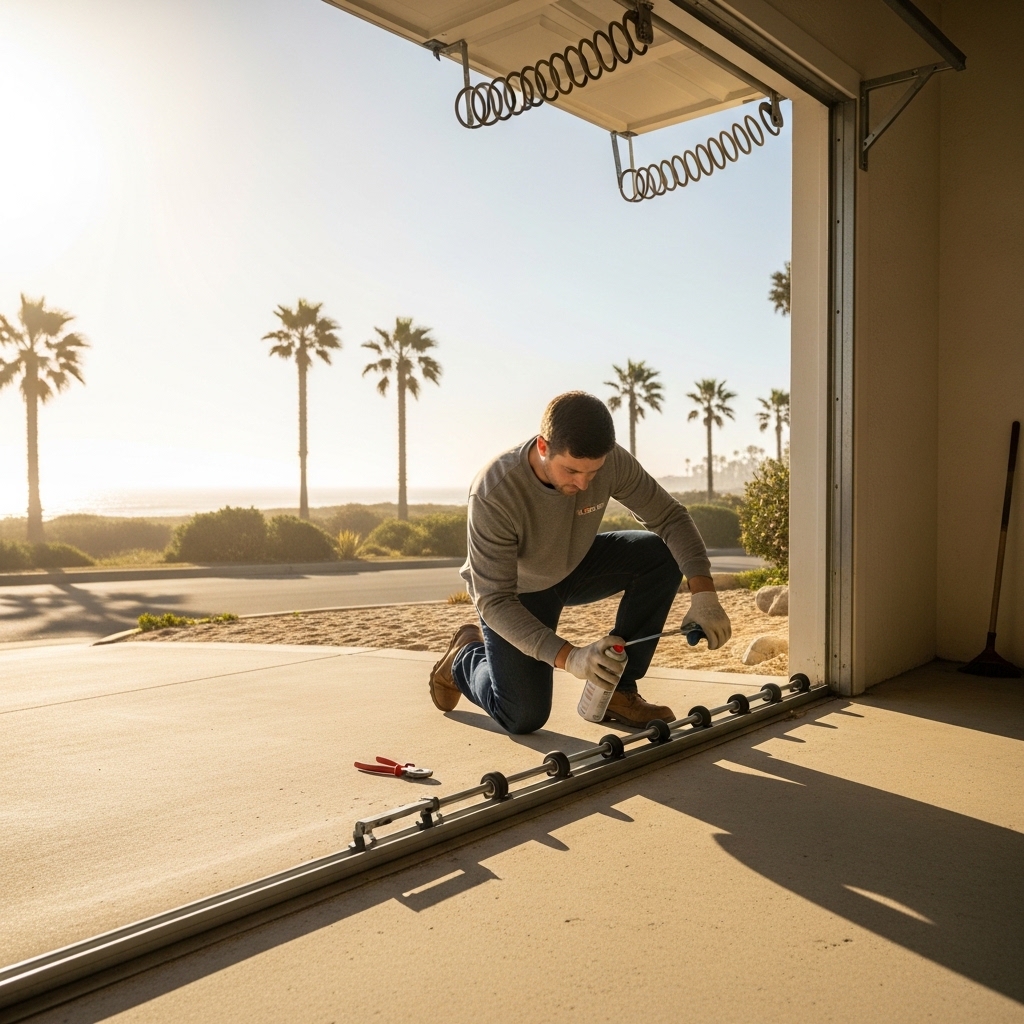
- Lubricate rollers, hinges, and springs lightly with a silicone-based product to reduce friction.
- Check fasteners. Tighten loose hinge screws and track bolts you can access safely.
- Inspect weatherstripping for cracks or gaps and plan timely replacement to keep conditioned air inside.
- Test door balance using the opener’s emergency release. A balanced door should stay in place when lifted halfway. If it slams shut or rockets up, call a pro.
Common Repairs in Fort Lauderdale Homes
- Spring replacement: Torsion or extension springs eventually fatigue. Replacing as a set is often recommended to maintain balance.
- Roller upgrades: Nylon rollers with ball bearings can reduce noise and help doors glide smoothly.
- Cable replacements: Frayed or kinked cables are a safety hazard and should be replaced promptly.
- Track realignment: Minor bends or misalignment from vehicle contact or storm impacts require careful correction.
- Opener repairs: Limit switch calibration, belt or chain tensioning, or logic board swaps restore reliability.
- Sensor alignment: Misaligned or dirty photo eyes lead to unexplained reversals.
- Panel fixes: Dents or cracks in panels may be repairable; severe damage might necessitate panel replacement for structural integrity.
Noise Reduction Strategies for Quieter Operation
Fort Lauderdale neighborhoods can be close-knit, and a loud garage door is a daily nuisance. Consider a belt-drive opener for quieter motion, add nylon rollers, and maintain consistent lubrication. Isolate opener vibration with appropriate mounting hardware and verify that the header bracket is secure. If your door is older, worn hinges and loose fasteners often contribute to rattling; periodic tightening is a simple fix.
Storm Readiness and Wind Considerations
Seasonal storms can stress doors beyond ordinary use. Reinforcement struts, upgraded tracks, and properly rated hardware help your door resist wind pressure. Ensure the opener’s manual release is functional in case of power outages, and keep backup batteries charged if your opener supports them. When storms are forecast, inspect the door for existing damage and address vulnerabilities before the first strong gusts arrive.
When to Repair Versus Replace Components
Not every aging part needs replacement right away. Some components—like slightly worn rollers—may function safely for a while with proper lubrication. Others—like fatigued springs, frayed cables, or cracked panels—warrant timely replacement to maintain safety and structural integrity. Use a simple rule of thumb: if a part directly affects lifting force, alignment, or the safety system, prioritize it.
Choosing a Local Professional
Seek providers with strong local references, clear communication, and familiarity with coastal conditions. Ask about their approach to balance testing, hardware upgrades, and long-term maintenance. Verify that technicians explain root causes, not just symptoms. A thorough inspection should cover springs, cables, rollers, hinges, tracks, opener drive, limit settings, photo eyes, and weather seals.
Mid-Project Planning and Communication
Once an inspection identifies the action plan, align on the scope and timeline. Discuss which parts are critical now and which can be monitored over time. If reinforcement is recommended for storm readiness, understand how it integrates with your existing door. Keep notes about part types, warranties, and maintenance cadence so you can track performance in the months ahead. If you decide professional help is the most efficient path, schedule expert garage door repair to ensure the work is completed safely and thoroughly.
Post-Repair Care to Prevent Repeat Issues
After service, watch the door’s behavior for a few days. Doors often “settle in” after adjustments, and minor follow-up tweaks may be helpful. Keep a reminder on your calendar for quarterly lubrication, biannual balance checks, and a pre-storm inspection at the start of hurricane season. Consistency is the best safeguard against avoidable breakdowns.
Fort Lauderdale-Specific Best Practices
- Rinse salt spray periodically if you live near the beach, focusing on exposed metal hardware.
- Check weather seals more often due to heat and UV exposure.
- Store a surge protector for the opener and consider a battery backup if power outages are common.
- Keep landscaping trimmed near the garage to reduce debris that can enter tracks.
- After heavy rain or wind, do a brief visual inspection before the next operation.
Common Mistakes to Avoid
- Over-lubricating tracks, which invites dust and grit that cause binding.
- Ignoring intermittent reversals, which can indicate sensor or balance issues.
- Using random parts for critical systems like springs and cables rather than matched components.
- Forgetting to test the manual release—crucial during outages and emergencies.
- Attempting spring adjustments without training.
Frequently Asked Questions
Q: How often should I schedule maintenance in Fort Lauderdale? A: A semiannual check—before and after storm season—plus quarterly lubrication is a smart baseline. Heavy-use doors may benefit from more frequent inspections.
Q: What if my door is unbalanced? A: If it slams shut or shoots up during the balance test, call a professional. Unbalanced doors strain openers and wear out parts prematurely.
Q: Are nylon rollers worth it? A: For many homes, yes. They reduce noise and friction, helping your door run smoothly and quietly.
Q: Why does my door reverse without anything in the way? A: Photo eye misalignment, dirty lenses, or a balance problem can trigger reversals. Clean and realign sensors, then test again. If issues persist, seek service.
Q: What should I do after a storm? A: Inspect for bent tracks, loose fasteners, panel dents, and sensor misalignment. Do not operate the door if you suspect structural damage.
Q: Can I reinforce my existing door for wind? A: In many cases, yes. Reinforcement struts, upgraded tracks, and proper fasteners can improve resistance. Consult a technician to match upgrades to your door’s specifications.
Q: Why is my opener noisy? A: Chain drives are inherently louder than belt drives. Worn gears, loose hardware, and metal-on-metal friction also contribute.
Q: How do I keep salt air from causing rust? A: Rinse exposed hardware occasionally and maintain lubrication to create a protective barrier.
Q: Is it okay to keep using the door if a spring breaks? A: No. The opener is not designed to lift the full weight of the door without spring assistance. Stop using the door and call a professional.
Q: What records should I keep? A: Note service dates, parts replaced, and recommended maintenance intervals to keep future work efficient and predictable.
Your Next Step in Fort Lauderdale
If your garage door is noisy, sluggish, or unreliable, take a proactive approach and build a simple plan: observe, maintain, inspect, and reinforce where needed. Keep safety at the center of every decision and partner with a local expert who understands coastal conditions. When you are ready to restore smooth, reliable operation with confidence, book professional garage door repair and get your door back to safe, quiet performance.