Introduction: Know the Rules Before You Build
Garage doors in Palm Beach County must do more than look great—they must meet specific performance and safety criteria shaped by Florida’s climate and building standards. If you are planning a new or replacement system, it pays to understand the requirements ahead of time. Partnering with a local expert for garage door installation ensures your project aligns with wind-load criteria, permitting processes, and inspection protocols without delays.
This guide summarizes the factors that typically influence compliance, from structural considerations to safety devices and documentation. While each municipality may have unique processes, the core concepts below will help you prepare.
Structural and Wind-Load Criteria
Wind resistance is essential in Florida. Doors must be selected and installed to withstand pressure differentials and gust loads consistent with your home’s location and design. Reinforced struts, heavier-gauge track, and secure anchoring into framing are common features of compliant systems. Where applicable, impact considerations may influence glazing choices or lead to non-glazed configurations.
Manufacturers publish product approvals and technical data that demonstrate compliance. Your installer should match these specifications to your address and provide documentation to the municipality for review. Properly specified hardware, including brackets and fasteners, is part of the compliance picture—not just the door panels.
Framing Integrity and Opening Conditions
Code-compliant installation relies on sound framing. The jambs and header must be plumb, level, and able to accept anchors chosen for the system’s loads. If existing framing is compromised by rot, corrosion, or settlement, the opening should be repaired before installation. This ensures safe operation and maintains the validity of product approvals.
Headroom, sideroom, and backroom clearances must meet the requirements of the track and spring design. Low-headroom kits and specialized hardware can accommodate tight spaces, but they must be matched to the door and opener configuration to preserve safety and performance.
Permits, Product Approvals, and Inspections
Most municipalities in Palm Beach County require permits for garage door installation, especially when wind-rated products are involved. Permit applications generally include product approval documents, plan notes, and installation details. Your installer typically manages this process and coordinates inspection scheduling.
During inspection, officials verify correct fastening patterns, strut reinforcement, and proper operation of safety features. Inspectors may also confirm that the opener is compatible, mounted correctly, and properly integrated with the door’s travel and reversal systems.
Opener Compatibility and Safety Devices
Garage door openers are governed by safety standards that require protective features such as photoelectric sensors and auto-reverse. Sensors must be installed at the correct height and aligned accurately. The opener’s force settings should be calibrated so that the door reverses upon encountering an obstruction. These elements protect people, pets, and property and are essential for inspection approval.
Compatibility matters. The opener’s power and drive type should match the door’s size and weight. Wall-mount units can improve vibration control and free up ceiling space, while belt-drive systems are favored for quiet operation. Battery backup can keep the door functional during power interruptions.
Weatherproofing and Energy Considerations
While the garage may not be conditioned space, effective weatherstripping at the perimeter and bottom seal helps reduce drafts, dust, and pests. Insulated door sections contribute to thermal stability, benefiting adjacent rooms and reducing noise. In coastal environments, corrosion-resistant finishes and hardware are critical to long-term performance.
Regular maintenance supports these benefits. Simple routines—cleaning, lubrication, and periodic inspection—sustain smooth travel and extend component life. An installer who provides maintenance guidance and service plans makes compliance and longevity easier to manage.
Electrical and Control Requirements
Openers require a dedicated outlet positioned within reach of the unit as specified by the manufacturer. Wiring should be tidy, protected, and compliant with applicable electrical standards. Wall controls and safety sensors must be mounted at appropriate heights to ensure safe, convenient operation for all household members.
Smart controls add convenience without sacrificing safety. App-based access, guest codes, and activity logs give visibility into daily operation and can be helpful in busy households or for deliveries.
HOA and Aesthetic Guidelines
Many neighborhoods within Palm Beach County have architectural guidelines covering exterior colors, window designs, and decorative hardware. Aligning with these standards is not just polite—it helps prevent project delays. A local installer familiar with community preferences can provide samples, photos, and submittal packets to expedite approvals.
By confirming style expectations early, you avoid redesigns later and ensure your new door complements your home and neighborhood.
Documentation You Should Expect
- Manufacturer product approvals and wind-load data tied to your selected model.
- Permit application and supporting drawings or installation details.
- Hardware specifications, including track, springs, and fasteners.
- Operation and maintenance literature for the door and opener.
- Warranty information and service schedule recommendations.
Installation Best Practices
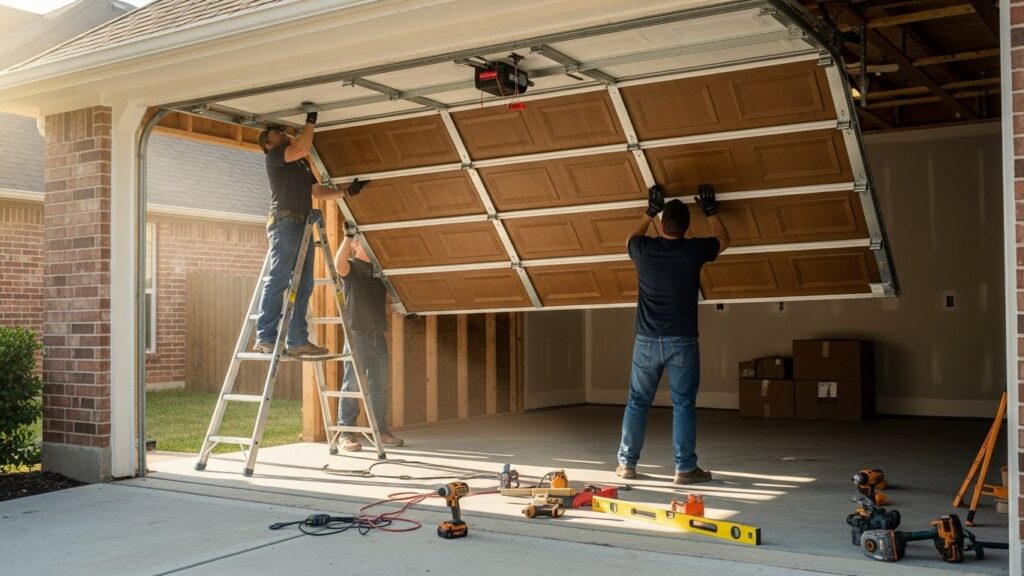
Quality installation is the backbone of compliance. Crews should level and plumb track, set spring tension correctly, and verify smooth, balanced travel. Fasteners must match manufacturer specifications and embed into suitable framing members. Photoelectric sensors are tested for proper reversal, and force settings are adjusted to meet guidelines.
The job site should remain clean and organized, with old materials removed and the new system presented neatly. Before completion, the installer should review operation, maintenance, and safety procedures with you.
Frequent Pitfalls and How to Avoid Them
- Overlooking wind-load requirements when selecting style options.
- Attempting to reuse incompatible openers or worn hardware.
- Neglecting permits, which can cause delays and rework.
- Skipping maintenance, leading to noisy operation and premature wear.
- Ignoring HOA guidelines, which may necessitate changes after purchase.
Frequently Asked Questions
Q: Do all new garage doors require permits in Palm Beach County? A: Many jurisdictions require them, particularly for wind-rated products. Your installer can confirm requirements and submit applications on your behalf.
Q: How do I know if a door meets wind requirements? A: The manufacturer provides product approvals and engineering data. Your installer will match these documents to your location and include them in the permit package.
Q: Are impact-rated windows necessary? A: Requirements depend on your location and the specific product. Your installer will explain options for impact-rated glazing or recommend non-glazed designs where appropriate.
Q: Can I install the door myself to save time? A: Professional installation is recommended due to the safety risks associated with springs and the importance of code compliance. A trained crew ensures correct fastening patterns, balance, and safe operation.
Q: Will an insulated door make a difference? A: Yes. Insulation improves comfort, reduces noise, and helps protect stored items from temperature swings. It is a practical upgrade in South Florida’s climate.
Q: How often should safety systems be tested? A: Test the auto-reverse and photoelectric sensors monthly. If the door does not reverse as expected, contact a professional immediately for adjustment.
Q: What should I keep for my records after installation? A: Save permit paperwork, product approvals, warranty information, and maintenance instructions. These documents simplify future service and real estate transactions.
Q: What if my garage has low headroom or unusual framing? A: Specialized track layouts and spring configurations can adapt to tight or unique spaces. A site assessment will determine the best approach.
Q: Do smart openers affect compliance? A: Smart features complement, but do not replace, core safety requirements. As long as sensors and reversal systems are installed and adjusted correctly, smart controls are a compliant enhancement.
Putting Requirements into Action
Understanding requirements puts you in control of your project. When product approvals, hardware choices, and safety devices align, inspections go smoothly and your door performs as intended. Durable finishes, corrosion-resistant components, and proper weathersealing round out a system designed for Palm Beach County’s environment.
If you want step-by-step guidance and a streamlined path from permit to final inspection, connect with a local expert who focuses on compliant garage door installation. With the right partner, you will enjoy a door that is beautiful, secure, and built to last.