
Garage Door Installation Process in Palm Beach Florida
Installing a garage door in Palm Beach, Florida follows a series of predictable steps when performed by a professional installer who understands regional needs. From initial consultation to final testing, the process balances practical site preparation, adherence to local codes, selection of suitable materials for coastal exposure, and careful assembly to deliver a safe, durable, and attractive finished product. An experienced local team can guide homeowners through options and arrange the entire job, including permitting if required. To begin your project with confidence, consider consulting a specialist in garage door installation who is familiar with Palm Beach County standards and environmental conditions.
The installation process generally starts with a detailed on-site evaluation. During this visit, the installer measures the opening, inspects the condition of the frame and header, and evaluates the surrounding structural support. They will check for issues such as water damage, rot, or previous poor installation work that may require repair before a new door can be safely mounted. The installer also assesses the garage interior for adequate electrical supply to run an automatic opener and places to mount tracks and support hardware. This initial step is crucial for developing an accurate project scope and timeline.
After evaluation, the installer provides recommendations for door types, material choices, and opener options suitable for your home. In Palm Beach’s coastal environment, corrosion resistance and wind-load capacity are important factors. The homeowner and installer may review styles like sectional steel, aluminum, or carriage-house doors, each with various insulation and finish options. Decisions about windows, color, decorative hardware, and insulation affect both aesthetics and performance. Once choices are finalized, the installer prepares a written plan that outlines materials, estimated timing, and any necessary permit work.
Permits and code compliance are a significant part of the process in hurricane-prone Florida. Palm Beach County can require permits to ensure that doors meet wind-load and safety requirements. A reputable installer will help determine whether your project needs permitting and will often manage the permit application as part of the service. This ensures the work will pass local inspections and that safety and insurance standards are upheld. Timely handling of permits helps avoid delays and ensures legal compliance.
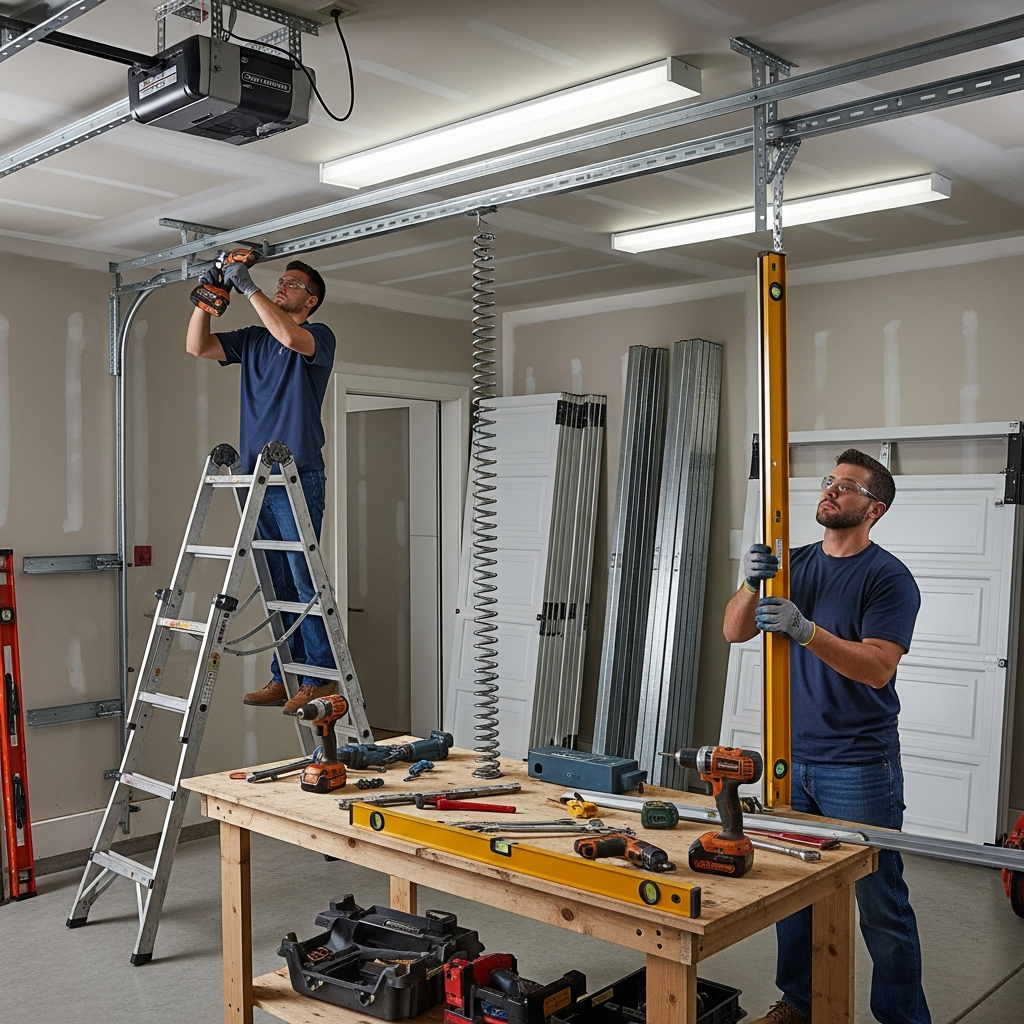
On the day of installation, the crew arrives with the pre-ordered door sections, tracks, hardware, and opener equipment. The first task is site preparation: clearing the workspace, protecting floors and walls, and safely removing the old door if one exists. Proper disposal or recycling of the old door is typically part of the service. Next, the crew inspects the opening again and performs any frame adjustments, repairs, or reinforcements needed to accept the new door. Attention to the rough opening and header is essential for a secure, long-lasting installation.
Assembly begins with installing the bottom section and weather-stripping, then building the carriage upward with track, rollers, springs, and braces. Torsion or extension springs must be installed and adjusted correctly for door balance; this is a task that requires specific training and should always be left to professionals to avoid dangerous accidents. Tracks are secured and aligned, and the door sections are fastened and checked for smooth operation. Careful calibration ensures that the door rolls evenly and that seals are effective against the elements.
When the door assembly is complete, the installer sets up and wires the opener if included. Openers with smart features, such as remote access and battery backup, may require network setup and testing of safety sensors. The team adjusts force settings, tests the auto-reverse mechanism, and verifies sensor alignment to ensure the door complies with safety standards. Proper opener installation improves convenience and reduces wear and tear on mechanical components.
After the mechanical and electrical work, finish touches include weatherproofing, final paint or finish touch-ups if needed, and cleaning the site. The installer conducts a comprehensive safety inspection and demonstrates the door’s operation to the homeowner, explaining maintenance schedules and emergency procedures. This walkthrough ensures that the homeowner understands how the system functions and what to monitor in the weeks following installation.
Post-installation service is important for long-term function. Most installers recommend routine checks every six to twelve months to lubricate moving parts, inspect cables and springs, test safety sensors, and tighten hardware that can become loose over time. Routine maintenance helps prevent failures and extends the lifespan of both the door and opener. For Palm Beach homes, attention to corrosion-prone hardware and weather-seal integrity is especially important because of salt air and humidity.
Homeowners should prioritize safety during the process. Springs and cables contain high tension and can cause severe injuries if improperly handled. Always hire trained professionals for these portions of the work. Confirm that your chosen installer carries liability insurance, has proper licensing, and provides written warranties covering parts and labor. Reasonable warranty terms and a clear maintenance plan from the installer contribute to peace of mind and long service life for your new door.
If your installation involves upgrades such as insulation or reinforced sections for wind resistance, discuss the impact on opener selection and balance. Heavier, insulated doors may require a more powerful opener or a different spring setup. Your installer will determine the correct spring ratings and opener horsepower to match the door’s weight and ensure smooth operation. Balancing all components properly reduces strain and lowers the likelihood of premature wear.
Community and neighborhood considerations can influence product choices. Many Palm Beach neighborhoods encourage design harmony, so you might choose a door style that complements local architecture. Local installers can show examples of completed projects to help you visualize options and ensure a good match with your home’s exterior. Additionally, local suppliers may offer finishes that stand up better to UV exposure and humid conditions, helping preserve the door’s appearance over time.
Frequently Asked Questions
Q: What do installers check during the initial site visit? A: Measurements, frame condition, header strength, electrical supply for openers, and any issues like water damage or structural problems that need resolving before installation.
Q: How long does permit approval take? A: Permit timelines vary by municipality and the project’s complexity; experienced local installers can often advise on typical turnaround times and may manage the permit application for you.
Q: Can an installer match the door to my home’s style? A: Yes, reputable installers offer a range of styles, finishes, and window options to complement your home’s architecture.
Q: What maintenance should I expect after installation? A: Regular checks for lubrication, hardware tightening, sensor testing, and corrosion inspection are recommended at least twice a year for coastal environments.
Q: Is spring replacement part of the standard installation? A: If your existing springs are worn or not compatible with the new door, the installer will recommend replacement to ensure proper balance and safety.
Final Steps and Scheduling
Understanding the full installation process helps you plan for a smooth project from initial consultation through ongoing maintenance. If you are ready to schedule an assessment and get professional guidance specific to Palm Beach County, contact a local team specializing in residential garage door installation. They can provide a site visit, explain code considerations, and outline a clear plan that includes permits, materials, and a timeline to completion.
When selecting an installer, verify licenses, insurance, and customer references, and request written warranties and maintenance recommendations. Good installers will provide clear communication, dependable workmanship, and a pathway for future service. With the right professionals, your new garage door will deliver safety, security, and improved curb appeal for years to come. Reach out to schedule your appointment and begin the process of upgrading your home with a properly installed garage door that meets Palm Beach County requirements and stands up to local conditions.