
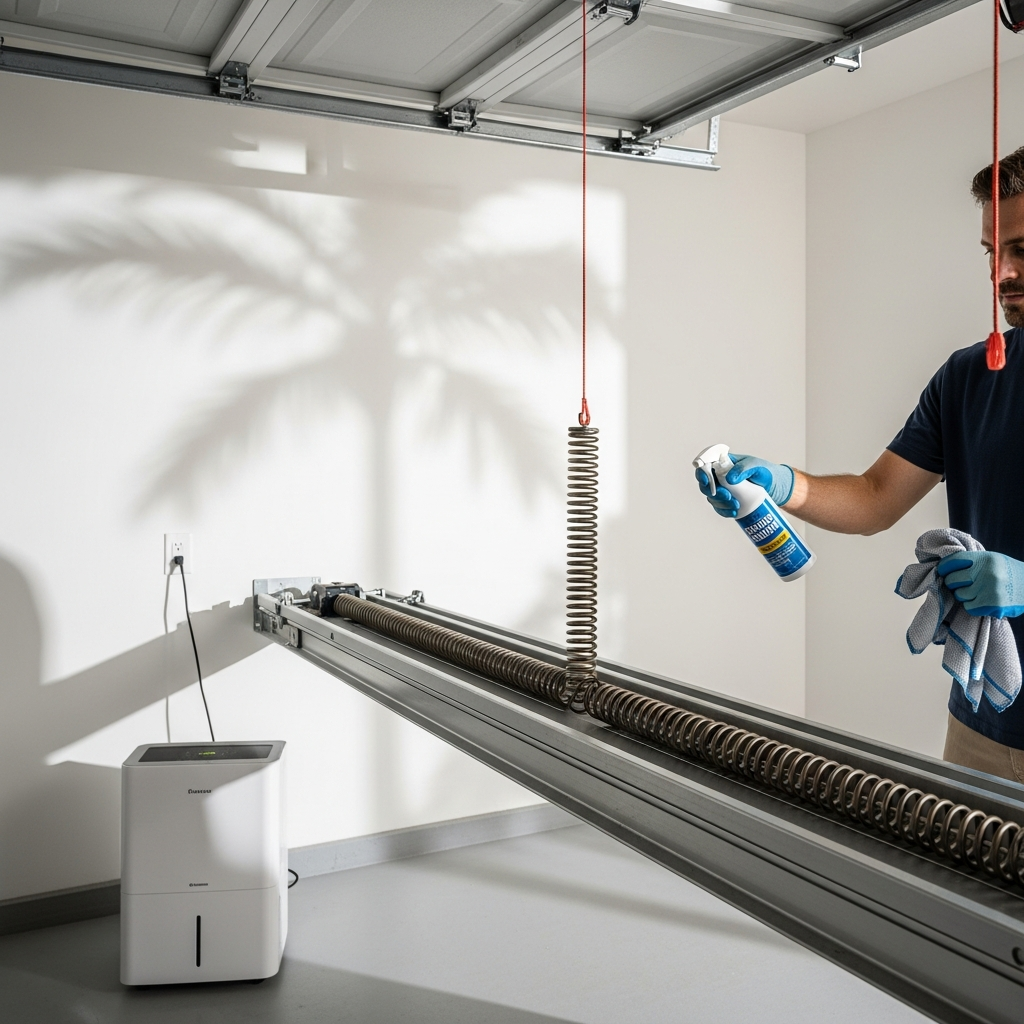
Maintaining a replaced garage door in Palm Beach, Florida, requires attention to salt air, humidity, and seasonal weather events. A proactive maintenance regime helps protect your investment, reduce emergency repairs, and extend the life of mechanical components and finishes. If you have recently completed or are planning a replacement, you can review local professional maintenance options and recommendations for garage door replacement care and upkeep.
Why maintenance matters in Palm Beach
Coastal conditions accelerate corrosion and wear, making maintenance more important than in inland locations. Salt particles carried by sea spray can create a corrosive environment for metal components, while high humidity can lead to swelling or rot in wooden elements. Regular maintenance preserves functionality, prevents breakdowns, and ensures safety systems like auto-reverse and sensors remain operational. With sustained care, you can maximize the life expectancy of panels, springs, tracks, and openers while keeping appearance and performance high.
Basic monthly and quarterly checks
Regular visual inspections catch small problems early. Monthly and quarterly checks should include the following routines:
1. Visual inspection of tracks and rollers for debris, dents, or corrosion. Clean dirt and buildup that may impede roller movement.
2. Check weatherstripping for cracks, compression, or detachment. Replace degraded seals to prevent water intrusion.
3. Test safety reversal by placing an object in the door’s path and confirming the door reverses on contact.
4. Verify that remote controls and wall buttons respond quickly and that battery-powered accessories have fresh batteries as needed.
Semi-annual maintenance tasks
Every six months, perform more involved tasks to keep the system humming:
Lubricate rollers, hinges, and torsion springs with a recommended lubricant to reduce friction and wear. Use lubricants designed for garage door applications; avoid heavy grease that attracts dirt.
Inspect cables and springs for signs of wear, corrosion, or fraying. If cables show wear, schedule professional replacement immediately to prevent sudden failure.
Check and tighten fasteners. Vibration over time can loosen bolts and screws; ensure everything is securely anchored.
Annual professional inspection
Hire a qualified technician at least once a year for a thorough inspection. Professionals can assess spring tension, opener settings, and overall balance—tasks that require specialized tools and experience. They will also examine the opener’s electronics and any backup power features to ensure operational reliability during power outages or storms.
Salt air and corrosion-specific procedures
In Palm Beach, extra steps combat salt-related wear. Rinse exposed metal components periodically with fresh water to remove salt deposits, especially if the property is within easy reach of sea spray. After rinsing, dry exposed areas and apply a corrosion-inhibiting spray or lubricant to protect metal surfaces. For painted surfaces, promptly touch up worn or chipped paint to prevent accelerated corrosion at exposed edges.
Weatherproofing and sealing
Seals prevent moisture infiltration and reduce drafts. Inspect the bottom seal and jamb sweeps for compression and cracking and replace them when compromised. Ensure thresholds are intact and that the door closes uniformly along the bottom edge. Proper sealing reduces the likelihood of water entering the garage during storms and helps maintain interior conditions.
Opener upkeep and electronic care
Openers contain electronics that can be sensitive to moisture and corrosion. Keep the opener housing clean and free of debris. If the opener is located in an unconditioned space, monitor for condensation and provide ventilation or a moisture barrier if necessary. Keep firmware updated on smart openers, and test battery backups before storm seasons to ensure they will function during power outages.
When to call a professional
Certain conditions require immediate professional attention: visible spring damage, frayed cables, sections that have come off track, or openers with electrical faults. High-tension components such as torsion springs pose a serious hazard if they fail or if anyone attempts to service them without proper tools and experience. If anything about the door’s movement feels unpredictable, schedule a professional safety inspection promptly.
Seasonal preparation and storm readiness
Prepare your garage door for storm seasons by performing preventive tasks in advance. Tighten all fasteners, clear gutters and roof areas near the garage to prevent water flow issues, and inspect seals. If you live in a wind-borne debris area, consider wind-rated doors and consult local code for storm protection measures. Test backup power systems and ensure remote operation is functioning in case you need to move vehicles quickly during an emergency.
Upgrading components for longer life
Upgrading to stainless fasteners, nylon rollers, and powder-coated tracks can significantly extend the time between maintenance cycles. Insulated doors not only improve energy performance but often have heavier construction that benefits from upgraded openers and durable hardware. When replacing parts, choose quality components with corrosion-resistant finishes designed for coastal exposure.
DIY maintenance safety tips
When performing DIY maintenance, always disconnect power before working near the opener. Avoid attempting spring adjustments or replacements unless you have the correct tools and training—these tasks are best left to professionals. Use appropriate eye protection, gloves, and stable ladders when accessing tracks or hardware. If a task appears beyond basic cleaning or lubrication, schedule a technician visit.
Recordkeeping and warranty compliance
Keep detailed records of maintenance activities, including dates, actions performed, and any parts replaced. These records support warranty claims and provide service history for future owners if you sell the home. Follow manufacturer maintenance guidelines closely to maintain warranty coverage for the door, springs, and opener.
Frequently Asked Questions
How often should I lubricate moving parts? Lubricate rollers, hinges, and springs every six months, or more often in high-salt environments. Use a lightweight garage door lubricant compatible with your components.
Can I wash salt off my garage door myself? Yes. Rinse the door and hardware with fresh water and dry exposed metal areas. Avoid high-pressure settings that might drive salt deeper into seams.
What are signs my springs need replacing? Visible corrosion, gaps in torsion springs, or significant changes in door balance indicate springs may need replacement. If you notice any of these signs, contact a professional immediately.
Should I upgrade my opener after replacement? Upgrading can improve reliability and provide modern safety features. Consider upgrade if your opener is old or lacks safety sensors and smart features.
Ongoing support and recommendations
Ongoing care preserves the functionality and aesthetic of your replaced garage door. If you prefer professional maintenance, arrange semi-annual or annual tune-ups with qualified technicians experienced in coastal environments. For homeowners seeking trusted local service and maintenance planning, consult resources and installers that specialize in Palm Beach conditions and can provide tailored maintenance agreements.
Protect your investment
Routine maintenance reduces costly repairs, prevents downtime, and keeps your garage door operating smoothly. If you would like a professional maintenance assessment or to schedule a tune-up, reach out to experienced local service providers who understand the demands of the Palm Beach environment and can offer targeted recommendations for long-term performance. Professional teams can provide inspection reports and maintenance plans that align with manufacturer recommendations and local climate considerations.