Regular inspections are essential to keep your garage door safe, functional, and durable, particularly in a coastal climate like Palm Beach, Florida. Inspection helps detect wear and potential hazards early so that technicians can make targeted repairs before emergencies occur. A thorough inspection covers mechanical components, electrical systems, seals, and structural attachments. If you prefer professional assessment, experienced garage door repair services in Palm Beach provide detailed inspections tailored to local environmental challenges. This guide outlines what to expect during a professional inspection and practical checks homeowners can perform between service visits.
Why Regular Inspections Are Important
Inspections identify small issues that lead to larger problems. For example, a slightly frayed cable can progress to a full break, or a misaligned track can cause premature roller wear. In Palm Beach, salt and humidity further accelerate part degradation, making periodic checks more important than in less corrosive climates. Inspections also confirm that safety features like sensors and auto-reverse mechanisms function as intended, protecting people and property.
Regular inspection and preventive maintenance reduce unexpected failures, improve energy efficiency by ensuring proper seals and balance, and extend the life of the door system.
What a Technician Will Inspect
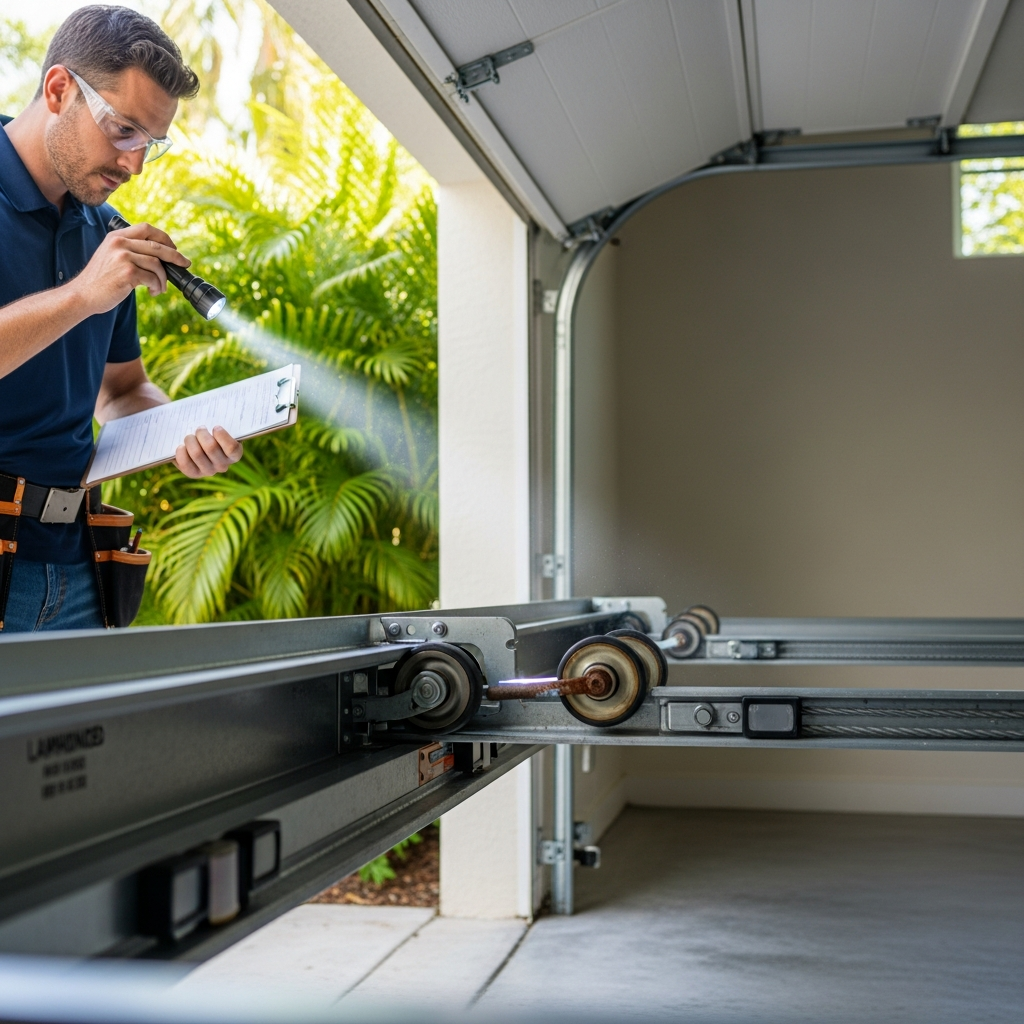
A professional inspection is comprehensive. Technicians assess springs and cables for signs of wear or corrosion, inspect rollers and hinges for smooth movement and damage, and check tracks for alignment and integrity. They test the opener, remote controls, keypad, and safety reversing sensors, and they examine seals and weatherstripping for cracks or detachment.
Technicians will also inspect the header and mounting points for structural soundness, especially after storms or impact events. For older systems, they may recommend upgrading components to improve safety and reliability.
Homeowner Walk-Through Checks
Homeowners can perform basic checks between professional inspections. Start by visually scanning for rust, fraying cables, and loose hardware. Operate the door and listen for unusual noises such as grinding, squeaking, or clanking that may indicate worn parts. Verify that the door travels smoothly and remains balanced when manually lifted halfway with the opener disconnected.
Test the safety features monthly by placing an object in the door’s path and confirming the door reverses. Check that the remote and keypad controls respond consistently, and replace batteries as needed. Keep the track clear of debris and inspect bottom seals for proper contact with the floor.
Testing Balance and Spring Condition
Testing balance requires disconnecting the opener and raising the door halfway. A balanced door will remain stationary at that point. If the door moves up or down on its own, spring tension may be off and requires professional adjustment. Technicians measure spring tension and inspect for gaps or deformations that indicate imminent failure. Because springs are dangerous to adjust, homeowners should not attempt spring work without professional tools and training.
Electrical and Sensor Inspections
Electrical checks include testing the opener’s motor, chain or belt drive tension, limit switch settings, and remote connectivity. Safety sensors must align correctly and respond to obstructions—misaligned or dirty sensors commonly cause intermittent issues. For smart openers, technicians may verify network connectivity and firmware status as part of the inspection.
Electrical inspections also ensure that the opener is wired safely and that any visible wiring shows no signs of wear or hazards. If you have surge protection or battery backup on your opener, the technician will test those functions to confirm they operate during power interruptions.
Inspection for Corrosion and Seal Integrity
In Palm Beach, corrosion checks are critical. Technicians inspect each metallic component for rust and evaluate whether protective coatings or stainless replacements are needed. They check the condition of weather seals and bottom sweeps for cracking, UV degradation, and detachment that can allow water intrusion and pest entry.
For wooden doors, technicians look for swelling, rot, or separation at joints, and for painted or finished doors they examine surface integrity and recommend touch-up or resealing to prevent moisture infiltration.
Recommendations and Prioritization
After inspection, a professional offers prioritized recommendations: immediate safety repairs, near-term replacements to avoid failure, and longer-term upgrades that will improve performance and durability. For example, a technician might recommend immediate cable replacement, suggest spring replacement within a few months, and propose installing corrosion-resistant hardware as a long-term improvement.
Documentation accompanies these recommendations so you can plan maintenance budgets and schedule follow-up work. A good technician will be transparent about urgency and expected outcomes for each recommendation.
Middle Section: Frequency of Inspections
For most residential doors, an annual professional inspection is a minimum. In coastal areas like Palm Beach, biannual inspections are often prudent due to increased corrosion risk. Homes that use the door frequently, or properties with multiple units or commercial doors, may benefit from quarterly inspections. If you live in an area prone to storms or have recently experienced a severe weather event, schedule an inspection promptly to identify hidden damage.
Consistent inspection schedules reduce the likelihood of unexpected failures and help maintain manufacturer warranties that often require documented maintenance.
Documentation and Service Records
Keep detailed records of inspections, repairs, parts replaced, and warranties. This documentation is valuable for tracking wear patterns, planning replacements, and providing proof of maintenance for insurance or resale. A service record helps technicians make informed recommendations during future visits and can reveal recurring patterns that suggest broader system upgrades.
DIY vs Professional Inspection: Knowing the Limits
Homeowners can perform visual and functional checks, but professionals are necessary for tensioned spring inspection, cable replacement, complex alignment, and motor diagnostics. If you uncover concerns such as frayed cables, missing fasteners, or visible spring damage, contact a professional immediately rather than attempting repairs. Professionals have the tools and training to diagnose underlying causes and perform safe repairs.
FAQs
Q: How often should I have my door inspected professionally? A: At minimum once per year for most homes, with biannual checks recommended for coastal environments and more frequent inspections for heavily used or commercial doors.
Q: Can inspection prevent all emergency repairs? A: While inspections greatly reduce the risk of sudden failures, they cannot guarantee that emergencies will never occur. Inspections identify and address most common failure points before they become critical.
Q: Will inspection include lubrication and minor adjustments? A: Many professional inspections include lubrication, minor tightening, and sensor alignment. Confirm the scope with your provider before the visit.
Q: What should I do if an inspection reveals imminent failure? A: Follow the technician’s safety recommendations and schedule immediate repairs to avoid hazardous outcomes. If immediate repairs are not possible, secure the area and limit access to the garage until the issue is resolved.
Regular garage door inspections are a cornerstone of safe and reliable operation. In Palm Beach, taking added precautions against corrosion and UV damage helps protect components exposed to coastal conditions. Professional inspections provide a thorough assessment and prioritized recommendations, while homeowner checks between visits help spot issues early.
Keep a consistent inspection schedule, maintain detailed service records, and choose inspection professionals who understand local environmental impacts. If your inspection uncovers concerns or if you prefer the assurance of a professional evaluation, contact experienced local garage door repair services to schedule a full inspection and discuss maintenance plans tailored to Palm Beach conditions. Routine inspections and timely repairs preserve safety and extend the lifespan of your garage door system.
Maintaining your garage door through regular inspections and prompt repairs ensures a more reliable, safer entry point to your home. If you want professional guidance or to schedule an inspection, reach out to qualified technicians who can provide a thorough assessment and clear recommendations tailored to your property’s needs.