
Introduction
Homeowners in Palm Beach, Florida, face unique challenges keeping garage doors functional because of salt air, high humidity, and frequent storms. Regular maintenance protects your investment, enhances safety, and prevents unexpected failures. Early attention to routine tasks reduces wear and extends component life. If you prefer professional assistance or seasonal tune-ups, consider contacting a trusted local company like garage door service for evaluations and preventive care. This article provides a complete maintenance plan, checklists, and practical tips tailored to the Palm Beach climate.
Why Routine Maintenance Matters
Garage doors are mechanical systems with many moving parts. Neglecting maintenance increases the risk of sudden failures that can be inconvenient and dangerous. Corrosion from coastal humidity accelerates deterioration of metal parts, and repeated thermal cycling in Florida can affect door alignment. Regular attention preserves functionality and ensures that safety features like auto-reverse sensors perform reliably.
Monthly Maintenance Checklist
Establishing a simple monthly routine helps catch small problems early. Spend 15–30 minutes performing these checks:
- Operate the door and listen for unusual sounds.
- Inspect the tracks for debris, dents, or misalignment. Clear any obstruction.
- Check rollers and hinges for visible wear or damage.
- Test the auto-reverse and photo-eye sensors to ensure proper operation.
- Look for rust on springs, brackets, and cables. Address rust early to avoid component failure.
Semi-Annual Tasks
Every six months perform these more thorough maintenance tasks. In coastal climates, you may wish to do this every three to four months.
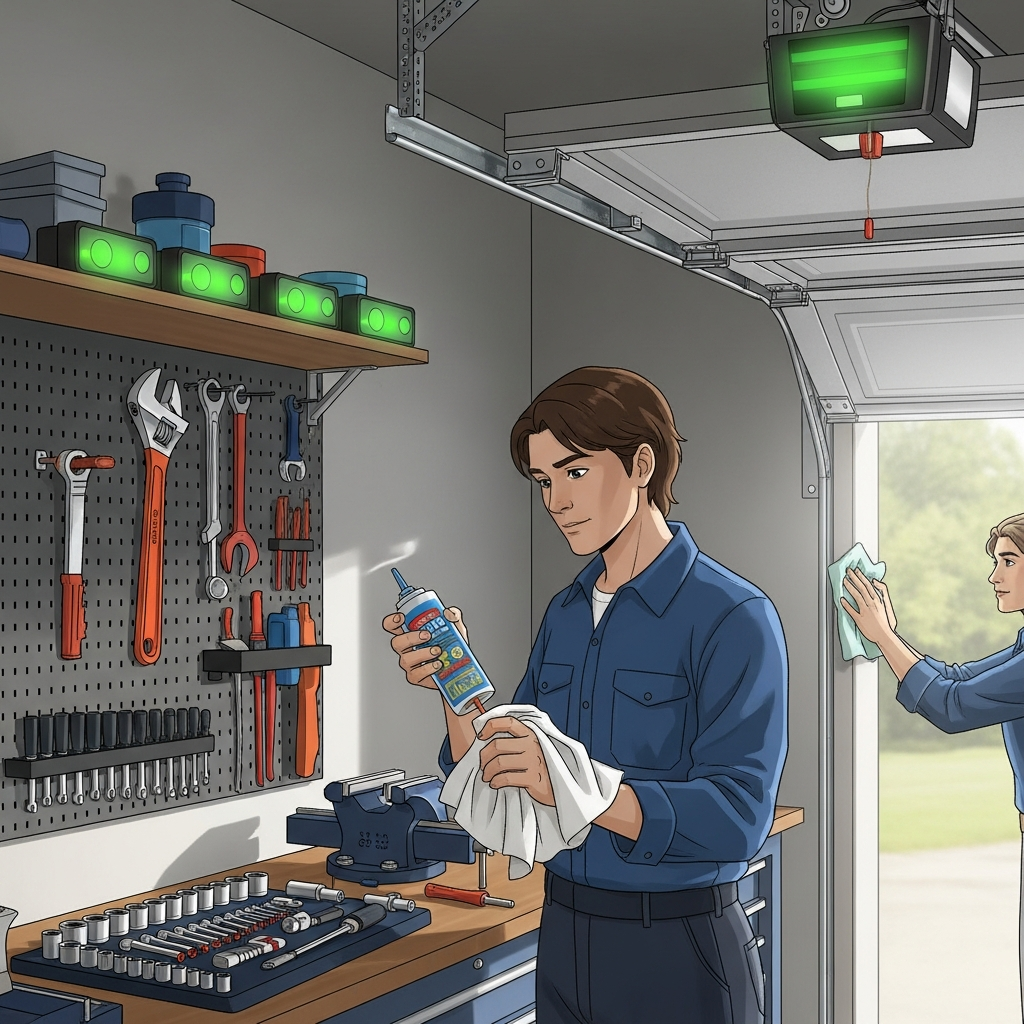
- Lubricate rollers, hinges, springs, and bearings with a silicone-based or lithium garage door lubricant.
- Tighten loose bolts and hardware to prevent rattles and misalignment.
- Inspect weatherstripping and replace if cracked or compressed to maintain a good seal.
- Clean and wipe down tracks. Do not grease the track itself; lubrication should be focused on rollers and bearings.
Annual Professional Inspection
In addition to DIY maintenance, schedule an annual inspection with a qualified technician. A pro can evaluate springs, cables, and the opener’s internal components and identify issues that may not be obvious to the homeowner. Annual servicing includes tension checks, safety adjustments, and balancing tests to ensure smooth and safe operation.
Lubrication Best Practices
Proper lubrication reduces friction and prevents premature wear. Use garage door-specific lubricants, and follow these guidelines:
- Apply lubricant to rollers, hinges, bearings, and the torsion spring where appropriate.
- Avoid heavy oils on the track; instead, clean the track and lightly lubricate rollers.
- Wipe away excess lubricant to prevent dirt accumulation.
- Reapply lubricant more frequently in coastal areas due to salt buildup and humidity.
Managing Corrosion in Coastal Environments
Palm Beach’s salt air accelerates rust on metal components. Address corrosion proactively:
- Use stainless steel or galvanized replacements when possible for springs, bolts, and brackets.
- Clean metal surfaces regularly to remove salt residue. Mild detergent and water followed by thorough drying reduces corrosion risk.
- Apply rust-inhibiting sprays or protective coatings to exposed metal surfaces.
Weatherstripping and Seals
Good weatherstripping prevents water intrusion, preserves energy efficiency, and reduces pest entry. Check seals at the bottom of the door and around the frame:
- Replace dry, cracked, or brittle weatherstripping to maintain an effective barrier.
- For homes near the ocean, consider thicker or more resilient materials designed for marine environments.
- Ensure the bottom seal makes even contact with the threshold to prevent leaks during storms.
Balance and Spring Tension Checks
A door that is out of balance places undue stress on the opener and other components. Perform a simple balance test:
- Disconnect the opener by pulling the release cord so the door can be operated manually.
- Lift the door halfway and let go. If it stays in place, balance is likely acceptable. If it drifts up or down, springs require adjustment.
- Adjusting springs is dangerous — have a trained technician make torsion spring adjustments and replacements.
Rollers, Hinges, and Tracks
Inspect rollers for chips or wear and replace damaged units promptly. Consider upgrading to sealed, nylon rollers for quieter operation and improved corrosion resistance. Check hinges and brackets for bends or cracks and tighten or replace as needed. Keep tracks clean and ensure they are properly aligned and anchored to the garage frame.
Electronics and Safety Sensors
Modern openers have electronic diagnostics and remote features, but sensors and wiring remain vulnerable to misalignment, humidity, and debris:
- Clean sensor lenses with a soft cloth to remove dust, grime, or salt residue.
- Ensure sensors are level and unobstructed with a clear line-of-sight across the door opening.
- Check wiring connections for corrosion, loose terminals, or chewed insulation and repair as required.
Responding to Storms and High Winds
Palm Beach sees storms and occasional high winds. Prepare your door ahead of storm season:
- Reinforce the door if necessary with wind-rated hardware, especially for large or older doors.
- Inspect anchors and bracket hardware for solidity and corrosion.
- Consider adding bottom seals and threshold plates for improved water resistance.
DIY vs Professional Maintenance
Many homeowners can effectively handle cleaning, lubrication, and basic inspections. However, complex tasks like spring replacement, opener drive repairs, or severe track realignment require professional skills and tools. A qualified technician can perform safe spring changes, test balance precisely, and ensure opener electronics work reliably.
Parts to Keep on Hand
Save time by keeping essential spare parts for quick fixes between professional visits:
- Extra batteries for remotes
- Replacement rollers and hinges
- Weatherstripping strips
- Shop rags, a ragged brush for cleaning, and a small tube of garage door lubricant
Creating a Maintenance Log
Track dates of inspections, lubrication, part replacements, and professional visits. A maintenance log helps you recall when springs were last replaced, which parts were upgraded, and when the garage door system received professional attention. This record is useful for resale value and warranty considerations.
Common Warning Signs That Require Immediate Action
Some symptoms need immediate attention to avoid accidents or significant damage:
- Sudden change in door movement — jerky, fast, or dropping motion.
- Visible spring breakage or loose cables.
- Unusual grinding in the opener or smoke smells during operation.
- Door that will not stay balanced when disconnected from the opener.
Frequently Asked Questions
How often should I lubricate my garage door?
In Palm Beach, lubricate rollers, hinges, and springs at least every six months; consider doing it quarterly in coastal locations to combat salt buildup.
Is it safe to adjust garage door springs myself?
Torsion springs are dangerous and should be handled by trained professionals. DIYers should avoid spring adjustments and hire a pro for safety and correct tensioning.
What materials resist corrosion best in coastal areas?
Stainless steel hardware, galvanized springs, and nylon rollers offer improved resistance to corrosion. Composite or steel doors with durable finishes also perform better than untreated wood.
Why does my door make more noise in the morning?
Temperature and humidity changes can affect lubrication consistency and metal contraction, causing temporary increases in noise. Regular lubrication and replacing worn rollers help reduce noise over time.
When should I replace rather than repair my garage door?
If a door has repeated problems across multiple components, significant rust or panel damage, or is older than 15–20 years, replacement can be more reliable and cost-effective in the long term.
Conclusion and Next Steps
Regular maintenance tailored to Palm Beach conditions preserves your garage door’s performance and safety. A combination of monthly checks, semi-annual lubrication, and annual professional inspections offers the best protection. Keep corrosion-prone components monitored, upgrade to corrosion-resistant parts where possible, and maintain a log of all service activities. For homeowners who prefer expert help or need a tune-up, a local service provider can provide targeted maintenance and preventive measures to protect your door from Florida’s coastal climate. Learn more about professional options and schedule service with specialists who understand the region by visiting garage door service.
Schedule Preventive Service
Taking a proactive approach avoids emergencies and keeps daily routines running smoothly. If you notice persistent issues or prefer regular professional maintenance, contact a trusted technician to evaluate and service your door. Proper upkeep now preserves safety and convenience for years to come. To arrange service or request advice tailored to Palm Beach homes, reach out to a qualified local team and schedule an inspection with experienced professionals.