
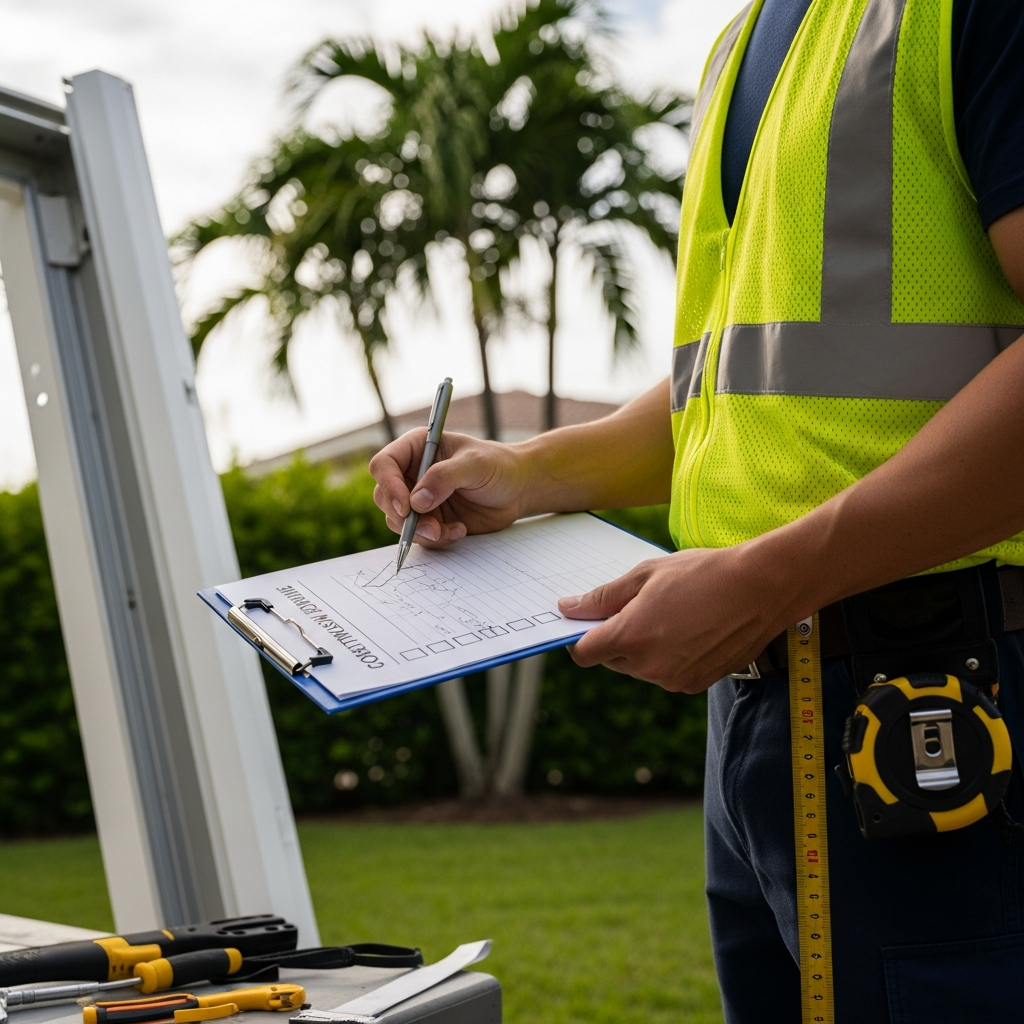
Palm Beach Florida Garage Door Installation Checklist
Installing a garage door requires planning, the right materials, and local expertise—especially in Palm Beach Florida where coastal conditions and regulatory requirements influence the best choices. This checklist breaks down the essential steps and considerations to help you prepare for a smooth installation. Begin with initial planning and site assessment, move through material selection and scheduling, and finish with testing and maintenance. If you prefer professional management, consider collaborating with experienced installers who specialize in garage door installation services to coordinate the entire process.
Initial Assessment
– Confirm your objective: Are you replacing an existing door, upgrading for better insulation, or installing a new door for a new opening?
– Take accurate measurements of the opening: width, height, headroom, side room, and backroom depth for any tracks or openers.
– Check local HOA requirements or neighborhood guidelines that might dictate appearance, color, or hardware standards.
– Determine if permits are required in your municipality and whether an inspection will be necessary after installation.
Material and Design Selection
– Choose materials that withstand coastal conditions: treated steel, composite, or fiberglass often outlast untreated wood in salty, humid environments.
– Decide on door type: sectional, roll-up, tilt-up, or carriage-style, based on space, aesthetics, and functional needs.
– Evaluate insulation options (R-values) if the garage is attached or climate control matters.
– Select corrosion-resistant hardware and finishes to reduce maintenance in a salt-air environment.
Hardware and Opener Considerations
– Select appropriate springs: torsion or extension, sized for the door’s weight and expected usage.
– Choose an opener type: belt drive for quiet performance, chain drive for cost-effectiveness, or a smart-enabled unit for remote access. Include a battery backup if power reliability is a concern.
– Ensure all fasteners and brackets are stainless steel or galvanized to minimize rusting near the coast.
Site Preparation Checklist
– Clear the garage interior and immediate exterior approach of vehicles and obstructions.
– Verify electrical access for the opener and any lighting or sensors.
– Document the condition of the framing and header; plan for reinforcement if needed.
– Prepare for day-of requirements such as gate access, homeowner association notifications, or parking arrangements for installation vehicles.
Installation Day Steps
1. Arrival and final site measure to confirm the selected door fits precisely and no unexpected modifications are needed.
2. Removal of the existing door (if applicable), including careful handling of springs and cables to avoid injury.
3. Frame preparation and reinforcement where needed, ensuring the opening is plumb and secure for mounting the new door. This may include shimming or adding blocking for anchors.
4. Assembly and mounting of tracks, rollers, springs, and panels, performed in sequence to maintain alignment and balance.
5. Installation of the opener and sensors, wiring as required, and setting travel limits and force settings for safe operation.
6. Final balancing, lubrication of moving parts, sealing of the perimeter, and a full functionality test including auto-reverse checks.
Post-Installation Checklist
– Confirm that all safety features operate correctly, including photoelectric sensors and manual release functions.
– Ensure perimeter seals are properly seated and that a threshold seal has been installed if recommended.
– Get a demonstration of manual operation and opener features from the installer.
– Receive a written summary of warranty details for panels, hardware, and labor.
Maintenance and Seasonal Care
– Monthly: visually inspect cables, rollers, springs, and tracks for signs of wear or corrosion. Test the auto-reverse function and manual release.
– Quarterly: lubricate rollers, hinges, and other moving metal parts according to manufacturer recommendations.
– Annually: schedule a professional inspection to assess spring tension, cable condition, and opener alignment. Replace worn components before they fail to avoid more costly damage or safety risks.
Special Considerations for Coastal Homes
Palm Beach homes face unique challenges from salt and humidity. Prioritize materials and finishes that resist corrosion, and consider more frequent maintenance checks compared with inland properties. Use stainless steel or hot-dipped galvanized hardware, and specify protective coatings for steel panels. Inspect seals and thresholds after heavy storms to ensure that water intrusion has not occurred. If you live in a wind-exposed area, ensure your door meets wind-load requirements and discuss reinforcement options with your installer.
Safety and Permitting
Never attempt high-tension spring adjustments or cable repairs as they can be hazardous without proper tools and experience. For any work that affects structural elements or requires electrical modifications, check permitting rules in your municipality. Many installers provide permitting services or guidance, which can simplify the process and ensure compliance with local building codes.
FAQ
Q: How can I prepare my garage before the installer arrives?
A: Remove vehicles and valuables, clear workspace, and ensure access to electrical outlets. Provide gate codes or HOA instructions in advance to avoid delays.
Q: What should I ask my installer during the site visit?
A: Ask about wind-load compliance, corrosion-resistant hardware, warranty coverage, average installation timeline, and whether they handle permitting.
Q: How often do I need professional maintenance?
A: An annual professional inspection is recommended, with monthly homeowner checks to catch obvious wear or operational issues.
Q: Will the installation disrupt my day?
A: Most standard replacements finish within a day. If structural reinforcement or custom fabrication is required, discuss timelines with your installer to plan accordingly.
Choosing a Qualified Installer
Look for installers who are licensed, insured, and have strong local references. Ask for before-and-after photos of recent jobs and request a clear written estimate that details materials, warranties, and schedule. Inquire whether they manage permits and inspections and confirm the expected cleanup procedures on completion.
Final Recommendations and Next Steps
Follow this checklist to prepare for a dependable installation that meets your needs and Palm Beach’s environmental demands. If you want professionals to manage selection and installation, contact specialists in garage door installation services to schedule an on-site assessment. Their expertise can streamline the process, ensure compliance with local codes, and provide long-term support through maintenance and repairs.
When you’re ready, book a site visit to finalize measurements, review design options, and set an installation date. With the right preparation and a qualified team, your garage door installation will enhance safety, convenience, and curb appeal for years to come.