Introduction: Reliable Access for Business Operations
Commercial garage doors are mission-critical assets. They control workflow, protect inventory, and shape first impressions for customers and partners. In Palm Beach County, businesses from logistics hubs to retail storefronts depend on doors that withstand heavy use, high heat, and seasonal storms. As you plan your next upgrade or build-out, align specifications, scheduling, and safety with a trusted provider of garage door installation to keep projects on time and operations uninterrupted.
This guide covers door types, code considerations, hardware choices, and maintenance strategies tailored to commercial environments in South Florida.
Door Types for Commercial Needs
Business facilities demand door systems matched to their daily operations. Sectional steel doors offer insulation, visibility options, and robust hardware for frequent cycling. Rolling steel doors deliver compact footprints and high durability for warehouses with limited headroom. High-speed fabric or rubber doors prioritize rapid opening and closing to maintain climate control and reduce energy loss in high-traffic zones. Aluminum-and-glass storefront doors provide modern aesthetics and daylighting for showrooms and service bays.
Selecting the right type starts with a workflow assessment: cycle counts, desired speed, opening size, headroom constraints, and exposure to weather and debris. Your installer will translate operational needs into a specification that balances performance, safety, and appearance.
Wind-Load and Structural Requirements
Florida’s wind standards apply to commercial installations as well as residential. Reinforced curtains, heavier tracks, wind locks, and structural brackets are common in wind-rated commercial systems. Product approvals document performance, and fastening patterns must be executed precisely to pass inspections and perform under stress.
For wide openings and docks, structural evaluation of jambs and headers ensures that the substrate can accept specified anchors. Where necessary, reinforcement or steel tubing may be recommended to control deflection.
Safety Systems and Controls
Commercial safety systems include photoelectric sensors, monitored edges, and breakaway features on select high-speed models. Control stations may feature constant-pressure operation, interlocks, and integration with security or fire systems. Strobe lights, audible alerts, and signage protect pedestrians in busy areas.
Smart access can extend to commercial settings through app control, audit logs, and role-based permissions. These tools help managers track after-hours entries, document deliveries, and coordinate contractors without swapping physical keys.
Opener and Operator Selection
Industrial-duty operators are built for higher cycle counts and heavier loads. Chain-drive jackshaft units and trolley operators dominate in commercial spaces, with horsepower and gear ratios matched to door weight and frequency of use. Programmable limits, soft start/stop, and duty-cycle ratings should align with expected traffic. Where power reliability is a concern, backup systems or manual chain hoists maintain access during outages.
For facilities with multiple doors, centralized control panels simplify oversight and reduce the chance of conflicting door movements. Integration with dock levelers, vehicle restraints, and safety interlocks further enhances efficiency and safety.
Weatherproofing and Environmental Control
Perimeter seals, brush weatherstripping, and insulated panels mitigate heat transfer and block dust and pests. In food, pharmaceutical, or clean assembly environments, high-speed doors help maintain temperature and cleanliness standards between zones. Where wind-driven rain is a concern, tighter seals and thresholds reduce intrusion and protect interior finishes.
In coastal areas, corrosion-resistant finishes and stainless hardware extend service life and preserve appearance. Routine rinsing and targeted maintenance keep systems operating smoothly despite humidity and salt air.
Project Planning, Permitting, and Scheduling
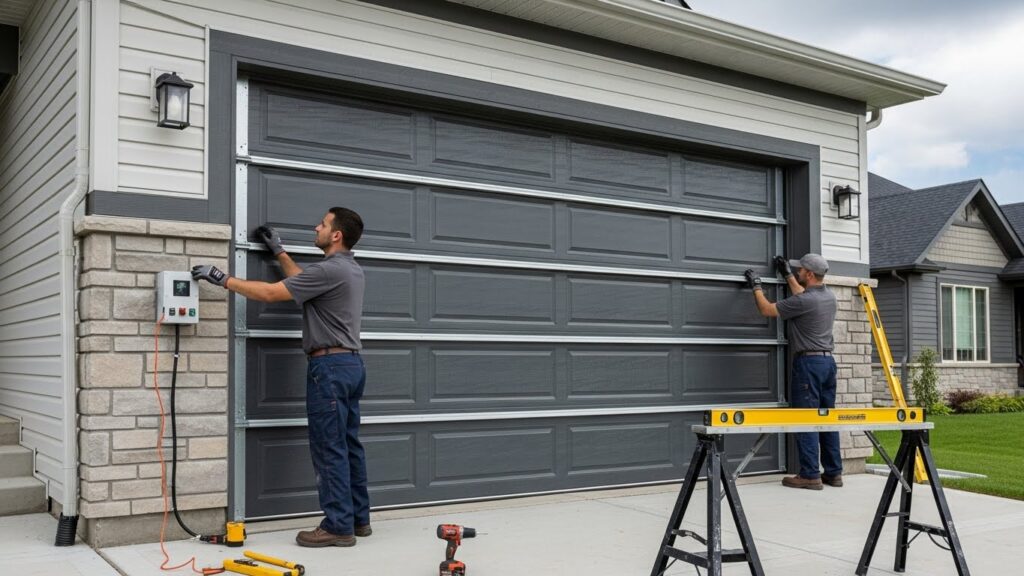
Commercial projects benefit from detailed scopes and coordinated timelines. Your installer should prepare product approvals, drawings, and permit applications, then plan work in phases to minimize downtime. Night or weekend installations may be arranged to reduce disruption in active facilities.
Communication is key. Clear sequencing—demolition, framing adjustments, track and operator installation, electrical coordination, and inspections—keeps stakeholders aligned and the site safe.
Lifecycle Cost and Maintenance Strategy
Upfront choices influence total cost of ownership through durability, energy performance, and service intervals. Specify commercial-grade rollers, hinges, and bearings suited to your cycle counts. Insulation reduces HVAC load in temperature-controlled spaces, while high-speed systems reduce air exchange and improve productivity.
Plan maintenance into operations. Quarterly or semiannual service aligns with high-cycle usage: lubrication, fastener checks, sensor calibration, and safety validation. Tracking cycle counts and logging service visits helps anticipate part replacement before failures impact operations.
Security and Access Management
Visibility, lighting, and camera coverage complement secure door systems. Encrypted remotes, keypads with rotating codes, and role-based app access help prevent unauthorized entry. In multi-tenant properties, segmentation of access and detailed audit logs provide clarity and accountability.
For storefronts, tempered or laminated glazing options balance visibility with resilience. Grilles and shutters protect after hours without sacrificing airflow where ventilation is needed.
Frequently Asked Questions
Q: How do I choose between sectional and rolling steel doors? A: Consider headroom, cycle counts, insulation needs, and service access. Sectional doors offer flexibility with windows and insulation, while rolling steel conserves space and handles high-cycle environments well.
Q: What inspections are required for commercial installations? A: Inspections typically verify wind-load compliance, fastening patterns, operator configuration, and safety systems. Your installer coordinates permits and documentation for approval.
Q: Can commercial doors integrate with building management systems? A: Yes. Many operators support integration for centralized monitoring, scheduling, and alarms. Discuss these goals early to select compatible equipment.
Q: How do I minimize downtime during installation? A: Plan phased work, coordinate door-by-door sequencing, and consider off-hours installation. Temporary barriers can maintain security and climate control while work proceeds.
Q: What maintenance schedule should I follow? A: High-cycle doors benefit from quarterly or semiannual service. Logging cycle counts helps predict part replacement and prevents unexpected outages.
Q: Are high-speed doors suitable for coastal environments? A: Yes, when specified with corrosion-resistant components and appropriate seals. Your installer will recommend materials that match your facility’s conditions.
Q: Can I retrofit smart access to existing commercial doors? A: Often, yes. Operators and controllers that support network integration can be added or upgraded to enable app control and audit logs.
From Specification to Operation
Businesses thrive on predictability. When doors are engineered for wind resistance, sized for daily traffic, and installed with safety in mind, your operations run smoothly and safely. Coordinated scheduling and clear documentation keep inspections straightforward and stakeholders informed.
If you are planning a new facility, modernizing a storefront, or upgrading high-cycle bays, partner with a team experienced in commercial-grade garage door installation. The right system delivers reliable access, long-term durability, and confidence through every season.